01
Adjustment
A healthy regulator set too high can often simply be adjusted down and verified over a period to confirm it holds. This is the cheapest outcome and we check for it first rather than reaching for a replacement.
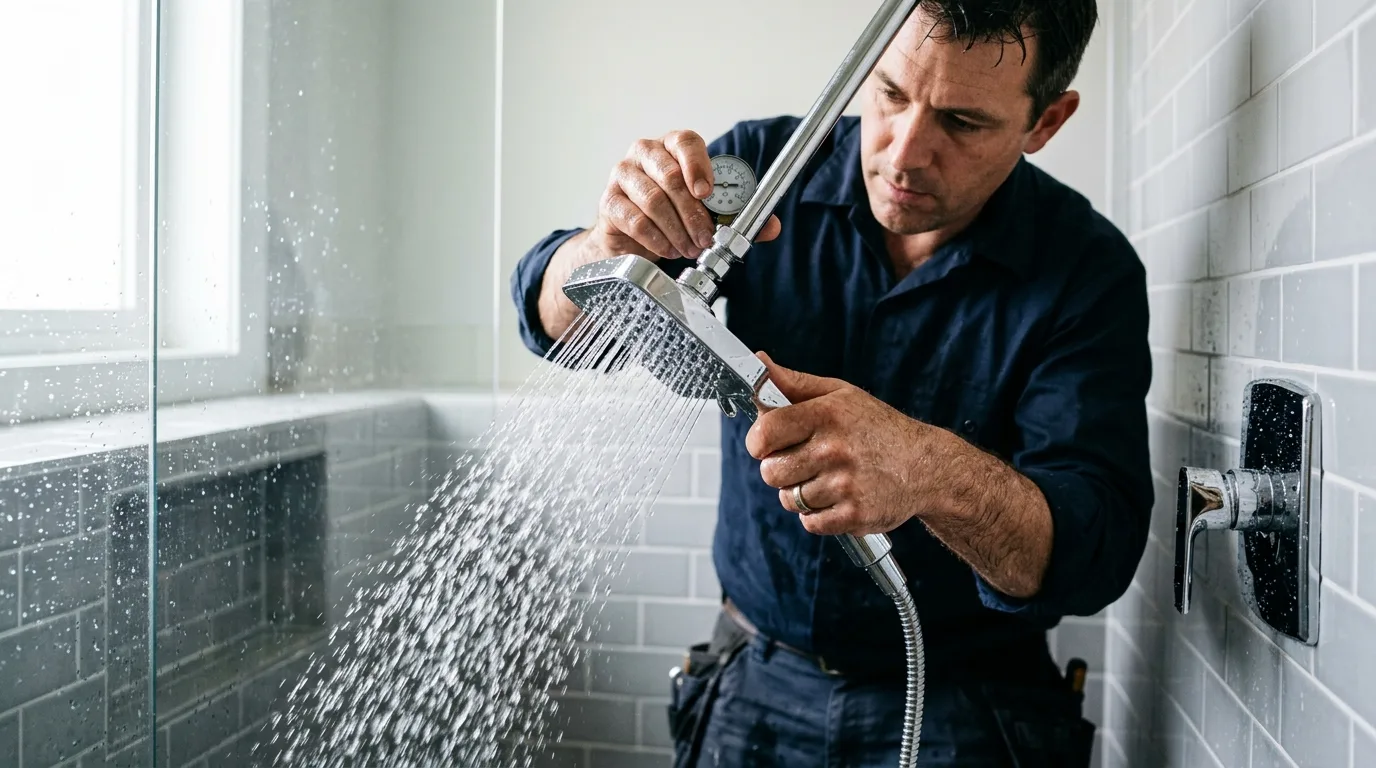
Static pressure · Corona, CA
Corona’s elevation range means plenty of houses receive pressure well above what residential plumbing is built for. It is the quiet cause behind banging pipes, weeping relief valves, short-lived fixtures, and heaters that fail early.
Answered 24/7 · static and flowing pressure measured · upfront pricing
80 psi
The code ceiling for residential supply
Measured
Static and flowing, both
24/7
Dispatch, including nights and weekends
The hidden cause
A pressure reducing valve, a PRV, or pressure regulator, sits near where water enters your property and knocks the incoming city pressure down to something residential plumbing can live with. California code caps water pressure to fixtures at 80 psi, and most plumbing components are happiest somewhere in the 50 to 70 psi range.
When that valve fails, or was never installed, the house receives whatever the main is delivering. In parts of Corona that can be well over 100 psi. Nothing dramatic happens immediately. What happens instead is that every component in the house begins wearing out faster, and each failure gets diagnosed as its own unrelated problem.
The symptom list is long and rarely connected by homeowners: faucets that drip again weeks after a cartridge was replaced; toilet fill valves that hiss, run on, or fail annually; a banging or hammering sound when a washing machine or dishwasher valve closes; a water heater relief valve that weeps; supply lines to appliances that fail; showers that feel harsh rather than strong; irrigation heads and drip fittings blowing off; and a water heater that dies years early.
Then there is the failure mode nobody wants: high static pressure is a significant factor in burst supply lines and washing machine hose failures, and those events happen at three in the morning when the house is empty of anyone paying attention.
Checking is trivial. A gauge on an outside hose bib gives a static reading in about a minute. If your house has never been tested, it is genuinely worth knowing the number.
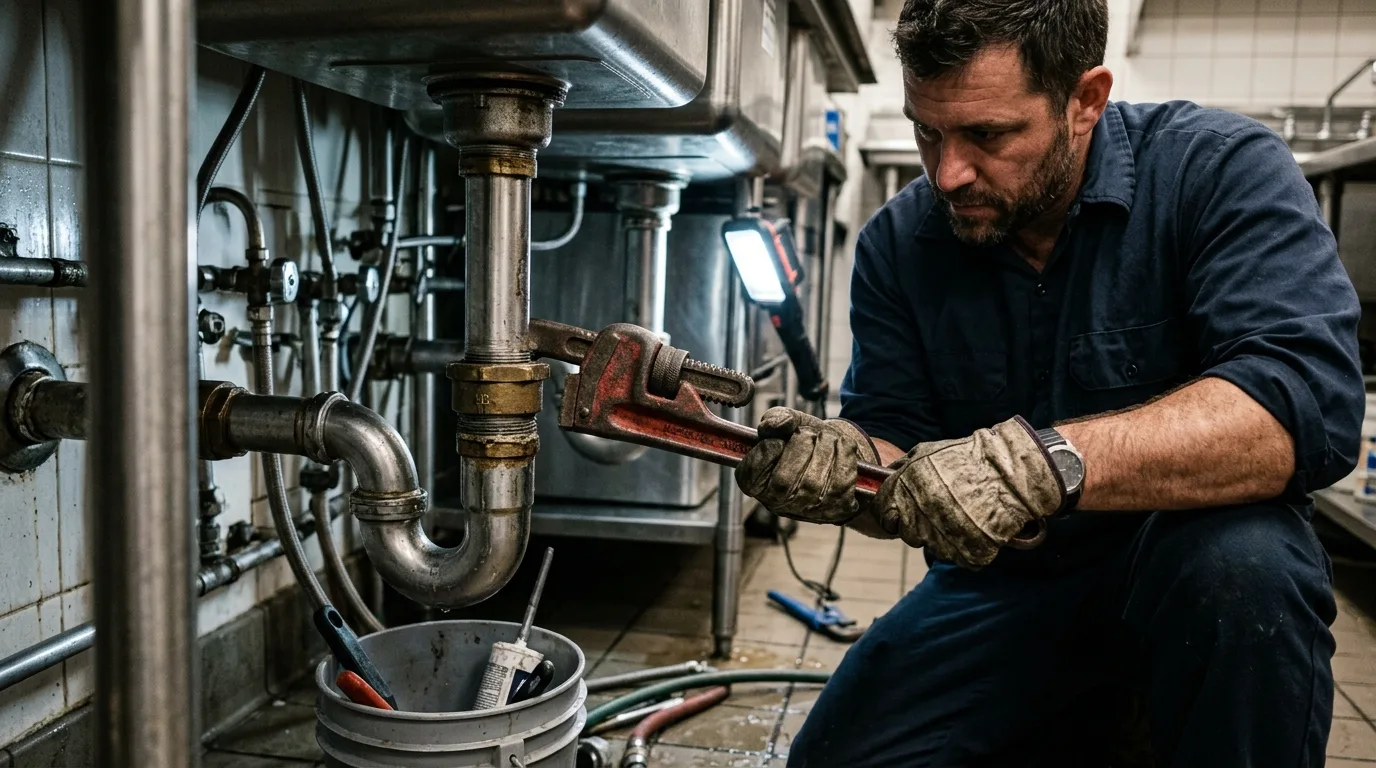
Diagnosis
Static pressure is what the system holds with no water moving. It is what stresses every joint, valve, and fitting continuously, twenty-four hours a day. This is the number that determines how fast your plumbing wears out.
Flowing pressure is what remains while water is actually running. It is what determines how strong your shower feels. The gap between the two tells us about restriction, in the service line, in corroded distribution piping, or in a partially closed valve.
Those two readings together separate the diagnoses cleanly. High static with good flowing pressure is a regulator problem, plain and simple. Normal static with poor flowing pressure is a restriction, and a new regulator will not help. Low static and low flowing points at a supply issue or a failed regulator stuck closed.
We also watch for pressure creep, a reading that starts reasonable and climbs over hours with no water use. That is the signature of a failing regulator that no longer holds, and it is often why a house tests fine at noon and hammers at midnight, when municipal demand drops and main pressure rises.
And we check the thermal expansion tank. On a house with a working regulator, the plumbing is a closed system: heated water expanding in the water heater cannot push back into the main. Without an expansion tank to absorb it, that expansion becomes a pressure spike every heating cycle. A weeping relief valve on a house with a good regulator and no expansion tank is not a valve problem; it is the valve doing exactly what it was designed to do.
What we do
Not every high-pressure reading needs a new valve, and we will tell you which situation you are in.
01
A healthy regulator set too high can often simply be adjusted down and verified over a period to confirm it holds. This is the cheapest outcome and we check for it first rather than reaching for a replacement.
02
A regulator that will not hold a setting, has failed open, has failed closed, or shows pressure creep gets replaced. They are consumable items with a service life typically in the ten to fifteen year range, not permanent fixtures.
03
Some older Corona homes never had a regulator, because the pressure at the time of construction did not demand one. Adding one where none exists means cutting into the service line and fitting the valve with isolation, which is a straightforward half-day job.
04
Fitted and pre-charged to match measured static pressure. Required by code on closed systems, missing on a large number of existing installations, and the actual fix for many weeping relief valves.
Sequence
Diagnosis is quick. The repair is usually a half-day at most.
Static and flowing pressure at an exterior hose bib, with a held reading to catch creep. Numbers written down and shown to you, not just described.
The existing regulator found, usually near the meter, at the point of entry, or in a below-grade box, and its condition, age, and adjustability checked.
Expansion tank presence and pre-charge, water heater relief valve condition, and whether any fixture damage has already occurred from the pressure.
Adjustment, replacement, or first-time installation, with the reasoning and the number. If the honest answer is a twenty-minute adjustment, that is what you get quoted.
Water isolated, valve fitted with unions so future service does not require cutting pipe, expansion tank installed where needed, and everything leak-checked under pressure.
Pressure dialled to an appropriate target, typically in the 50 to 65 psi range, then verified static and flowing at multiple fixtures and confirmed to hold.
80 psi
Code maximum to residential fixtures
50–65
Typical psi target we set
10–15
Years of typical PRV service life
Why here
Water pressure in a municipal system is created and managed largely by elevation. Reservoirs and tanks sit high, water flows down, and the pressure at any given house depends on how far below its supply tank it sits. Utilities divide their systems into pressure zones to keep that within a workable band, but zones cover a range of elevations by necessity.
Corona is built across a large elevation range, from the Santa Ana River corridor and the flats near the 91 up through Corona Hills and into the hillside developments. That is a lot of vertical distance across one city, and the practical consequence is that houses sitting at the low end of a pressure zone can receive substantially more pressure than houses near the top of the same zone.
This is why pressure complaints in Corona cluster by neighborhood rather than by house age, and why a plumber who works here checks pressure as a matter of routine. It is also why we take pressure readings on service calls that have nothing to do with pressure, a high reading explains a great many other symptoms.
Two more local factors compound it. Night-time rise: municipal pressure typically increases overnight when demand across the system drops. A house that reads acceptably at two in the afternoon can be considerably higher at two in the morning, which is precisely when unattended supply line failures happen. Any honest pressure assessment accounts for that.
Hardness interaction: Corona’s fifteen-to-twenty grain water deposits scale on valve seats and internal surfaces, and a regulator is a valve with a diaphragm and a seat. Mineral accumulation is a leading reason regulators here stop holding their setting earlier than their nominal service life. It is the same mechanism that shortens the life of water heaters and fixture cartridges, and it is why a softener conversation sometimes belongs in a pressure discussion.
One practical note for anyone about to spend on a repipe or a new water heater: install the new system into controlled pressure. Putting new pipe behind a failed regulator recreates the conditions that destroyed the old pipe.
Straight answers
| Factor | Why it changes the number |
|---|---|
| Adjustment or replacement | A healthy valve that just needs dialling down and verifying is the least expensive visit we make. A replacement involves a valve, isolation, and pipe work. |
| Whether one exists already | Replacing an accessible existing regulator is routine. Installing one on a house that never had it means cutting into the service line and fitting new piping and unions. |
| Where the valve is | At the point of entry in a garage or on an exterior wall is easy. In a below-grade box, buried, or behind landscaping means excavation before plumbing. |
| Valve size and quality | Three-quarter and one-inch valves differ in cost, and so do quality grades. A better valve with a serviceable diaphragm and a repair kit available is worth the difference here, given what our water does to seats. |
| Expansion tank | Adding one where the closed system requires it is a modest cost and prevents a category of expensive problems. Existing tanks that have lost charge get replaced or recharged. |
| Damage already done | Sometimes high pressure has already taken out fixture cartridges, fill valves, or supply lines. Those are separate repairs, quoted separately, and we tell you which are urgent. |
| Unions and serviceability | We fit replacements with unions so the next service is a valve swap rather than a pipe-cutting exercise. Slightly more now, considerably less later. |
| Emergency versus scheduled | A regulator that has failed open and is hammering the house at midnight can be dispatched at midnight, at emergency rates. A scheduled morning costs less. |
A pressure test is quick and inexpensive, and it either rules out a whole category of problems or explains several at once. Either result is worth having.
Pipes banging?
If fixtures keep failing and nobody has measured your static pressure, that is the first thing to check. It takes a minute.
Answered 24/7 · upfront pricing before any work
Related work
Coverage
Before the next project
Repiping or replacing a heater is the right moment to fix the regulator, not the moment to discover it failed.
Independent local contractors · workmanship guarantee on completed work
Pressure FAQs
California code caps pressure to residential fixtures at 80 psi. In practice most plumbing systems and appliances are happiest between about 50 and 65 psi, and that is where we typically set a regulator.
Below roughly 40 psi the house starts to feel weak, particularly with two fixtures running. Above 80 psi you are shortening the life of every valve, seal, and fitting in the building, whether or not anything has failed yet.
A screw-on pressure gauge from any hardware store, threaded onto an exterior hose bib with everything in the house off, gives you a static reading in under a minute. It is one of the most useful ten-dollar tools a homeowner can own.
Two tips: take a reading late at night or early morning as well, because municipal pressure usually rises overnight. And leave the gauge on for a few hours to catch a creeping reading, which is the signature of a failing regulator.
Most Corona homes built from roughly the 1970s onward do. It is usually a bell-shaped brass valve near where the water line enters the property, at the point of entry on an exterior wall, near the meter, or in a below-grade box.
Older homes, particularly pre-1960 properties near downtown and the Circle City historic district, sometimes have none at all, because the pressure at the time of construction did not require it. If your static reading is high and no valve exists, adding one is the fix.
Yes, and in Corona it is not unusual. Nominal service life is ten to fifteen years, but a regulator is a valve with a rubber diaphragm and a metal seat, and our fifteen-to-twenty grain water deposits mineral on both.
Scale on the seat stops the valve holding a setting, which is why we see pressure creep on relatively young valves here. A better-quality valve with an available repair kit is worth the extra money for exactly this reason.
Most often thermal expansion with no expansion tank. When your house has a working regulator, the plumbing becomes a closed system, so water expanding as the heater fires cannot push back into the city main. Pressure spikes instead, and the relief valve does its job.
The fix is a properly pre-charged thermal expansion tank, not a new relief valve. Replacing the valve without addressing the cause means it weeps again in a few months. We measure static pressure and check the expansion tank before touching the valve.
Slightly less forceful, and generally more pleasant. Most people bringing an over-pressured house down to a proper setting report that showers feel fine and that the harsh, needling quality goes away.
If your shower is genuinely weak, high pressure was not what was making it strong, more likely a clogged aerator or head, a restricted service line, or scaled distribution piping. Those are separate and fixable.
Water hammer, a pressure shockwave when a fast-closing valve stops moving water abruptly. Washing machine and dishwasher solenoid valves are the usual triggers. High static pressure makes the shockwave much more violent.
Reducing the pressure to a correct setting usually eliminates it or reduces it dramatically. Where it persists, arrestors at the offending appliance and proper pipe support handle the rest. It is worth fixing: hammer is mechanical stress on every joint in the run.
Very likely. Fill valves, faucet cartridges, angle stops, and appliance supply lines are all rated for normal residential pressure, and running them at 100-plus psi wears them out on a compressed schedule.
This is the pattern that brings most people to this page: repeated fixture repairs that never seem to stick. Fixing the pressure does not un-break what already broke, but it stops you paying for the same repair annually.
Mostly expensive, but not only. Sustained high pressure significantly raises the risk of a supply line or connector failure, and those events cause water damage rather than injury, often overnight or while a house is empty.
It also stresses the water heater and its relief valve, which is a component you want working correctly. So: not a fire-alarm emergency, but a genuine risk to the building and worth resolving rather than living with.
On an accessible valve with a working adjustment screw, turning it down is mechanically simple, and we are not going to pretend it needs a professional.
What people get wrong is verification. You need to confirm the valve actually holds the new setting over time rather than creeping back, and you need to check whether an expansion tank exists and is correctly charged, because lowering the pressure on a closed system with no expansion tank simply moves the problem. If your valve is old, seized, or does not respond to adjustment, forcing it can break it while the water is on.
Corona, CA · pressure specialists
Static and flowing pressure measured, the regulator assessed, and the closed-system items checked.
Dispatch answers 24/7 · same-day and emergency response available