01
Service line leaks
Long buried runs across large parcels. Isolated by section and located acoustically so excavation happens once, in the right place.
Norco · 92860
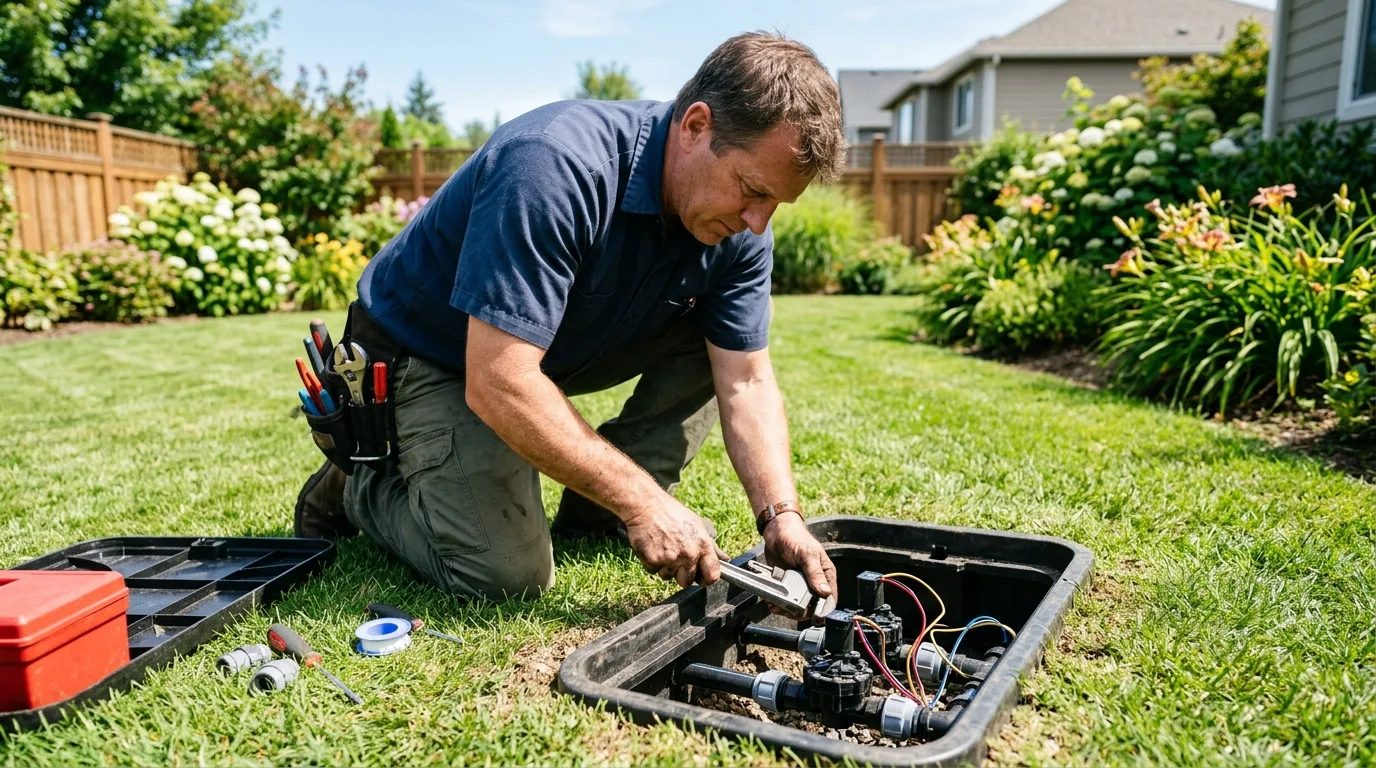
Horsetown USA means large parcels, long buried lines, outbuildings with their own plumbing, and irrigation systems built for acreage rather than a lawn.
Answered 24/7 · wells, long service lines, and outbuilding plumbing
The city
Norco is unlike anywhere else in the region. Zoning and civic identity are built around horsekeeping and rural residential living, with large parcels, horse trails instead of sidewalks in much of the city, and a housing stock that spans decades of construction on generous lots.
For plumbing, the consequence is straightforward: there is a lot more buried pipe per property here. The service line from the meter to the house can run a very long way. Sewer laterals are correspondingly long, or the property is on septic. Irrigation systems are sized for acreage. And a great many properties have plumbing serving barns, stables, tack rooms, wash racks, workshops, and second dwellings.
That changes the probability distribution of where a problem is. In a tract home, a leak is most likely at a fixture or inside a wall. On a Norco parcel, a significant share of failures are in buried pipe somewhere across a large property, and finding them is the majority of the work.
It also means more infrastructure that nobody has looked at in years. Disused irrigation lines, abandoned stubs from removed structures, hose bibs at the far end of a paddock, and shut-off valves that no longer control what someone once labeled them as. Mapping what actually exists is frequently step one.
Some properties are on private wells with pressure tanks and their own treatment, and some have a combination of well and municipal supply for different purposes. Others are on septic rather than sewer, which changes drain diagnosis entirely. Both are worth mentioning when you call.
Outbuildings
Plumbing serving barns and outbuildings has a distinctive failure profile, because it combines heavy intermittent use, exposure to weather, and almost no routine inspection.
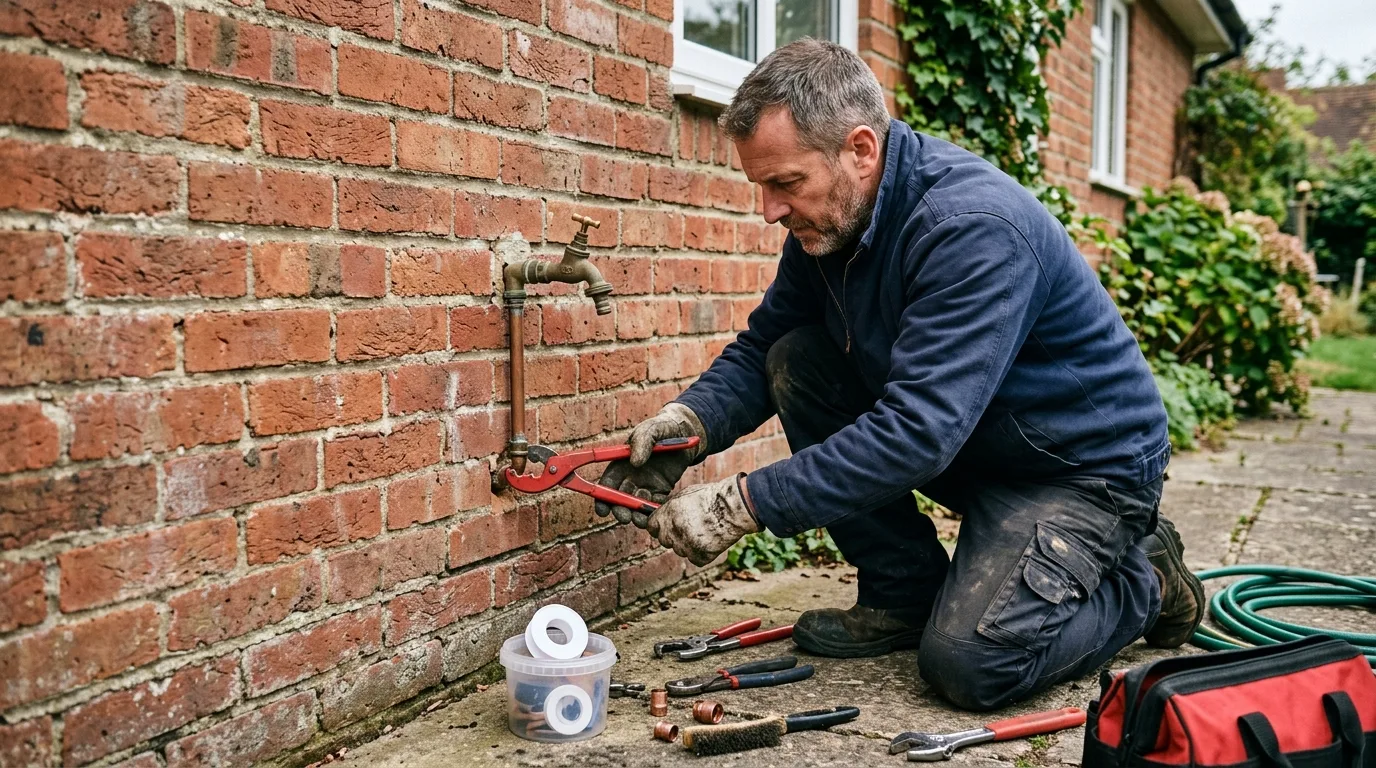
Exposure is the first factor. Pipe running to and around outbuildings is frequently above ground, and standard PVC in direct sun becomes brittle within a few years and cracks with minor impact or thermal movement. A large proportion of the failed exposed pipe we replace on rural properties was never suitable for where it was installed.
Physical damage is the second. Wash racks, gates, equipment, vehicles, and animals all interact with pipe and hydrants at ground level. Yard hydrants get knocked, hose bibs get pulled sideways by hoses under tension, and buried lines get hit by fence posts, tractors, and arena work.
Backflow risk is the third and most important. A hose in a water trough, a wash rack drain, or a line serving a paddock is a direct cross-connection to the drinking water supply if a pressure drop siphons it backwards. This is precisely the situation backflow protection exists for, and on rural properties it is frequently missing or nominal. A vacuum breaker at a hose bib costs very little; an anti-siphon or vacuum breaker assembly on a line serving animal water is genuinely important.
Isolation is the practical one. On a large property, plumbing serving outbuildings should be isolatable so a failure out there does not mean shutting the house down, and so the line can be drained or shut off seasonally if it is not in use. Many properties lack this, and adding it is inexpensive and immediately useful.
Common calls
Driven by acreage and outbuildings rather than by build year.
01
Long buried runs across large parcels. Isolated by section and located acoustically so excavation happens once, in the right place.
02
A pump that cycles on and off every few seconds has usually lost its air charge or split its bladder. You can hear it, and it wears the pump out fast.
03
Yard hydrants, wash rack plumbing, and barn supply lines damaged by exposure, equipment, or animals.
04
Hoses in troughs and lines serving animal water without vacuum breakers or anti-siphon protection. Inexpensive to fix and genuinely important.
05
Extensive systems with long buried runs, UV-damaged exposed pipe, and pressure-driven component failure across elevation change.
06
Where a property is on septic, drain diagnosis is different. We handle the plumbing side and are clear about where the septic specialist takes over.
How we work
On acreage, narrowing the search is most of the job.
Parcel size, supply type, septic or sewer, outbuildings, and where the meter or wellhead sits relative to the house. This shapes everything.
Everything off inside, meter or pump watched, then the main at the house closed. This separates a long-line problem from an indoor one immediately.
Outbuildings, irrigation, and any secondary structures closed off in turn. On a large property this is the fastest path to the right area.
Listening along the run with correlation on long lines, and pressure testing to narrow the section before any ground is opened.
What is above the line, whether trenchless replacement is the better whole-cost answer, and what restoration will involve.
Excavation kept to one hole where possible, plus isolation valves and backflow protection added where they are missing.
Acreage
Standard parcel character in Norco
100 ft+
Common service line lengths
Isolation
What most outbuilding plumbing lacks
24/7
Dispatch across Norco
Local conditions
Hard water. Regional hardness of fifteen to twenty grains applies here too, with the usual consequences: sediment in water heaters, scaled fixture cartridges, seized shower valves, and mineral on regulator seats. On properties with drip irrigation it also closes emitters and misting nozzles.
Sun on exposed pipe. More consequential in Norco than in most places, simply because there is more above-ground pipe on a rural property. Ultraviolet degradation of standard PVC is the single most common cause of cracked exposed line we find here, and it is a material-selection problem rather than a failure of good pipe.
Physical exposure. Equipment, vehicles, animals, and ongoing property work all interact with plumbing that is at ground level or shallow. Damage from another activity is at least as common a cause of failure as material fatigue.
Long buried infrastructure. More pipe, more joints, harder detection, and much more expensive excavation if it is done speculatively. This is what makes accurate locating and trenchless replacement disproportionately valuable on Norco parcels.
Cross-connection risk. Rural properties have more genuine backflow hazards than suburban ones, troughs, wash racks, chemical sprayers, and irrigation among them. It is the area where a small, cheap intervention makes the biggest real difference to safety.
Norco
On a long buried line that is worth investigating now, before it undermines a driveway or a structure.
Answered 24/7 · upfront pricing before any work
Full service list
Norco
On a property with hundreds of feet of buried line, that can run for months without a visible sign.
Independent local contractors · workmanship guarantee on completed work
Norco FAQs
Start at the meter or pump: turn everything off and watch for flow. Then close the main at the house, if flow continues, the leak is on the buried line outside rather than indoors.
From there we isolate outbuildings and irrigation in turn and locate acoustically. The goal is one correctly placed excavation instead of exploratory digging across acreage.
Yes, from the pressure tank inward: the tank, the switch, the pipework, any treatment and every fixture past it.
Pump replacement and well-bore work is a specialist discipline. Where that is the answer we will say so rather than guess at it.
Almost always the pressure tank. It holds an air charge separated from the water by a bladder, and that charge is what allows the pump to cycle sensibly.
When the bladder fails or the charge is lost, the pump short-cycles. It is audible and genuinely damaging to the pump, so it should be addressed promptly.
Yes, supply lines, yard hydrants, hose bibs, wash rack plumbing, and drainage connections where applicable.
Two things we always include: an isolation valve so a failure out there does not mean shutting the house down, and appropriate backflow protection, which rural outbuilding plumbing frequently lacks.
Sunlight. Buried PVC lasts; the same pipe run above ground goes brittle in a few summers and then splits at the first knock or hot-to-cold swing.
On a rural property there is usually more above-ground pipe than on a suburban lot, so it shows up more. Exposed runs need appropriate material or proper sleeving and coating.
Yes, and it matters more than most people realize. A hose in a trough or a line serving a wash rack is a direct cross-connection, and a pressure drop in the main can siphon that water back toward the drinking supply.
A vacuum breaker at a hose bib costs very little. On a dedicated line serving animal water, a proper anti-siphon or vacuum breaker assembly is the right protection.
Yes, on the plumbing side, the drains and lines within the property up to the system, blockages, and diagnosing whether a problem is plumbing or the system itself.
Tank pumping, leach field work, and system repairs are a septic specialty. We are clear about where that boundary falls rather than working past it.
Yes. Dispatch is answered 24 hours a day across Norco, with emergency response for burst lines, active leaks, and backups at any hour.
On a large property, knowing where your main shut-off is before you need it makes a real difference. It is worth locating and testing it on a calm day.
Frost-free hydrants set below the frost line are the durable answer for new work. On existing exposed runs, insulation plus thermostatically controlled heat tape gets most properties through a Corona winter.
The parts that actually fail are the short exposed sections at the riser and the automatic waterer valve itself. Both benefit from being boxed and insulated rather than wrapped and hoped for.
Local well water is generally hard, sometimes harder than the municipal supply, and often carries iron as well. A test is the only way to know what you are treating.
Livestock lines are usually left on raw or filtered water rather than softened, because sodium is not desirable in animal drinking water. The common arrangement is softening the house and taking barn and pasture supply off ahead of the unit.
Norco · 92860
Long lines isolated by section, wells and pressure tanks understood properly, and excavation kept to one hole.
Dispatch answers 24/7 · same-day and emergency response available