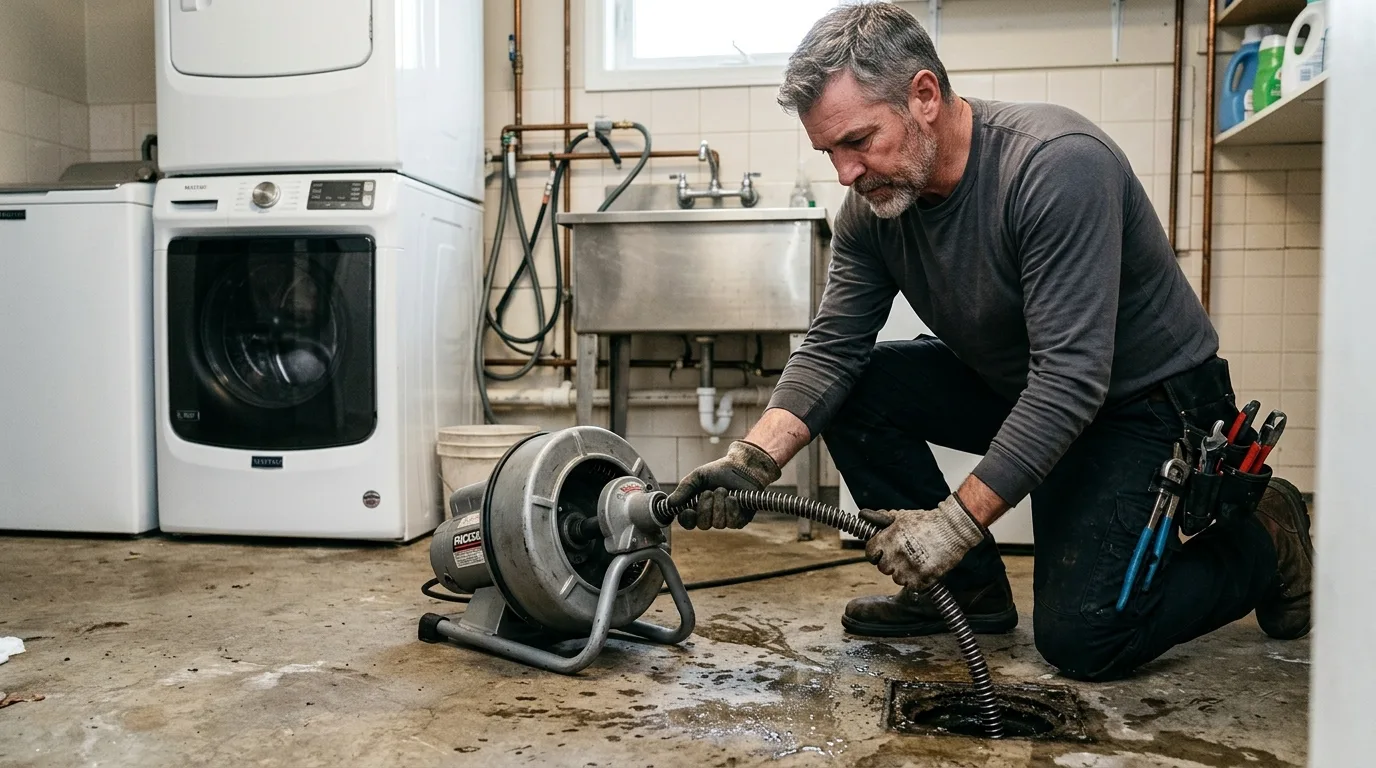
Drain machine clearing a laundry floor drain in a Corona, CA home

Clogs & backups · Corona, CA

Drain cleaning in Corona, CA

One slow sink is a fixture problem. Two fixtures at once is a main line problem, and it does not get better on its own. We clear it, then tell you why it happened.

If waste is coming back into the house, stop using water everywhere and call. Every flush adds to it.

Cleared and diagnosed

A cable clears the blockage. A camera tells you whether roots or a break caused it.

Fixture to main line

Kitchen, laundry, tub, toilet, branch lines and the sewer lateral itself.

No chemical drain openers

They damage pipe, injure people and rarely fix the actual restriction.

Every call24/7 for main line backupsCleanout access used where possibleUpfront pricingCause identified, not guessed

Read the symptom

One drain, or all of them? It is the only question that matters

Before anyone touches a cable, work out how far down the problem is. The answer changes the tool, the price and the urgency, and you can usually determine it yourself in a minute.

One fixture is slow, everything else is fine

The restriction is local, in the trap, the tailpiece or the first few feet of branch line. Kitchen sinks clog with grease and food solids. Bathroom sinks clog with hair and soap. Tubs and showers clog with hair, almost always. These are ordinary, non-urgent jobs and they clear from the fixture.

Two or more fixtures are affected, or the lowest drain backs up

Now the restriction is downstream of both of them, a branch line serving several fixtures, or the main sewer lateral leaving the house. Tells include a toilet bubbling when the washing machine drains, a shower base filling when a toilet is flushed, or waste appearing at the lowest drain in the house because that is the first place water finds a way out.

That is an urgent call. Stop using water in the entire house, no toilets, no showers, no dishwasher, no washing machine, because everything you send down has nowhere to go but back.

Gurgling, smells and slow-everywhere

Air is being pulled through water seals because the line is partly restricted or the vent is blocked. It is an early warning rather than an emergency, and it is a good moment to act, because partial restrictions become full blockages at the least convenient possible time.

Please do not use chemical drain opener

Caustic openers rarely clear a real restriction; they sit on top of it, generate heat, and damage older cast iron, ABS joints and rubber seals along the way. Worse, they turn a routine cable job into a hazard for whoever opens the line next, which is either a plumber or you. If you have already poured some in, say so when you call. Nobody will judge you; the plumber just needs to know before they open the trap.

Causes

What is actually blocking the line

Clogs are not random. Each fixture fails in its own characteristic way, and in Corona two causes dominate the main line.

01

Grease, in the kitchen line

Cooking fat goes down warm and liquid and cools into a solid coating on the pipe wall. It narrows the line over years until one dinner’s worth is too much. The worst week of the year is reliably between Christmas and New Year.

02

Tree roots, in the lateral

Roots seek the moisture and nutrients in a sewer line and enter at joints and cracks. Mature landscaping in older Corona neighborhoods sits directly over clay laterals, and clay has a joint every few feet.

03

Hair and soap

Tubs, showers and bathroom sinks. Hair binds with soap scum into a mat that catches everything after it. Mechanical removal works; chemicals mostly do not.

04

Wipes and non-flushables

“Flushable” wipes do not break down. Neither do paper towels, dental floss, cotton buds or cat litter. They snag on any existing irregularity and build a dam.

05

Scale and mineral build-up

Hard water leaves deposits on the inside of drain lines too, especially where hot water discharges. It reduces the effective diameter and gives everything else something to grab.

06

Broken or bellied pipe

A cracked, offset or sagging section collects solids at the same spot every time. If you are cleared twice a year, this is usually why, and cabling it again will not change it.

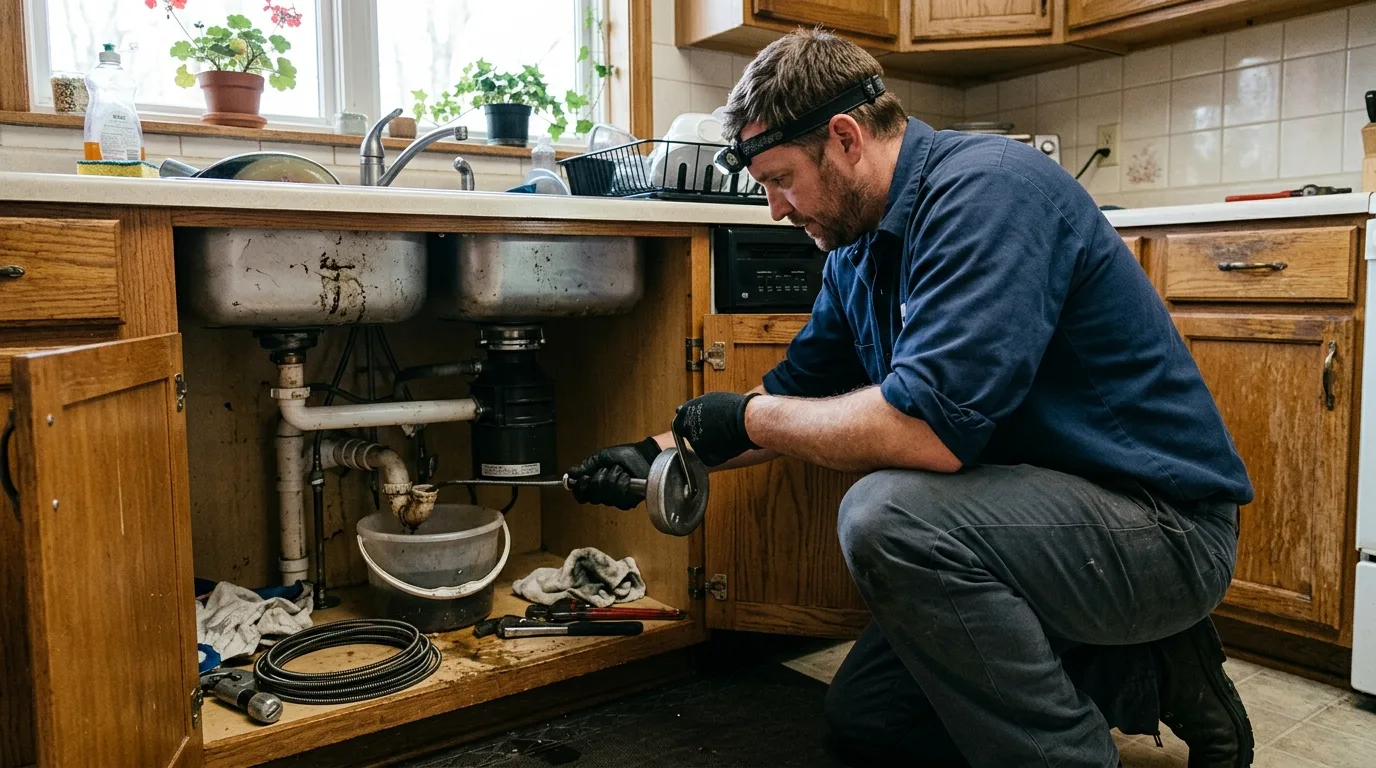
Plumber cabling a blocked kitchen sink drain from inside the cabinet

Method

Cable, jet, or camera first?

Three different tools, three different jobs. Using the wrong one is how people end up paying twice.

Cabling, the workhorse

A motorised cable with a cutting head is fed down the line, bores through the blockage and pulls or cuts it apart. Fast, effective, relatively cheap, and the right first move for the great majority of clogs. What it does not do is clean the pipe wall: it makes a hole through the obstruction rather than removing what is coating the pipe.

Hydro jetting, when the pipe itself is dirty

High-pressure water scours the full diameter back to bare pipe and flushes the debris out. This is the right answer for grease-coated kitchen lines, heavy scale, and recurring blockages where cabling keeps buying only a few months. It is not appropriate for every pipe, fragile old cast iron or damaged clay needs a camera look first. Detail on the hydro jetting page.

Camera, when it keeps coming back

If a line has blocked more than once, the useful question is not how to clear it again but what is wrong with it. A camera inspection shows roots, offsets, bellies, cracks and collapsed sections, with a depth and distance reading so any repair can be located precisely rather than excavated hopefully.

Access matters too. A proper cleanout outside the house makes all of this faster, cleaner and cheaper. If your house does not have one, common in older Corona properties, installing one is a small job that pays for itself the second time you need the line opened.

The visit

How a drain call goes

Clear the blockage, then answer the question the blockage was asking.

1

Work out how far down it is

Which fixtures are affected, in what order, and what happens when each one runs. That determines whether this is a trap job or a main line job before any equipment comes off the van.

2

Find the best access point

An exterior cleanout if there is one, a roof vent, a pulled toilet or a fixture trap if there is not. Access choice affects both mess and price, and you get told which is being used and why.

3

You approve the price

For clearing the blockage, and separately for a camera inspection if the history suggests you need one. No work starts before you agree.

4

Clear it

Correct cable and head for the pipe size and material, worked until flow is genuinely restored rather than until the water starts moving.

5

Test properly

Run substantial volume, not one flush. Fill a tub, run the washer, flush repeatedly. Partial clears look identical to full clears until someone does laundry.

6

Explain the cause and the options

What came out, what it means, and whether the honest recommendation is jetting, a camera or a repair. If nothing needs doing beyond the clear, you get told that too.


2

Fixtures affected at once means it is the main line

1910

Earliest housing era downtown, with clay and cast iron still in the ground

24/7

Emergency response for sewage backing up into the house

0

Chemical drain openers used, ever

Local detail

Why Corona drains block the way they do

Drain problems track the age of the pipe and the trees above it more than anything else, and Corona has a wide spread of both.

Clay laterals and mature trees in the historic core

Downtown, the Circle City Historic District and Central Corona have housing dating back to around 1910, and much of the original sewer work is vitrified clay with a joint every few feet, or cast iron inside the house. Clay is durable but jointed, and every joint is an invitation. The pepper, ficus and eucalyptus trees that make those streets pleasant to walk down have root systems sitting directly on top of those laterals. Root intrusion is not an occasional finding in that part of town; it is the default explanation for a recurring main line blockage, and the reason a camera earns its fee on the second call rather than the fifth.

Cast iron reaching the end of its life

Houses built between roughly 1930 and 1975 often have cast iron drain lines. Cast iron scales and corrodes internally, so the effective diameter shrinks and the wall roughens, which gives grease and solids something to grip. Cabling a rough cast-iron line clears it; jetting cleans it, but only if the pipe is sound enough to take the pressure. That judgment needs a camera, not an opinion.

ABS and long, shallow runs in the newer tracts

South Corona, Eagle Glen, Chase Ranch, Sycamore Creek, Dos Lagos and Temescal Valley are mostly early 2000s onward with ABS plastic drainage. Plastic does not corrode and does not attract roots the way clay does, so blockages there are more often behavior and slope: grease in kitchen lines, wipes, and occasionally a bellied section where fill settled under a long run. Newer does not mean immune; it means a different cause list.

Hard water shows up on the drain side too

The mineral load in Inland Empire water is usually discussed in terms of water heaters and fixtures, but it also deposits inside drain lines where hot water discharges, dishwasher and laundry runs especially. Combined with grease, it builds a hard, greasy composite that a cable bores through and a jet actually removes.

The first rain of the season

Corona goes months without meaningful rain and then gets it all at once. The first real storm finds every yard drain, area drain and downspout line that silted up over summer, and Temescal Canyon moves a lot of sediment. Those are not sewer blockages, but they flood garages and side yards just as effectively, and they are worth clearing before the season rather than during it.
Prevention

What actually keeps drains clear

Most drain advice is folklore. These are the parts that hold up.

Worth doing

  • Pour cooking grease into a can and bin it, never down the sink, hot water or not
  • Hair catchers in every shower and tub. Cheap, ugly, extremely effective
  • Bin wipes, floss, cotton buds and paper towels. Only toilet paper goes down
  • Run plenty of cold water while the disposal runs, and after it
  • If a line has blocked twice, get a camera in it instead of a third cable
  • Have an exterior cleanout installed if your house lacks one

Not worth doing

  • Chemical drain openers, damage pipe, hurt people, rarely clear the real restriction
  • Enzyme treatments as a fix for an existing blockage; they are maintenance at best
  • Boiling water down a PVC or ABS line, which can deform joints
  • Running the disposal to grind fibrous waste like celery, onion skin or coffee grounds
  • “Flushable” wipes, whatever the packet says
  • Repeated annual cabling on a line nobody has ever looked inside

Straight answers

What changes the price of a drain call

FactorEffect
Fixture or main lineA bathroom sink trap is a small job. A blocked sewer lateral involves bigger equipment, more access work and more time.
Access availableAn exterior cleanout is fastest and cleanest. Pulling a toilet, going through a roof vent or opening a wall all add labor.
What is in the lineSoft blockages clear quickly. Compacted roots, hardened grease or a foreign object take longer and sometimes need jetting.
Pipe material and conditionSound ABS takes anything. Fragile old cast iron or cracked clay needs a careful approach and often a camera first.
Repeat historyA first-time blockage is usually just a clear. A third one in two years is a diagnostic job, and pricing it as a clear would be dishonest.
Time of daySewage backing up at midnight is an after-hours call at an after-hours rate. A slow shower is not, and we will say so.

If the clear reveals a broken or root-invaded line, you get the camera footage and a repair conversation, not a surprise on the invoice.

Backing up right now?

Stop running water and call, the line has nowhere to put it

No toilets, no showers, no washer until it is cleared. We will get a plumber out and keep the mess contained.

Get a drain cleared tonight

24/7 across every Corona neighborhood and the surrounding cities.

Drain cleaning FAQs

What people ask about clogs

Run water and watch what else reacts. If flushing a toilet makes a shower base fill, or the washing machine draining makes a toilet bubble, the restriction is downstream of both; that is the main line.

The other tell is the lowest drain in the house. Water always finds the easiest exit, so a floor drain, a garage drain or a downstairs shower is where a main line blockage shows itself first.

Stop all water use in the entire house immediately, toilets, showers, sinks, dishwasher, washing machine. Tell everyone, not just yourself. Every gallon you send down adds to what is already backing up.

Then call. This is a genuine 24/7 emergency, both for the mess and because waste water in a living space is a health issue, not just an inconvenience.

Almost always grease. Fat goes down warm and liquid, cools on the pipe wall, and builds a coating that narrows the line year by year. Cabling bores a hole through it, which restores flow but leaves the coating in place, so it closes up again.

If your kitchen line blocks annually, jetting it to scour the pipe back to bare wall is the intervention that actually changes the pattern.

Yes. They generate heat, they attack old cast iron and rubber seals, and they can soften ABS joints. On a full blockage they mostly sit on top of it and do nothing useful.

They also make the line dangerous for whoever opens it next. If you have used one, tell the plumber before they pull a trap; it is a safety issue, not a confession.

Looking for water and nutrients. A sewer lateral is the wettest, richest thing in a dry yard, and clay pipe has a joint every few feet for roots to enter through.

In the older parts of Corona, downtown, Circle City, Central Corona, mature street trees sit directly over clay laterals, and root intrusion is the standard explanation for a recurring main line blockage. Cutting them out restores flow; the roots come back. The permanent answers are lining or replacing the affected section.

Most houses need nothing on a schedule. Fix the causes instead: grease in the bin, hair catchers in the showers, only toilet paper down the toilet.

The exceptions are worth knowing. Homes with known root intrusion, restaurants and any commercial kitchen, and houses with a documented belly or a rough cast-iron line often do benefit from planned jetting on a set interval, because for them the blockage is a scheduling question rather than an accident.

Not for a first-time clog with an obvious cause. Definitely yes if the same line has blocked more than once, if the house is older with clay or cast iron, if you are buying the property, or if you are about to spend real money on hardscape or landscaping over the lateral.

A camera turns “it keeps blocking” into a specific finding at a specific distance and depth, which is the difference between a targeted repair and a trench.

Usually, if the house has an accessible exterior cleanout; that is the preferred access point and it keeps the work outside.

Without one, options are the roof vent, a fixture trap, or pulling a toilet. Older Corona homes frequently have no cleanout, and adding one is a small job that makes every future drain call faster, cleaner and cheaper.

Gurgling means air is being pulled through water seals, which happens when a line is partly restricted or a vent is blocked. It is an early warning rather than a fault.

It is a good moment to act, because partial restrictions do not stay partial. Clearing it on a Tuesday afternoon costs less than clearing it on a Sunday night.

Yes, with footage to back it up. If a line has a collapsed section, a significant belly or root intrusion through cracked clay, cabling it is a temporary result and we would rather say so.

You will then get the real options, spot repair, trenchless lining or bursting, or full replacement, priced, with the trade-offs explained, so you can choose rather than be steered.

Corona, CA · 24/7

Drains cleared properly, and the reason explained

From a slow bathroom sink to sewage in the shower base, the same number handles all of it, at any hour.

Call about drain cleaning

Upfront pricing. No chemical drain openers. Camera footage if the line needs looking at.