01
Failed pipe transitions
Galvanized meeting copper without dielectric separation, and improvised repair joints from past remodels. Corrosion concentrates at the join.
Orange Heights · 92879
A long-established neighborhood with mature trees and mixed build years, which means mixed pipe materials, and the failures happen where one generation meets the next.
Answered 24/7 · every material and transition identified before we quote
The neighborhood
Orange Heights is one of Corona’s longer-established residential areas, and like most neighborhoods of that description it is not one thing. Original construction spans several decades, remodels and additions have been layered on top, and the result is housing where the plumbing represents three or four generations of materials and practice in the same building.
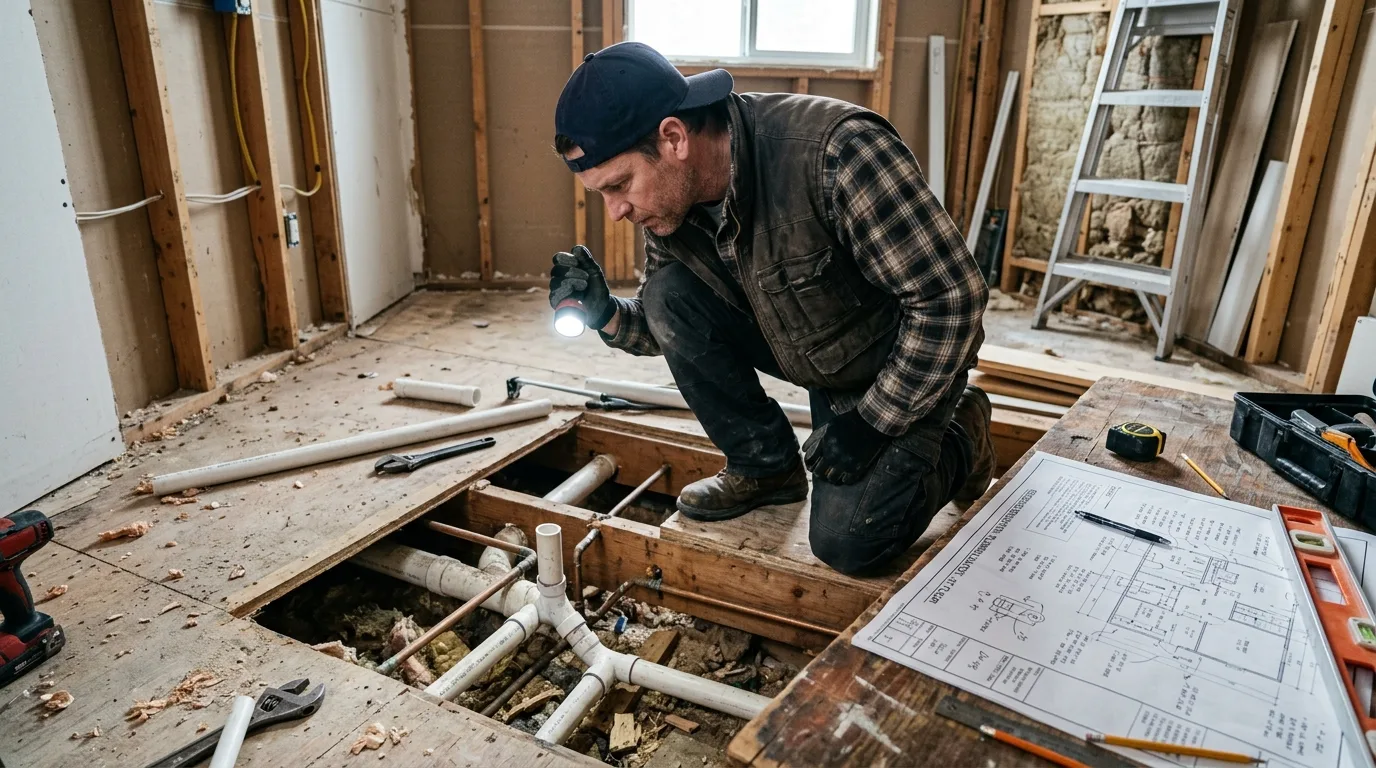
That is the single most important fact for anyone working on these houses. In a tract home everything is the same age and fails predictably. In a layered house, the pipe itself may be perfectly sound, and the failure happens at the point where a 1960s galvanized stub meets 1980s copper, or where a 1990s CPVC repair was tied into something older with whatever fitting was available.
Dissimilar metals are the classic version. Galvanized steel in direct contact with copper sets up galvanic corrosion at the joint, and the connection eats itself from the inside. Done properly, that transition needs a dielectric union or a brass intermediary. Done quickly, it works fine for a decade and then fails.
The other layered-house issue is undocumented work. Lines that were capped and abandoned, runs rerouted during a remodel, and shut-offs that no longer control what someone once labeled them as. Diagnosing a house like this means mapping what is actually there rather than assuming a standard layout.
Outside, the picture is more consistent: mature trees, established landscaping, and laterals that are frequently clay in the older sections. Roots find clay joints, and Orange Heights has plenty of both.
Outside the house
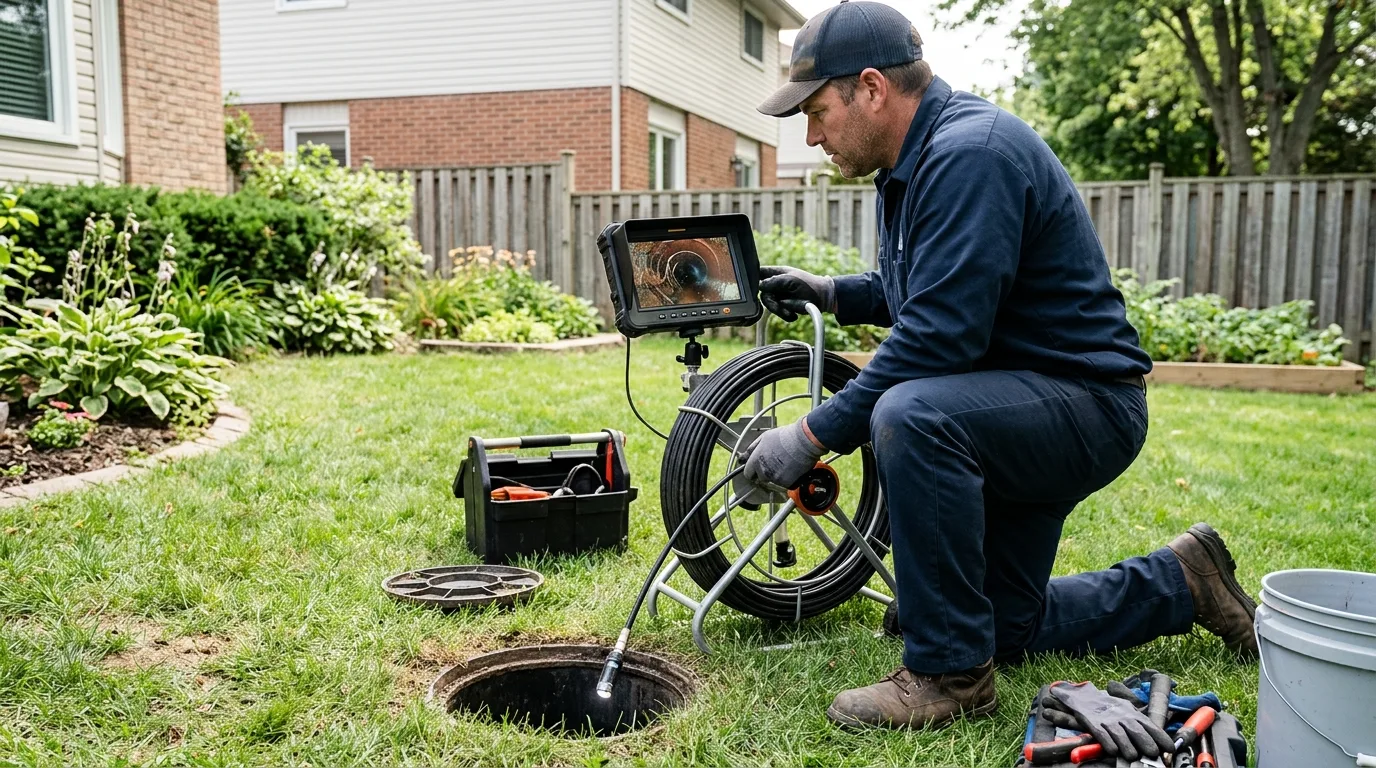
Root intrusion in a jointed clay lateral is the most predictable sewer problem in older Corona, and Orange Heights has the conditions for it in abundance: clay pipe with joints every few feet, and trees planted when the houses were new that now have root systems to match.
A camera answers one question: is the pipe still sound. If roots have matted at a joint but the clay either side is intact, you own a maintenance schedule, not a repair. Jetting on an interval set by the footage handles it, and on these grove-era streets that interval is usually shorter than the generic advice suggests.
In the second, the pipe is damaged: joints offset, sections cracked, or a belly where the line has lost its fall and now holds water. Cleaning a line in that condition buys months. The honest answer is repair or replacement, and the question becomes how to do that without trenching a mature front yard.
Where the pipe is not sound, what you are really pricing is the yard. Trenchless repair works from two small pits instead of a trench, which on a lot with seventy-year-old planting, a mature root plate and a concrete drive is frequently the cheaper job once restoration is counted. We price the dig and the make-good as separate lines so that comparison is visible rather than buried.
Neither is right for every situation. A fully collapsed line or one with severe offsets may need conventional excavation. The point of the camera is to know which category you are in before anyone commits to an approach.
Common calls
Layered materials inside, mature trees outside.
01
Galvanized meeting copper without dielectric separation, and improvised repair joints from past remodels. Corrosion concentrates at the join.
02
Clay pipe with jointed connections under mature trees. Camera first to distinguish a maintenance interval from actual pipe damage.
03
Original waste stacks that have scaled rough inside and lost the bottom of the pipe. Cabling clears the symptom for a month at a time.
04
Pressure that has faded over years, hot side worse, and rusty water on the first draw after a weekend away. Patching one section moves the problem along.
05
Abandoned lines, rerouted runs, and shut-offs that no longer control what they appear to. Mapping precedes diagnosis.
06
A wide range of ages and installation standards, often in garages or service porches with venting and strapping that predate current requirements.
How we work
Mapping the house is the first real step.
Build year, what has been remodeled and when, previous plumbing work, and any recurring problems. This shortens diagnosis substantially.
Supply, waste, and each transition between them. In a layered house, knowing what meets what is most of the diagnosis.
On any repeat backup. The footage distinguishes root intrusion in a sound pipe from structural damage that cleaning will not fix.
Static and flowing at the hose bib. High pressure on old piping and mixed transitions is a failure risk, not just a wear issue.
Repair, trenchless, or replacement, including when patching is the wrong purchase and why.
Access planned before cutting, pressure held on completed work, drains camera-checked after clearing, and photographs provided.
Mixed
Build years and pipe materials
Clay
Common lateral material in older sections
Camera
Standard on any repeat drain issue
24/7
Dispatch across the area
Local conditions
Mature trees. The defining outdoor factor. Established root systems over jointed clay laterals produce recurring sewer problems, and they also make excavation expensive to restore. Both facts push in the same direction: camera first, trenchless where suitable.
Hard water on old pipe. Fifteen to twenty grains compounds every problem galvanized piping already has, and it scales water heaters, fixture cartridges, and valve seats. In a house with mixed materials it also accelerates corrosion at transitions, which are already the weak point.
Pressure. Orange Heights sits comparatively low in the city elevation profile, which generally means higher static pressure. On modern plumbing that is a wear issue; on older supply piping and improvised transitions it is a genuine failure risk. A working regulator matters more on an older house, not less.
Foundations. A mix of raised and slab construction depending on era and whether a property has been added to. Raised foundations make leak location and repiping dramatically easier; where there is slab, the usual slab leak considerations apply. Establishing which you have is step one.
Irrigation history. Generations of grove and landscape watering leave the soil around buried lines permanently damp, which corrodes metallic service pipe from the outside in. Add decades of other trades digging across the same yards and buried pipe here has had a harder life than its age suggests.
Orange Heights
Once is bad luck. Twice on the same line means something down there is not going to clear itself.
Answered 24/7 · upfront pricing before any work
Full service list
Orange Heights
Mature trees over jointed laterals is the most predictable sewer problem in Corona. A camera tells you which version you have.
Independent local contractors · workmanship guarantee on completed work
Orange Heights FAQs
Almost certainly roots. The laterals here are jointed clay, and the grove and street trees that make these lots pleasant have root systems that find every joint eventually.
A camera inspection distinguishes between roots in a structurally sound pipe, which is a maintenance interval, and actual damage like offsets, cracks, or a belly holding water, which cleaning will not fix.
Often, yes. Lining installs a new pipe inside the old one from access points at either end, and pipe bursting pulls a new line through the existing path. Both avoid a trench through mature landscaping.
Neither suits every case, a fully collapsed line or severe offsets may need excavation. The camera establishes which category you are in first.
Copper and galvanized steel in contact form a small battery, and the steel side corrodes from the inside out until the joint closes up or weeps. A dielectric fitting keeps the two metals apart so that reaction never starts.
In houses with layered remodel history, these transitions are extremely common and frequently were not done properly. It is one of the first things we look for.
If your house still has original galvanized supply, that is the signature: pressure that worsens over years, worse upstairs, and worse on hot water because heat accelerates the corrosion.
Confirm with a gauge. If static pressure at the hose bib is fine but flow inside is poor, the restriction is your piping rather than the supply.
It is durable and it does not last forever. Cast iron scales internally into a rough surface that catches waste and corrodes from the bottom of the pipe upward until the invert is gone.
Repeat backups in a house of this age warrant a camera. Lining is often possible, which is far less disruptive than replacement.
In Orange Heights it depends on the era and whether the house has been added to, both exist in the neighborhood, sometimes in the same building.
It matters a great deal for diagnosis. A crawlspace makes leak location and repiping much easier; a slab means different methods and different costs. We establish it before diagnosing anything under the floor.
If the failures are at transitions in otherwise sound piping, targeted repairs done properly are reasonable and durable. If the underlying pipe is original galvanized, repairs are postponing rather than fixing.
We will tell you which situation you are in and show you what we based it on. There is a real difference between a house with bad joints and a house with bad pipe.
Yes. Dispatch is answered 24 hours a day, with emergency response for active leaks, burst lines, and sewage backups at any hour.
For a sewage backup, stop using water in the house immediately, every fixture adds to what is coming back up. Then call.
No. Roots enter through joints and cracks that are already open, and a stump does not close them. Removing the tree also does not remove the root mass already in the pipe.
The fix is at the pipe: clear it, camera it, then decide between spot repair, lining, or replacement based on what the footage shows. Cutting a mature tree solves nothing and costs a mature tree.
Standing water or damp soil, white or green crust on copper, rust flaking off galvanized branches, drain lines that have sagged out of fall, and insulation that has been pulled apart by rodents.
A sagging waste line is the one people miss. It holds water, collects solids, and produces recurring slow drains that no amount of cabling resolves until the fall is corrected.
Orange Heights · 92879
We identify what meets what before quoting, because that is where the problem almost always is.
Dispatch answers 24/7 · same-day and emergency response available