01
Tankless scale and faults
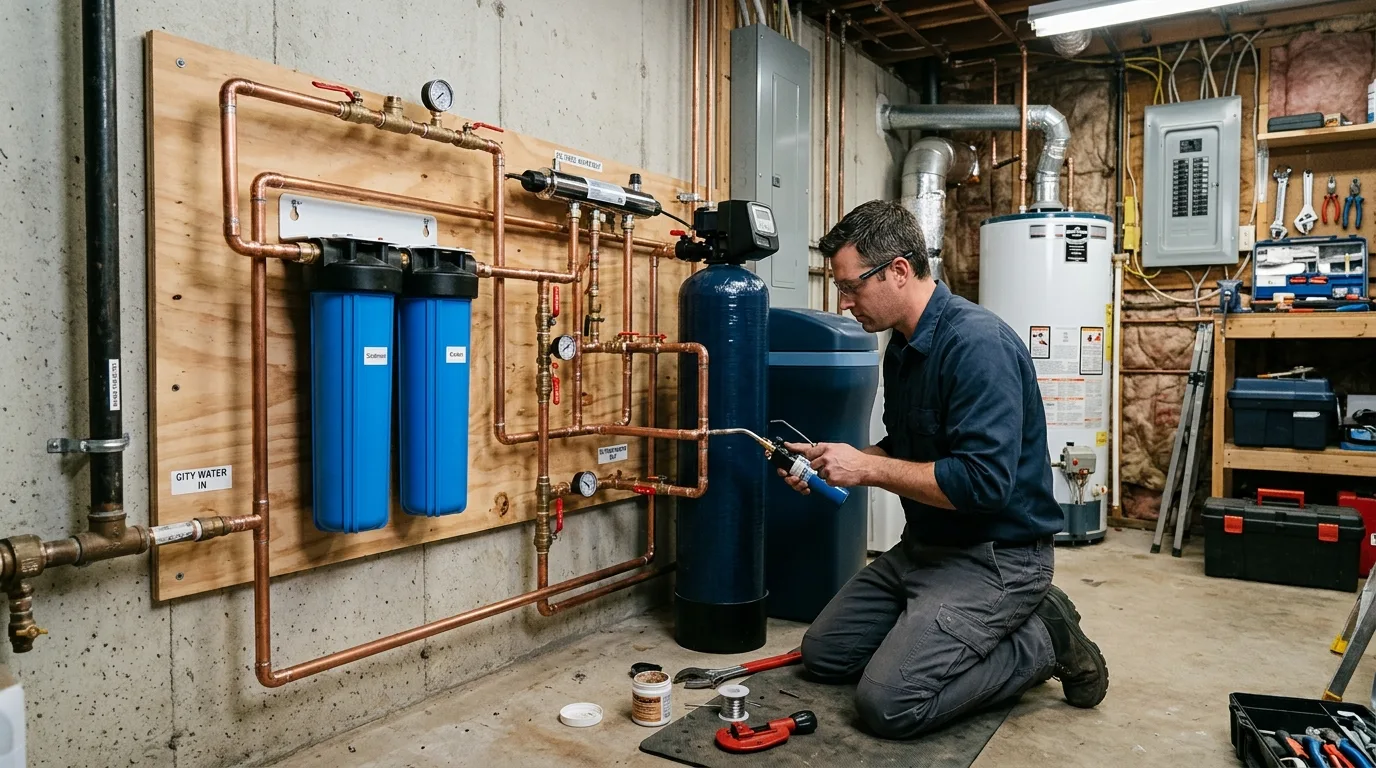
Original builder-fitted units now well past their first decade, most never opened. Codes, wandering temperatures and dropping flow, all from the exchanger.
Sycamore Creek · 92883
Newer construction in the heart of the Temescal Valley, which means the hardest water in our service area meeting equipment that has never been treated for it.
Answered 24/7 · newer-build faults, warranty-safe servicing
The neighborhood
Sycamore Creek is a 2000s master-planned community on the valley floor, and by the standards of our service area the housing is practically new. Slabs, plastic supply, plastic waste, correct venting, and equipment that was all specified within a couple of years of each other.
Which means the problems here have almost nothing to do with age and almost everything to do with water chemistry. The Temescal Valley draws on local basin groundwater, and the hardness figures in this part of the service area sit at the top of the range, commonly fifteen to twenty grains per gallon and sometimes higher depending on the blend at any given time.
For context, water above ten grains is generally classified as very hard. What that means practically is that every piece of water-using equipment in a Sycamore Creek home is operating in conditions considerably more aggressive than the manufacturer’s testing assumed.
The consequences arrive in a predictable order. Water heaters accumulate sediment and lose capacity. Tankless heat exchangers scale and start faulting. Fixture cartridges wear early and shower valves seize in their bores. Dishwashers and washing machines fail at their solenoids. Ice makers and coffee systems fur up. Glassware never quite looks clean and neither does the shower glass.
None of that is a defect in the house. It is a water treatment gap, and it is the single most consequential plumbing decision a homeowner in this valley makes.
The main decision
A water softener in this valley is not a luxury upgrade; it is the difference between equipment reaching its rated service life and reaching half of it. The economics are much better than the usual sales pitch suggests, because the pitch talks about soap and towels while the real return is in replacement cycles.
The thing worth understanding about a tract like this is that the equipment ages together. The heaters, softeners, angle stops, supply hoses and toilet fill valves went in within a year or two of each other, so they reach the end of their service life within a year or two of each other as well. Ten to fifteen years in, a street starts producing the same call in sequence.
Undersized, a unit regenerates constantly, wasting salt, wasting water, and delivering inconsistent softness between cycles. Oversized, it regenerates too infrequently, and resin that sits unused for long periods loses efficiency. Correctly sized, it regenerates on a sensible interval and you never think about it beyond adding salt.
The other decisions worth getting right: whether to soften the whole house or leave outside hose bibs and irrigation on raw water, which is usually sensible; whether to leave a hard cold tap at the kitchen sink for drinking, which some households prefer; and whether to pair softening with filtration for chlorine and taste, which addresses a different problem entirely and is often bundled without being explained.
Salt-free conditioners are worth mentioning honestly. They do not remove hardness; they alter how minerals crystallise so they are less likely to adhere. For scale prevention in pipes and heaters they have real value. For soap performance, spotting, and the feel of the water, they do not do what a softener does. Both are legitimate; they solve different problems and should not be sold interchangeably.
Common calls
New housing, aggressive water.
01
Original builder-fitted units now well past their first decade, most never opened. Codes, wandering temperatures and dropping flow, all from the exchanger.
02
Units too small for the household regenerating constantly, exhausted resin beds, and bypass valves left in place from years ago and forgotten.
03
Sediment on the tank bottom insulating the burner from the water. Shows up as less hot water and higher gas use before it shows up as a failure.
04
Early wear and scaled valve bores. A cartridge that seizes in its bore turns a small repair into a wall opening.
05
Builder-grade PRVs in the older parts of the community reaching end of life, with seats scaled by hard water.
06
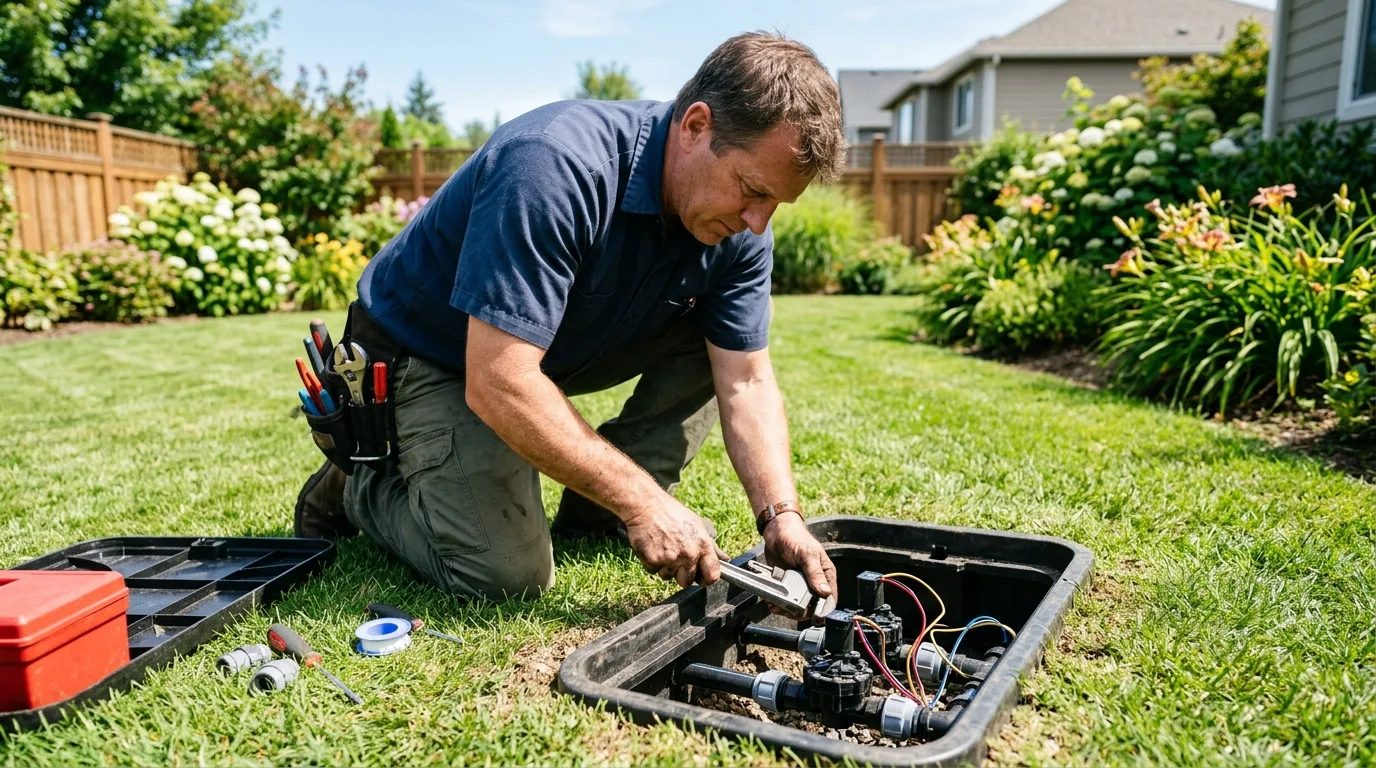
Extensive landscape systems with drip emitters and misting nozzles that scale closed, plus pressure-driven component failure.
How we work
The water test comes first because it explains most of the list.
A reading at your tap, plus raw-versus-treated where a softener is fitted, because a bypassed unit and no unit at all look identical from the kitchen.
Gauged at the hose bib. When a fifteen-year-old house keeps losing small parts, the answer is nearly always pressure or chemistry rather than bad luck.
Age and type of heater, the tankless error log if there is one, how the softener is programmed and what shape the resin is in, and when the filter cartridges were last changed.
Meter watched with the house shut down, then again with the irrigation valved out. Builder-installed drip systems hide a loss for months.
Where treatment is the answer, sized from your measured hardness and household use rather than from a default.
Every joint pressure-tested, the tankless taken through a full heating cycle, softener programming confirmed against your actual use, and hardness re-read at the tap afterwards.
15–20+ gpg
Typical valley hardness
10 gpg
Threshold for "very hard" water
Annual
Tankless descaling interval here
24/7
Dispatch across Temescal Valley
Local conditions
Groundwater source. The Temescal basin’s geology contributes dissolved calcium and magnesium, and local groundwater carries a higher mineral load than imported surface supply. Depending on the blend at any given time, valley readings sit at or above the top of the range seen elsewhere in the service area.
What that does to tankless units. A tank heater accumulates sediment on its bottom and keeps working badly for years. A tankless unit heats water through a narrow heat exchanger, and mineral inside that exchanger directly reduces heat transfer and restricts flow. The unit fires harder to compensate, efficiency falls, and eventually it faults. Annual descaling is the entire maintenance requirement and most manufacturers make it a warranty condition.
Pressure. Worth measuring at every address. The valley has meaningful elevation variation, and static pressure above the 80 psi code limit shortens the life of every seal and valve in the house. It is also the reason irrigation components fail repeatedly.
Slab and soil. Slab-on-grade throughout, with the region’s expansive soil behavior. Slab leaks are less frequent in newer piping than in fifty-year-old copper, but the mechanism exists and the diagnostic rule is the same, locate precisely, open concrete once.
What is genuinely in your favour. Nothing here is made of cast iron or clay, the venting was inspected to a current code, and the laterals are young enough that roots are not yet a theme. That removes most of the expensive categories of plumbing problem. What is left is chemistry and wear, both of which are predictable and both of which have a fix that is not a surprise.
Sycamore Creek
At valley hardness, an unserviced heat exchanger is losing efficiency every month and heading toward a fault code.
Answered 24/7 · upfront pricing before any work
Full service list
Sycamore Creek
Everything downstream of your meter is being sized and serviced against a number nobody has measured. It takes two minutes.
Independent local contractors · workmanship guarantee on completed work
Sycamore Creek FAQs
Commonly fifteen to twenty grains per gallon and sometimes higher depending on the supply blend. Anything above ten grains is classified as very hard, so this is at the aggressive end.
It is worth having the actual number at your tap rather than relying on a general figure, because sizing treatment equipment correctly depends on it.
For most households in this valley, yes, and the strongest argument is equipment life rather than laundry. Softened water extends the life of tankless units, tank heaters, fixture cartridges, shower valves, and appliance internals.
The return shows up in replacement cycles you never have to pay for, which is less visible than soft towels but considerably more valuable.
It is calculated from your measured hardness and your household water use, which together give a grain capacity requirement.
Too small and it regenerates constantly, burning salt and water for uneven results. Too large and the resin sits idle between cycles and loses efficiency. Either way the builder-standard unit fitted to every house on the street was sized for none of them in particular.
They are legitimate but they solve a different problem. A conditioner alters how minerals crystallise so they adhere less readily, which genuinely helps with scale in pipes and heaters.
What it does not do is remove hardness, so soap performance, spotting, and the feel of the water are unchanged. Both technologies have a place; they should not be sold interchangeably.
Annually at this hardness, and some heavy-use households benefit from more often. Mineral builds inside the heat exchanger, reducing heat transfer and restricting flow until the unit faults.
Skipping it can also void the warranty, which is the part people find out about late. With isolation valves fitted the service is a two-hour visit.
Usually not. Plants do not benefit from softened water and it adds unnecessary salt use, so irrigation and hose bibs are normally tapped upstream of the softener.
Some households also keep one hard cold tap at the kitchen sink for drinking. It is a preference, and worth deciding before the installation rather than after.
Yes, and it is the most visible symptom of hardness. Mineral deposits left as water evaporates are what you are seeing, and no amount of cleaning product addresses the cause.
A softener eliminates it. A conditioner reduces scale in the plumbing but will not fix spotting, which is worth knowing before choosing between them.
Yes, as normal service area with dispatch answered 24 hours a day, same-day service where the schedule allows, and emergency response at any hour.
We cover Sycamore Creek, Dos Lagos, and the wider Temescal Valley alongside Corona itself.
Brine discharge needs an air gap at a standpipe, laundry box, or approved connection, and there are limits on how far and how high it can be run before the unit struggles to push it.
It can be relocated, but it is plumbing work rather than a hose repositioning. Getting the drain and the bypass right at installation is most of what separates a unit that works for years from one that becomes a nuisance.
Only in that the two systems must stay strictly separate. Recycled supply runs in purple pipe with its own valves and is not connected to household plumbing at any point.
What matters for a homeowner is not creating a cross-connection during irrigation work, and keeping any required backflow assembly tested. A plumber working on your irrigation should know which system each line belongs to before cutting anything.
Sycamore Creek · 92883
Hardness measured at your tap, equipment sized to your household, and tankless units serviced on the interval this water actually demands.
Dispatch answers 24/7 · same-day and emergency response available