01
Slab leaks
The 1960s and 70s tracts, with copper in fifty-year-old concrete. Usually announced by a warm patch of floor or a bill nobody can explain.
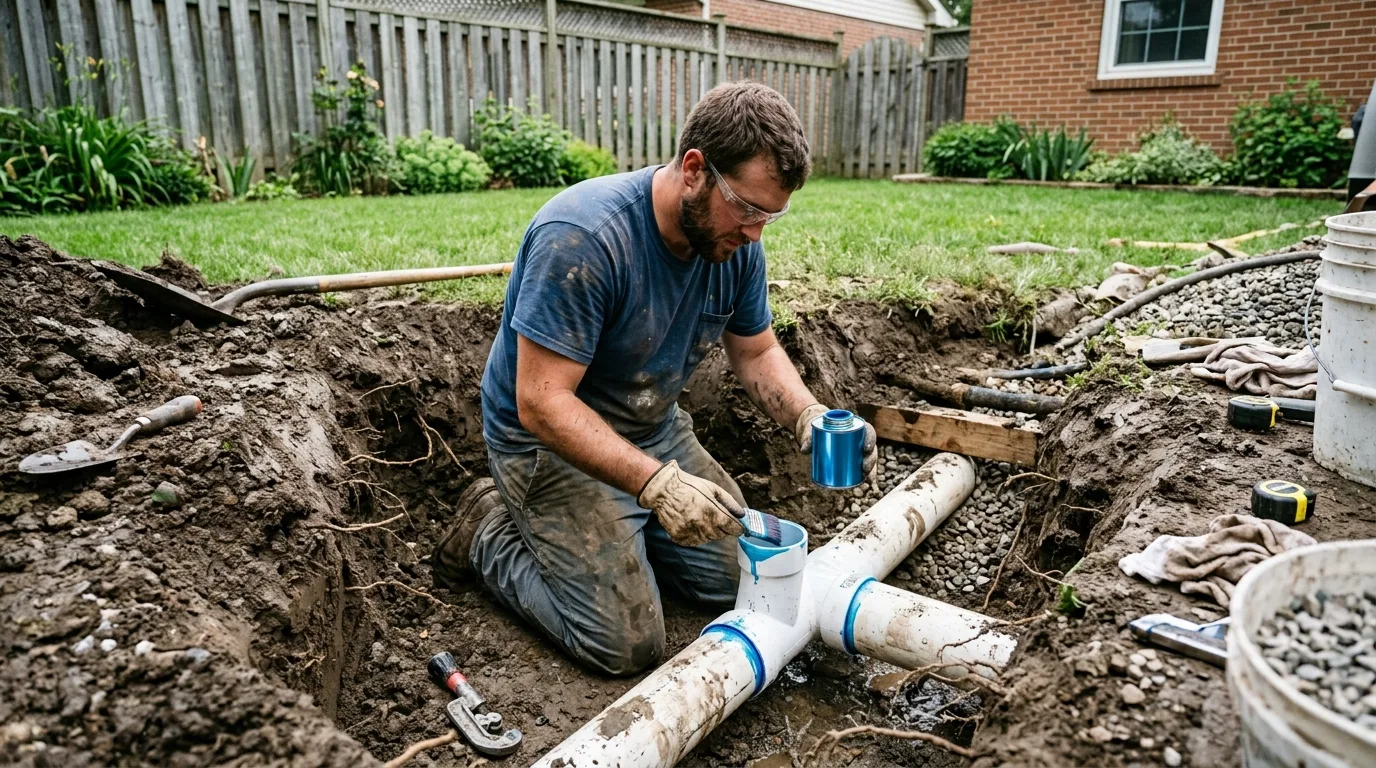
Chino · 91708 / 91710
A city with genuine agricultural roots and a housing stock that spans mid-century tracts through new development. The old dairy land underneath still shapes what happens to buried pipe.
Answered 24/7 · we cover the San Bernardino County side
The city
Chino built its identity on agriculture, dairy in particular, and while much of that land has been developed, the history still matters to plumbing. The city has mid-century residential tracts, older properties on larger parcels with agricultural infrastructure, extensive newer development, and industrial and commercial areas alongside.
The result is a wider range of conditions than a purely suburban city. On one call the housing is a 1960s slab tract with copper supply; on the next it is an older property on acreage with a long service line, legacy irrigation, and outbuildings; on the next it is construction from the last fifteen years where the issues are hardness and builder-grade components.
What ties the older parts together is buried infrastructure on developed farmland. Ground that has been graded, filled, and irrigated for a century behaves differently from undisturbed soil. Expansive clay content is typical of the region and moves with moisture, stressing rigid pipe in and beneath slabs. Legacy irrigation lines and abandoned stubs are occasionally still in the ground, and previous trenching leaves disturbed fill that settles unevenly.
Mid-century tracts bring the familiar slab-era story: copper supply in or under concrete, now fifty to sixty years old, producing slab leaks that are invisible until a warm floor spot or an unexplained bill announces them.
Older sections may have cast iron waste and clay laterals with the root intrusion that always accompanies jointed pipe under mature trees.
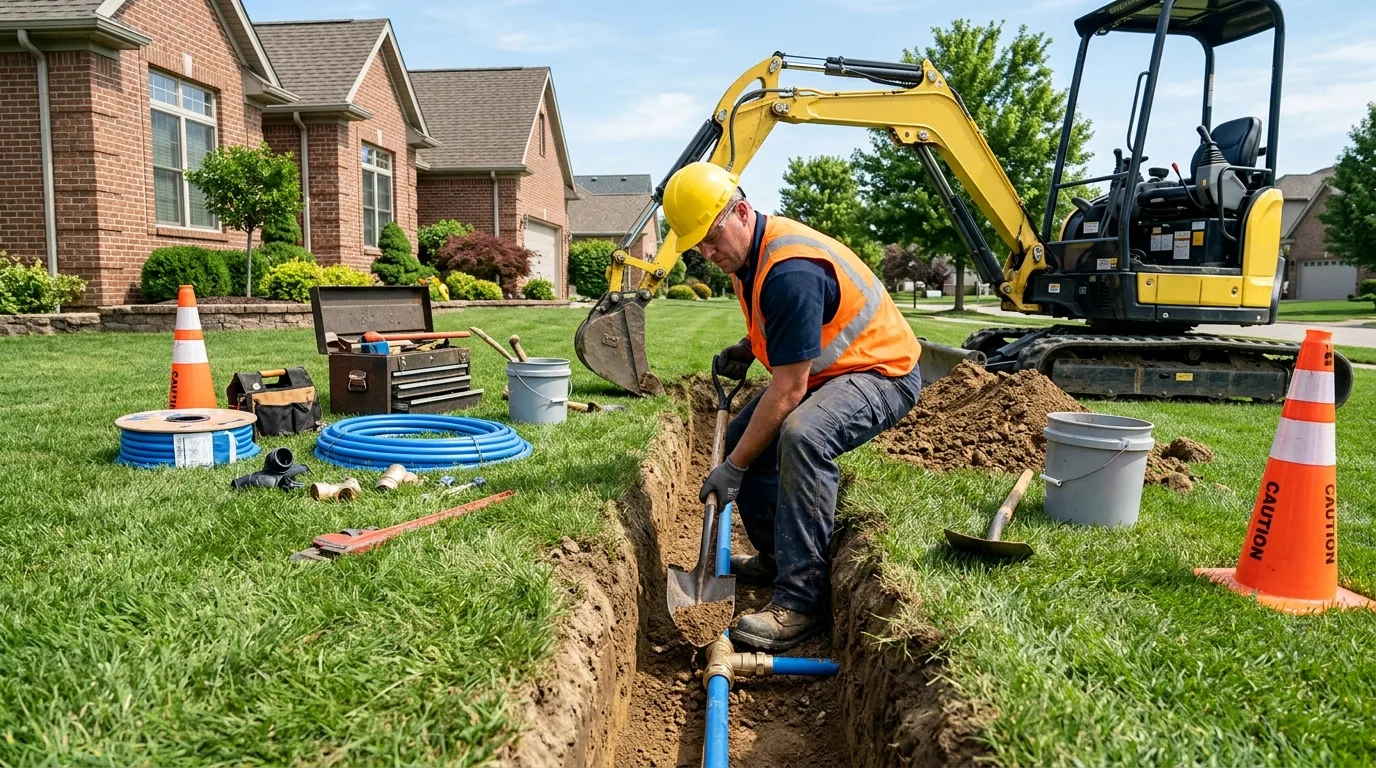
Old farmland
Chino was dairy and row-crop land for a century before most of it was houses, and the ground remembers. That is not sentiment, it is a diagnostic advantage: on an older Chino parcel the likely faults are different from the ones on a purely suburban street, and knowing the history shortens the search.
Abandoned lines are still down there. Irrigation mains, stand pipes, stock-water runs and capped stubs were routinely left in place when parcels were subdivided. They turn up during excavation, they confuse locating equipment, and occasionally one is still connected to something it should not be. Where the property history suggests it, we look for cross-connections into the potable supply rather than assuming the previous owner sorted it out.
Fill settles unevenly. Land that was graded and trenched repeatedly leaves pockets of disturbed fill that compact at their own pace. A service line laid across that ground is being bent slowly, which is why rigid pipe here fails in the middle of a run rather than at a fitting.
A century of irrigation changes the soil. Expansive clay that has been wetted and dried for decades moves with every season, and buried metallic pipe in permanently damp ground corrodes from the outside in. Both are slow, invisible, and cumulative.
Outbuildings complicate the meter test. Barns, workshops, second dwellings and paddock hydrants are frequently fed by their own branches, sometimes with no isolation valve. Finding a loss on this kind of parcel means isolating branch by branch instead of reading one gauge, and that is the difference between one excavation and three.
For the slab-era tracts, the diagnosis and the repair-versus-reroute arithmetic are the same as anywhere else in the region, and our Central Corona page sets that out in full. The Chino difference is everything outside the footprint of the house.
Common calls
A broad list, driven by the spread of eras and lot types.
01
The 1960s and 70s tracts, with copper in fifty-year-old concrete. Usually announced by a warm patch of floor or a bill nobody can explain.
02
Clay laterals in older sections under mature trees. Camera first to separate a maintenance interval from actual damage.
03
Internal scaling and invert corrosion producing repeat backups. Lining is often possible and far less disruptive than replacement.
04
Acre-plus parcels where the meter is a long way from the house and branches run off to outbuildings. Isolated branch by branch before anyone digs.
05
A wide range of ages and installation standards, many with strapping and venting that predate current requirements.
06
Newer construction where equipment and fixtures wear early. Treatment sized to measured hardness is the response.
How we work
On an old farm parcel the sequence is what keeps this to one hole in the ground.
Build era, lot size, foundation type, and any agricultural or legacy infrastructure. This shapes where the problem is likely to be.
Everything off inside, the low-flow indicator watched, then the house main closed so indoor and outdoor losses can be told apart.
Acoustic, thermal, pressure isolation and tracer gas as the ground requires. On disturbed fill the equipment earns its keep.
On any repeat backup. The footage separates root intrusion in sound pipe from structural damage cleaning will not fix.
Repair, reroute, trenchless or repipe, priced separately from access and restoration so you can see which half the money is going to.
Pressure held, the meter re-read with everything off, ground and hardscape put back, and photographs of anything now buried.
1950s–now
Tract eras across the city
2+
Failures before a reroute pays
Camera
Standard on any repeat drain issue
24/7
Dispatch across Chino
Local conditions
Developed agricultural land. Ground that was farmed and irrigated for a century has been graded, filled, and disturbed, and it does not behave like undisturbed soil. Uneven settlement stresses buried pipe and slabs, and legacy infrastructure occasionally surfaces mid-job. Knowing the property history genuinely helps.
Expansive soils. Typical of the region, swelling and shrinking with moisture and moving slabs with them. That movement is one of the mechanisms by which embedded copper abrades and eventually perforates.
Hard water. Regional hardness in the fifteen to twenty grain range does the usual work, sediment in water heaters, scale on fixture cartridges and shower valve bores, mineral on regulator seats. In newer Chino construction it is the primary driver of early equipment failure.
Pressure. Worth measuring at every address. Above the 80 psi code limit, every seal and valve in the house wears faster and supply lines are more likely to let go unattended. A gauge on a hose bib is the cheapest diagnostic available.
Mature trees in older sections. Established root systems over jointed clay laterals produce recurring sewer problems and make excavation expensive to restore. Both point toward camera inspection first and trenchless replacement where the line is a candidate.
Chino
That is the classic slab leak sign. Located properly, the repair is a modest opening rather than a demolished floor.
Answered 24/7 · upfront pricing before any work
Full service list
Chino
When multiple fixtures are slow at once, the problem is the main rather than the fixtures. A camera settles it.
Independent local contractors · workmanship guarantee on completed work
Chino FAQs
Yes, as normal service area. Chino, Chino Hills, and the surrounding communities are covered alongside our Riverside County work.
Someone picks up at any hour, same-day where the day allows it, and for a burst line we dispatch whoever is closest to the Chino end of the run.
Warm spots on the floor, the sound of running water with everything off, an unexplained rise in the water bill, or damp and a musty smell near the base of a wall.
Confirm it with the meter: everything off inside, and watch the low-flow indicator. If it moves with nothing running, water is escaping somewhere.
No. Proper location puts the leak in a small area, and the opening is typically a modest square rather than a trench across a room.
People fear this because guessing leads to repeated cutting. We locate acoustically and with pressure isolation, thermal imaging, or tracer gas before anything is opened.
Spot repair makes sense when the piping is otherwise sound and this is a first failure. It is quicker, cheaper, and less disruptive.
Reroute makes more sense after a second failure or where more are likely. It abandons the line in the slab and runs new pipe overhead, removing that run from the concrete permanently.
It can, and it is worth mentioning when you call. Abandoned lines, legacy irrigation, and old valves change what we test and occasionally turn out to be the source of the problem.
Where a parcel still carries irrigation or dairy-era pipework, a cross-connection into the potable supply is a real risk, and the property history tells us whether to go looking for one.
In older sections, roots in jointed clay laterals under mature trees. It is the most predictable sewer problem in any established neighborhood.
The camera is what separates a maintenance problem from a structural one: roots in otherwise sound pipe means an interval, while an offset, a crack or a belly means cleaning will never hold.
Not immune, just different. Newer construction here fails on water chemistry and builder-grade components rather than on pipe age.
Hardness of fifteen to twenty grains and static pressure above code both wear fixtures and equipment faster than manufacturers assume. Both are measurable and fixable.
Yes, including trenchless methods. Lining installs a new pipe inside the old one from access points at either end, and pipe bursting pulls a new line through the existing path.
Both avoid a trench through landscaping and driveways. A camera inspection establishes whether your line is a candidate before anyone commits.
Almost always. Work in the public right of way, and any lateral replacement to the main, is permitted and inspected, and encroachment approval may be needed if the trench crosses the street or sidewalk.
The contractor who takes the job pulls the permit and schedules the inspection. Ask to see it. Unpermitted lateral work surfaces later during a sale, and by then it is expensive to put right.
Air and disturbed sediment. Main work pushes both into the branch lines, and the debris lands in aerators, angle stops, and fill valves, the narrowest places in the system.
Running the outside hose bibs wide open for several minutes flushes the bulk of it before it reaches fixtures. Aerators can then be pulled and rinsed. If pressure stays uneven afterwards, something has partly blocked and is worth looking at.
Chino · San Bernardino County
Diagnosis before demolition, honest options on repair versus replacement, and response that actually covers this side of the line.
Dispatch answers 24/7 · same-day and emergency response available