01
Long waits for hot water
Distance, not capacity. Solved with recirculation configured and controlled properly, or a point-of-use unit for an outlying wing.
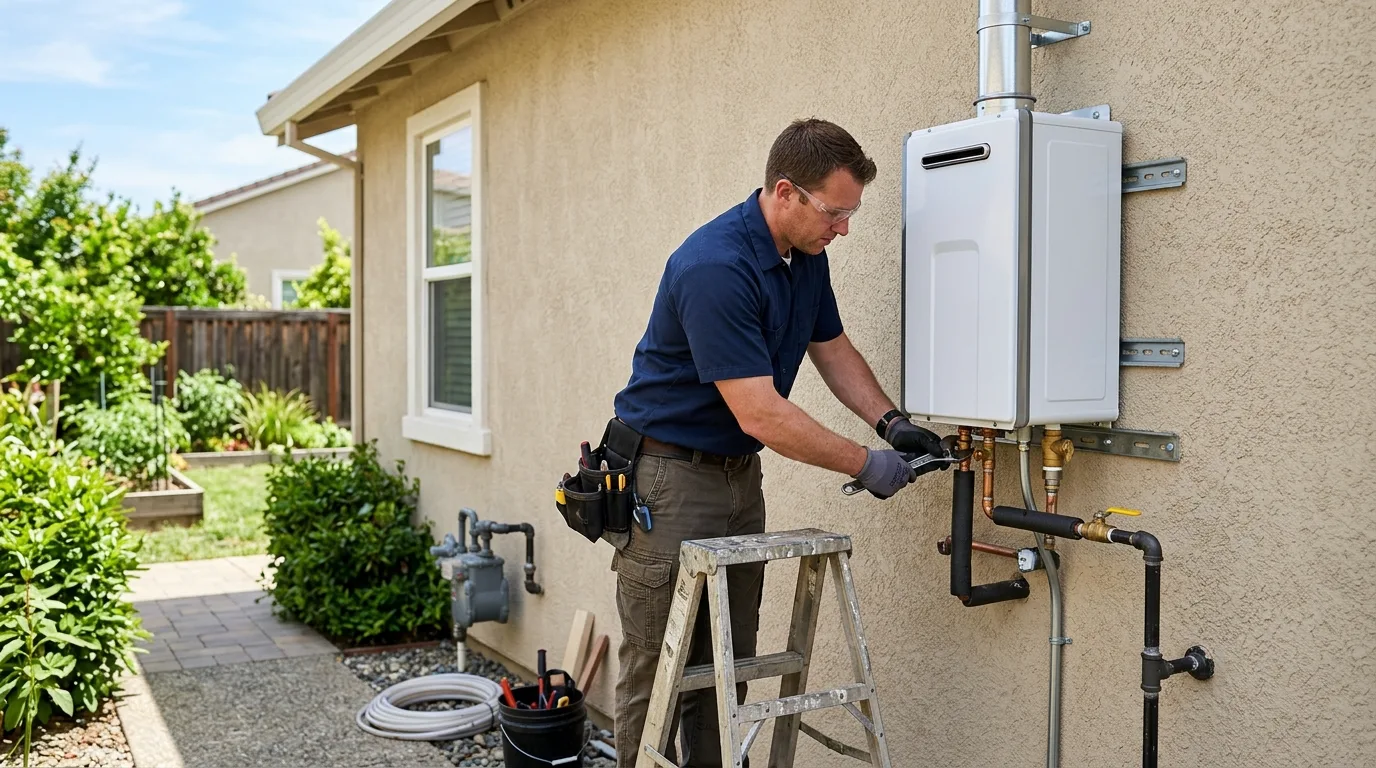
Eagle Glen · 92883
Larger homes with long hot water runs, extensive irrigation, and equipment that hard water treats unkindly. Eagle Glen’s plumbing problems are about scale and distance more than age.
Answered 24/7 · tankless service, softeners, and recirculation
The neighborhood
Eagle Glen was built from the late 1990s into the 2000s around the golf course in south Corona, and the housing is generally larger than the city average, bigger floor plans, more bathrooms, more fixtures, and substantially more landscape than a standard tract lot.
Size changes the plumbing brief in ways people underestimate. A large single-story or sprawling two-story floor plan means long runs from the water heater to the furthest fixture, and long runs mean waiting. The water sitting in a fifty-foot pipe has to be pushed out before hot arrives, and that is water down the drain every single time somebody uses a distant bathroom.
The instinct is to blame the water heater. Usually the heater is fine, the problem is geometry. The real solutions are a properly configured recirculation system, or in some cases a point-of-use unit serving a distant wing. Both work; a bigger heater does not.
The second characteristic is equipment density. Larger homes here typically have more of everything that hard water damages: multiple water heaters or a high-output tankless unit, water softeners, filtration, ice makers, multiple dishwashers in some cases, and irrigation systems covering substantial ground. Each is a maintenance item, and at fifteen to twenty grains of hardness they all age faster than their manuals assume.
The build era means slab-on-grade, copper or PEX supply, and ABS drains. Original builder-grade components, pressure regulators in particular, are now at or past the age where failure is expected.
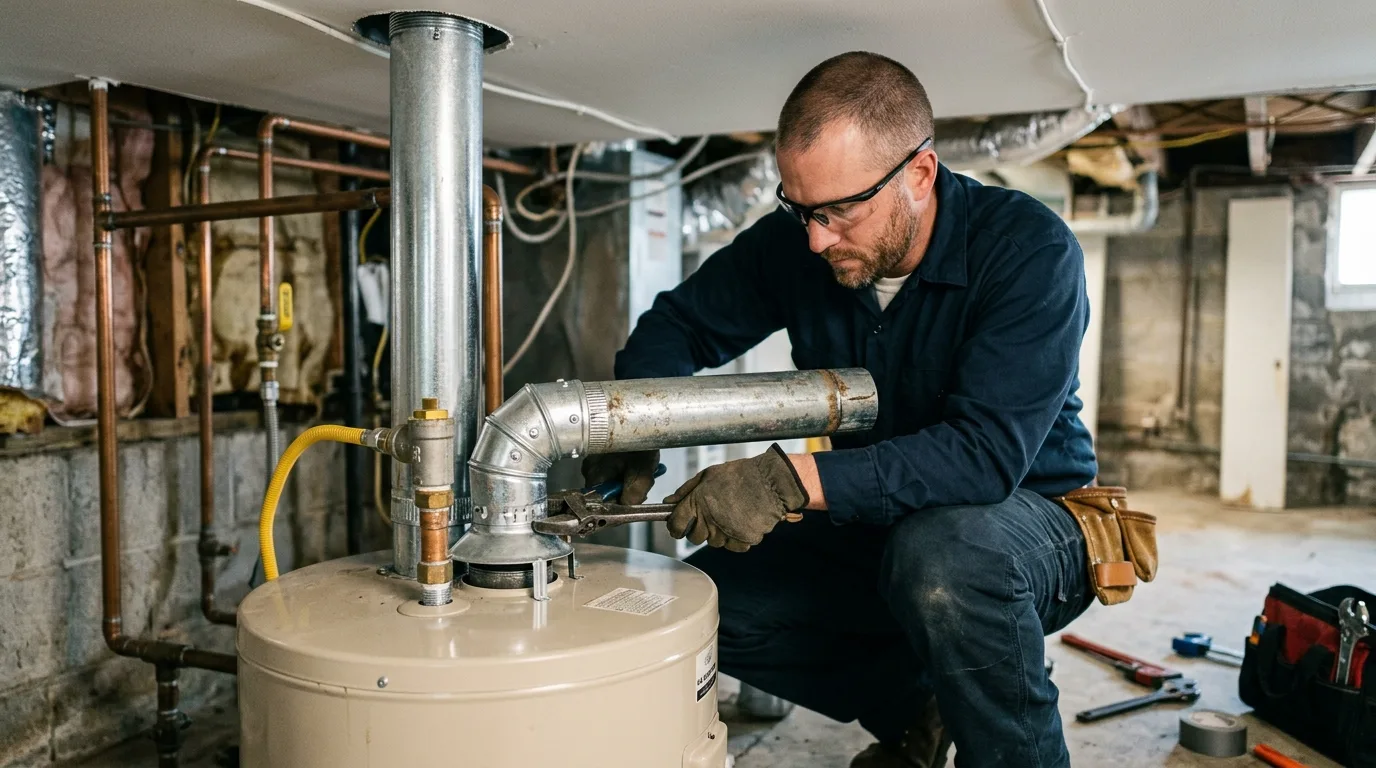
Hot water
A recirculation system keeps hot water moving through the supply loop so it is available at the fixture almost immediately. On a large floor plan it is the single upgrade with the most noticeable day-to-day effect, and it saves a meaningful volume of water over a year.
There are two common arrangements. A dedicated return line is the better version: a separate pipe carries water from the far end of the loop back to the heater, and the pump circulates continuously or on a schedule. It is efficient and quiet. It requires that return line to exist, which means it is easiest to install during construction or a remodel.
A comfort valve arrangement uses the cold line as the return via a thermostatic crossover valve under the furthest fixture. It retrofits without new pipe, which is its whole advantage. The trade-off is a period of lukewarm water at the cold tap on that branch, which some households never notice and others dislike.
What matters more than the type is the control. A pump running continuously wastes energy and, on a tankless system, can cause short-cycling that shortens equipment life. Timers matched to household patterns, aquastats, or on-demand buttons at the point of use all reduce that considerably. A recirculation system installed without thought about control is an energy problem wearing a convenience costume.
On tankless, there is one further requirement: the unit must be specified as recirculation-compatible, and ideally have a built-in buffer. Pairing a standard tankless heater with a continuously running loop is a known way to age it prematurely.
Common calls
Larger homes, more equipment, and hard water on all of it.
01
Distance, not capacity. Solved with recirculation configured and controlled properly, or a point-of-use unit for an outlying wing.
02
Error codes, temperature swings, and reduced flow from an unserviced heat exchanger. Annual descaling is the whole maintenance requirement here.
03
Units too small for the household regenerating constantly, resin beds past their life, and bypasses left in place from years ago and forgotten.
04
Builder-grade regulators from the original construction reaching end of life. The symptoms appear as fixture failures long before anyone checks the valve.
05
Slab-on-grade throughout. Located with acoustic, thermal, and pressure methods before any concrete is opened.
06
Extensive landscape systems on large lots. A cracked supply line runs continuously and is nearly invisible in an irrigated yard.
How we work
Sizing and service history matter more than they do on a small house.
Floor plan, fixture count, heater location, and the distance to the furthest outlet. On a large home this is what explains most hot water complaints.
Static and flowing at the hose bib. Repeated fixture failures on a house of this age almost always trace to an original regulator.
Heater type and age, tankless service history and error log, softener settings and resin condition, filtration cartridge dates.
Meter check with everything off, then irrigation isolated separately. On a large irrigated lot this is the fastest way to find an outdoor leak.
What needs service, what needs replacing, what would genuinely improve daily use, and what can safely wait. Separated clearly.
Work pressure-tested, tankless run through a full cycle, recirculation timing set to your household pattern, and softener settings confirmed.
Annual
Tankless descaling interval in this water
15–20 gpg
Local hardness
Timer
What most recirculation systems are missing
24/7
Dispatch across south Corona
Local conditions
Hardness at scale. Fifteen to twenty grains through more equipment means more consequences. Tankless heat exchangers scale, softener resin exhausts, ice makers and coffee systems fur up, fixture cartridges wear early, and shower valves seize in their bores. A correctly sized softener is close to essential in a house with this much water-using equipment, and the payback is in replacement cycles rather than in soap.
Pressure. South Corona’s elevation range means static pressure varies street by street, and Eagle Glen is no exception. Original builder-grade regulators are now old enough that failure is expected, and a failed one takes fixtures with it quietly for years. The gauge test is quick and it is worth doing even with no obvious complaint.
Irrigation. Large lots mean extensive landscape systems, long buried supply runs, and years of accumulated trenching, edging, and hardscape work by other trades. Outdoor leaks here can run for months without visible evidence, wet ground near sprinklers looks entirely normal. When a bill rises with no indoor explanation, the outdoor system is where we start.
Slab and soil. Slab-on-grade with the region’s expansive soil behavior. Slab leaks occur less often than in mid-century construction but the diagnostic rule is identical: locate precisely, then open concrete once.
What is in your favour. ABS drains rather than cast iron and plastic laterals rather than jointed clay mean root intrusion is a far smaller issue here than in older Corona. Drain problems in Eagle Glen are usually about what went down them, not about the pipe.
Eagle Glen
At this hardness, an unserviced heat exchanger is losing efficiency every month and heading toward a fault code.
Answered 24/7 · upfront pricing before any work
Full service list
Eagle Glen
On a large floor plan that is a distance problem with a real solution, and it is not a bigger heater.
Independent local contractors · workmanship guarantee on completed work
Eagle Glen FAQs
Distance, not heater capacity. The water sitting in the pipe between the heater and that fixture has to be pushed out before hot arrives, and on a large floor plan that can be a substantial volume every time.
A bigger heater does not help. A properly configured recirculation system does, and so does a point-of-use unit for an outlying wing.
A dedicated return line is the better arrangement if one exists or can be run; it is efficient and does not affect the cold supply. A thermostatic crossover valve under the furthest fixture retrofits without new pipe but produces a period of lukewarm water at that cold tap.
What matters most is control. A pump on a timer matched to your household, an aquastat, or an on-demand button avoids the energy waste of continuous running.
Only if the unit is specified as recirculation-compatible, ideally with a built-in buffer tank. Pairing a standard tankless heater with a continuously running loop causes short-cycling and shortens its life.
We check the model before recommending anything. Where the existing unit is not suitable, there are configurations that work around it.
Annually in Corona water. At fifteen to twenty grains, scale builds inside the heat exchanger quickly, reducing heat transfer, restricting flow, and eventually producing fault codes.
The annual service is usually a warranty condition too. Where isolation valves were installed with the unit it takes about two hours.
The practical test is soap behavior and spotting, but the more reliable check is a hardness test on treated water. If it reads anything close to raw supply, the unit is not doing its job.
Common causes are an exhausted resin bed, a bypass left in place and forgotten, settings that no longer match the household, or a unit undersized from the start.
On a large irrigated lot, almost certainly outside. Buried supply lines crack, valves pass, and none of it shows because damp ground near sprinklers looks normal.
Turn everything off inside and watch the meter low-flow indicator, then close the irrigation isolation valve and check again. That narrows it in minutes.
Yes. The area is slab-on-grade throughout, and while newer copper fails less often than fifty-year-old copper, the mechanism exists.
We locate acoustically and with pressure isolation and thermal imaging before opening anything, then give you an honest comparison of spot repair versus rerouting the line overhead.
If it dates to the original construction, it is at or past a normal service life, and Corona water scales the valve seat which shortens that further.
The tell is fixture components failing on a cycle. A held gauge reading overnight will show whether pressure is creeping, which is the signature of a valve that no longer holds.
It depends on simultaneous demand rather than square footage. Two showers, a dishwasher, and a laundry running at once is a very different flow requirement from a single bathroom at a time.
On larger floor plans the common arrangements are one high-capacity unit sized for peak flow, or two units either manifolded together or split by zone so the far wing has its own supply and a short run.
An isolation valve for the irrigation supply is straightforward, inexpensive, and the single most useful thing on a large landscaped lot; it lets you separate an irrigation leak from a house leak in about a minute.
A dedicated irrigation meter is a bigger project involving the water agency, and it makes sense mainly where sewer charges are calculated from total consumption. Backflow protection is required on the irrigation side either way.
Eagle Glen · 92883
Sized properly, serviced on a schedule, and diagnosed with equipment rather than assumption.
Dispatch answers 24/7 · same-day and emergency response available