01
Softener sizing and service
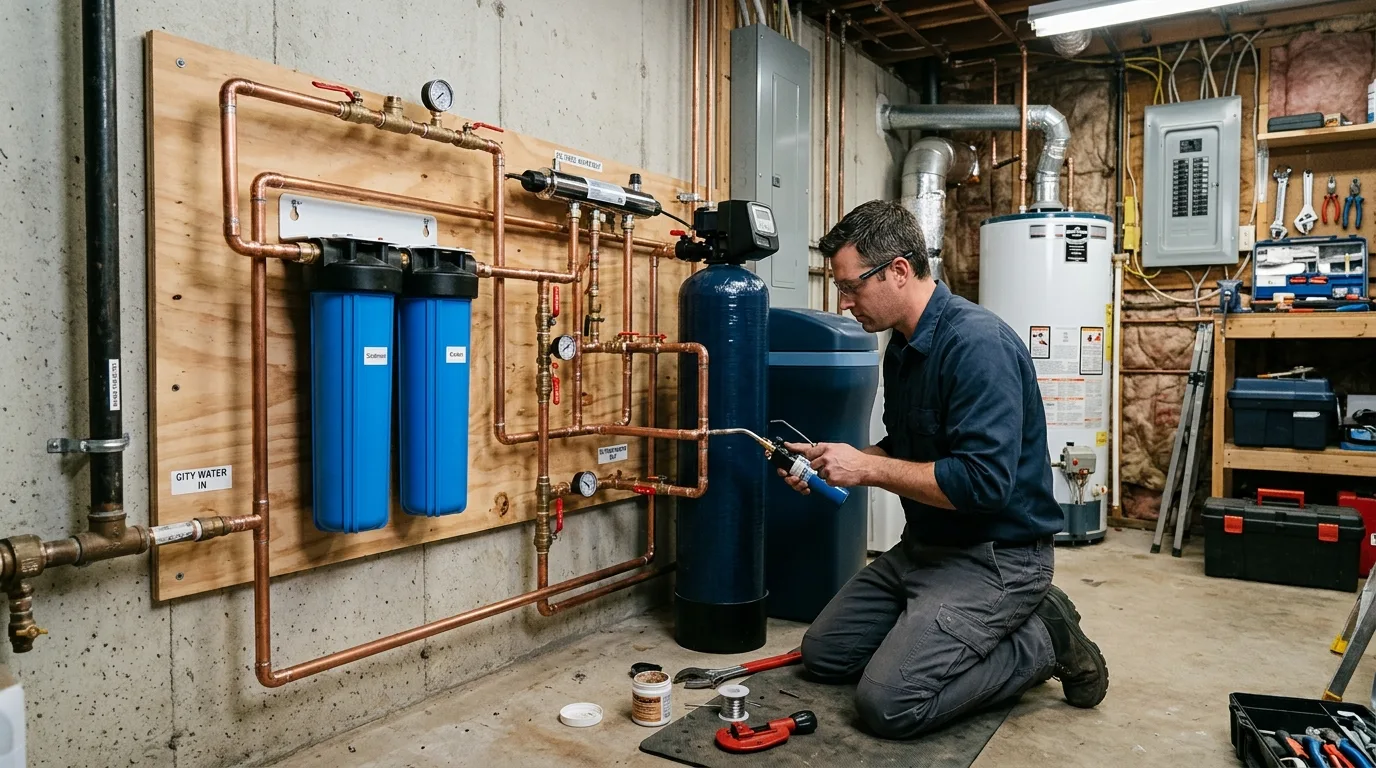
Units undersized for household and hardness regenerating constantly, exhausted resin beds, and bypasses left in place and forgotten.
Temescal Valley · 92883
The valley that gives Corona its water chemistry. Mineral load here is the highest in our service area, and it dictates almost everything that goes wrong downstream of the meter.
Answered 24/7 · hardness tested, treatment sized properly
The valley
The Temescal Valley runs southeast from Corona along the I-15 corridor, and it is the source of the groundwater that gives this whole region its distinctive water chemistry. Development here spans from long-established rural and semi-rural parcels to master-planned communities built within the last two decades, which means an unusually wide range of housing in a single geographic area.
What unites it is the water. The valley’s geology contributes dissolved calcium and magnesium in quantity, and hardness readings here sit at the top of the regional range, commonly fifteen to twenty grains per gallon and, depending on the source and blend serving a given property, sometimes higher. Water above ten grains is classified as very hard. This is well past that.
The practical effect is that every piece of water-using equipment in a valley home operates in conditions considerably more aggressive than its manufacturer assumed. Water heaters accumulate sediment and lose capacity. Tankless heat exchangers scale and fault. Fixture cartridges wear early. Shower valves seize in their bores. Dishwashers, washing machines, ice makers, and coffee systems all fail at the components that contact water.
Homeowners frequently interpret this as a run of bad luck or poor-quality fixtures. It is neither. It is a measurable water condition with a well-understood solution, and the households here that have addressed it have a completely different experience of plumbing than those that have not.
The other characteristic of the valley is variety of infrastructure. Some properties are on municipal supply; others, particularly older and larger rural parcels, have private wells, pressure tanks, and their own treatment. Those are a different discipline and worth saying so on the phone.
Beyond the meter
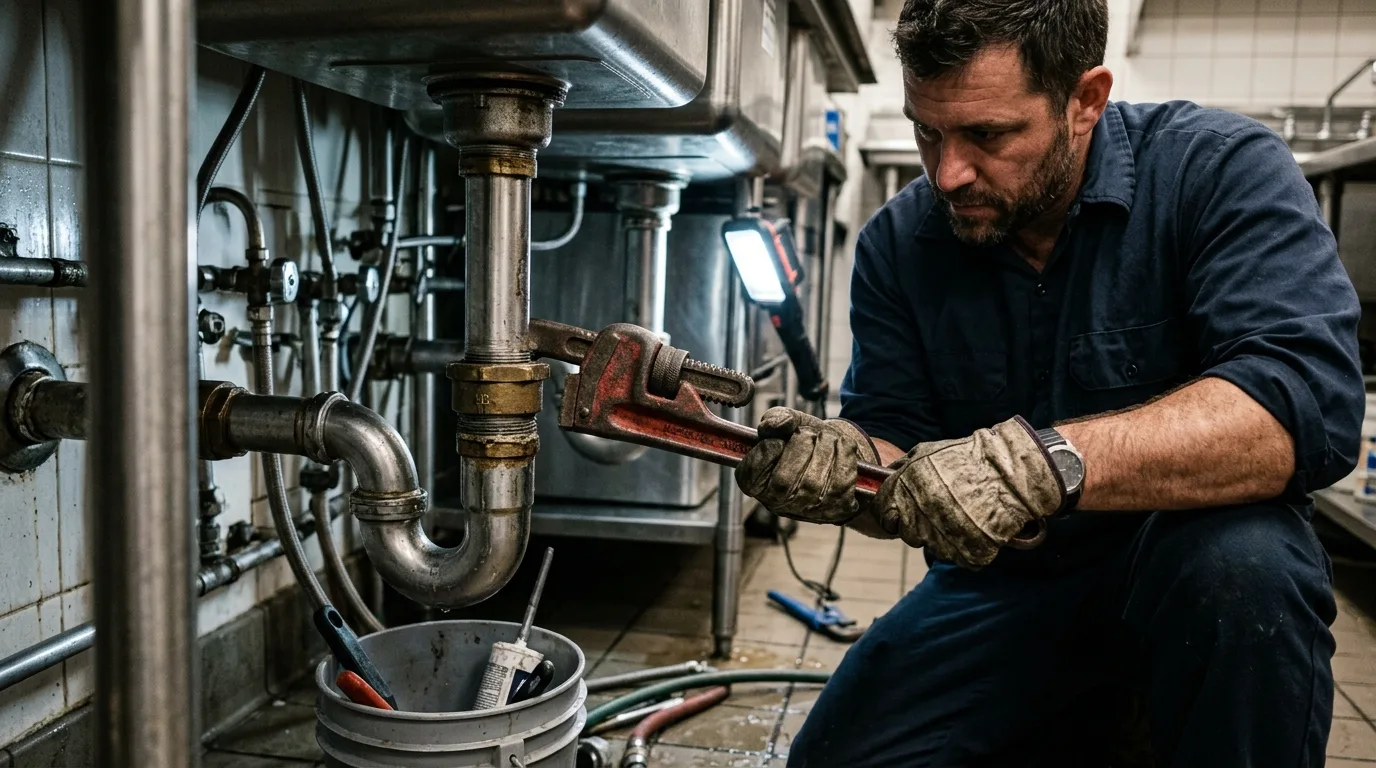
A property on a private well is a small water utility. Instead of a meter and a regulator, there is a pump, a pressure tank, a pressure switch, and usually a treatment train, and each of those is a component with its own failure modes.
The pressure tank is the most commonly misunderstood. It contains an air charge separated from the water by a bladder, and that charge is what allows the pump to cycle sensibly rather than starting and stopping constantly. When the bladder fails or the charge is lost, the pump short-cycles, which is both audible and genuinely damaging to the pump. Rapid cycling is the classic symptom and it is worth acting on quickly.
The pressure switch sets the cut-in and cut-out pressures. Water that surges and drops noticeably during use, or a system that will not build to its set pressure, frequently traces here rather than to the pump.
Treatment on a well is often a train rather than a single unit: sediment filtration, sometimes iron or manganese removal, sometimes pH correction, then softening, and sometimes point-of-use drinking water treatment. Order matters, and a train assembled piecemeal over the years frequently has units in the wrong sequence or bypassed and forgotten.
What we bring to a well property is the plumbing side: the pressure tank, the switch, the pipework, the treatment sequence, and everything downstream. Pump replacement and well-bore work is a specialist discipline and where that is the answer we will say so plainly rather than guess at it.
Municipal-supply properties in the valley have the simpler version of the same conversation: a regulator, an expansion tank, and treatment sized to measured hardness.
Common calls
A chemistry-driven list, plus well-specific work.
01
Units undersized for household and hardness regenerating constantly, exhausted resin beds, and bypasses left in place and forgotten.
02
Error codes, temperature swings, and reduced flow. At valley hardness, annual descaling is a warranty condition and a practical necessity.
03
Sediment insulating the burner from the water. Presents as less hot water and higher gas use well before it presents as failure.
04
Rapid pump cycling from a failed bladder or lost air charge. Audible, damaging to the pump, and worth addressing quickly.
05
Cartridges wearing early and shower valves seizing in their bores, where a small repair becomes a wall opening.
06
Large lots with long buried runs. Leaks located by isolation and acoustic methods so excavation happens once.
How we work
The water test explains most of the list before we touch anything.
Municipal or private well, and what treatment already exists. These are different jobs and the answer shapes everything after it.
Actual hardness at the tap, and on treated homes a raw-versus-treated comparison to confirm the equipment is working.
Static and flowing on municipal supply, or cut-in and cut-out pressures and tank pre-charge on a well system.
Heater type and age, tankless service history, softener settings and resin condition, filter dates, and treatment sequence.
Where treatment is the answer, specified from measured hardness and household use. Never from a default.
Pressure held, tankless run through a full cycle, treated hardness verified at the tap, and settings documented for you.
15–20+ gpg
Typical valley hardness
10 gpg
Threshold for "very hard"
Annual
Tankless descaling interval
24/7
Dispatch along the I-15 corridor
Local conditions
The geology. The valley’s mineral load is not an anomaly to be worked around; it is the baseline condition, and it is why treatment here is closer to essential than optional. Everything else on this page follows from it.
Elevation and pressure. The valley has real vertical variation along its length and across its slopes, and static pressure varies with position in a municipal pressure zone. Above 80 psi, every seal and valve in the house wears faster, and irrigation components fail repeatedly. It is measured, never assumed.
Large parcels. Many valley properties sit on generous lots, which means long buried service lines and long sewer laterals or, on some parcels, septic systems. Long buried runs mean more opportunity for failure and much harder detection, which raises the value of accurate locating and of trenchless replacement.
Irrigation. Extensive landscape systems on large lots, with drip emitters and misting nozzles that scale closed in this water, plus ultraviolet degradation of exposed PVC and pressure-driven component failure. An unexplained bill in this valley is outside until proven otherwise.
Soil. Expansive soils typical of the region, moving with moisture and stressing rigid buried pipe and slabs. It is one of the mechanisms behind slab leaks on the valley’s slab-built housing.
Temescal Valley
Every treatment and sizing decision downstream of your meter depends on that one number.
Answered 24/7 · upfront pricing before any work
Full service list
Temescal Valley
In this water that is a chemistry problem wearing a plumbing costume. Treatment is the fix.
Independent local contractors · workmanship guarantee on completed work
Temescal Valley FAQs
Commonly fifteen to twenty grains per gallon and sometimes higher depending on the source and blend serving your property. Anything over ten grains is classified as very hard.
It is worth having the actual figure at your tap, because sizing treatment equipment correctly depends entirely on that number and on your household water use.
For most valley households, close to it, and the strongest case is equipment life rather than laundry. Softened water extends the life of tankless units, tank heaters, fixture cartridges, shower valves, and appliance internals considerably.
The return arrives as replacement cycles you never pay for, which is less visible than soft towels and much more valuable.
Yes, on the plumbing side: pressure tanks, pressure switches, pipework, treatment trains, and everything downstream of them.
Pump replacement and well-bore work is a specialist discipline. Where that is the answer we will say so plainly rather than guess at it.
Almost always the pressure tank. It holds an air charge separated from the water by a bladder, and that charge is what lets the pump cycle sensibly instead of starting and stopping constantly.
When the bladder fails or the charge is lost, the pump short-cycles. It is audible and genuinely damaging to the pump, so it is worth acting on quickly.
Annually at minimum, and heavy-use households benefit from more frequent service. Mineral builds inside the heat exchanger, reducing heat transfer and restricting flow until the unit faults.
Most manufacturers make annual descaling a warranty condition. It takes a couple of hours through the isolation valves.
Yes, considerably. A treatment train has a correct sequence, sediment filtration, then any iron or pH correction, then softening, then point-of-use drinking water treatment.
Trains assembled over years frequently have units in the wrong order or bypassed and forgotten. Reviewing the sequence often improves results without buying anything new.
Methodically. Everything off inside and the meter low-flow indicator watched, then the main at the house closed; that splits an outdoor service line problem from an indoor one immediately.
From there, acoustic listening along the run and pressure isolation narrow it to a small area. The objective is one correctly placed excavation rather than exploratory digging.
Yes, along the I-15 corridor including Sycamore Creek, Dos Lagos, and the surrounding valley communities and rural parcels.
Dispatch is answered 24 hours a day, with same-day service where the schedule allows and emergency response at any hour.
A softener needs salt kept above a third of the tank, a resin bed that gets replaced somewhere around the ten-year mark, and settings that still match the household after children leave or arrive.
Filtration cartridges have a service interval measured in gallons, not months, and a neglected cartridge restricts flow before it stops filtering. An annual check of hardness on treated water tells you whether the whole chain is still doing its job.
Not for the plumbing inside the house. It can change who is responsible at the meter, what pressure is delivered to your street, and how quickly a main issue gets attended to.
It is worth knowing which agency serves you and keeping their water quality report to hand. Hardness and mineral content vary across this valley, and the treatment that suits one street is oversized or undersized on another.
Temescal Valley · 92883
Hardness measured, treatment sized to your household, and equipment serviced on the interval this water actually demands.
Dispatch answers 24/7 · same-day and emergency response available