01
Polybutylene fitting failures
Sudden releases at crimped connections rather than slow drips. The reason we recommend planning a repipe rather than waiting.
Corona Hills · 92880 / 92882
The hillside tracts north and east of the city center were largely built in the 1980s, which puts a specific and well-documented supply material under a lot of these floors.
Answered 24/7 · pipe material identified before anything is quoted
The neighborhood
The hillside tracts that make up Corona Hills were built predominantly through the 1980s and into the early 1990s, during a period when residential construction was experimenting with supply materials. That timing is the most useful single fact about plumbing in this area.
The material in question is polybutylene, a flexible gray or occasionally blue-gray plastic pipe used widely in residential construction from the late 1970s through the mid 1990s. It was inexpensive, easy to install, and for a while it looked like the future. It was the subject of extensive litigation, and it is no longer used.
The problem is not usually the pipe wall itself. It is the fittings and the joints, particularly early acetal plastic fittings with crimped metal rings, and the effect of chlorinated water on the material over time, which makes it progressively brittle. Failures tend to occur at connections, and they tend to occur without warning, not as a slow drip you notice, but as a fitting that lets go.
Not every Corona Hills home has it. Plenty were built in copper, and some have already been repiped. But the era is right, and the first thing worth doing if you own a house here is finding out what you have. It is usually visible under a sink, at the water heater, or where the main enters, gray flexible pipe with crimped bands rather than rigid copper.
The rest of the picture is standard for the era: slab-on-grade construction, ABS drains, and original builder-grade regulators, heaters, and stops now well past their expected life.
What to do about it
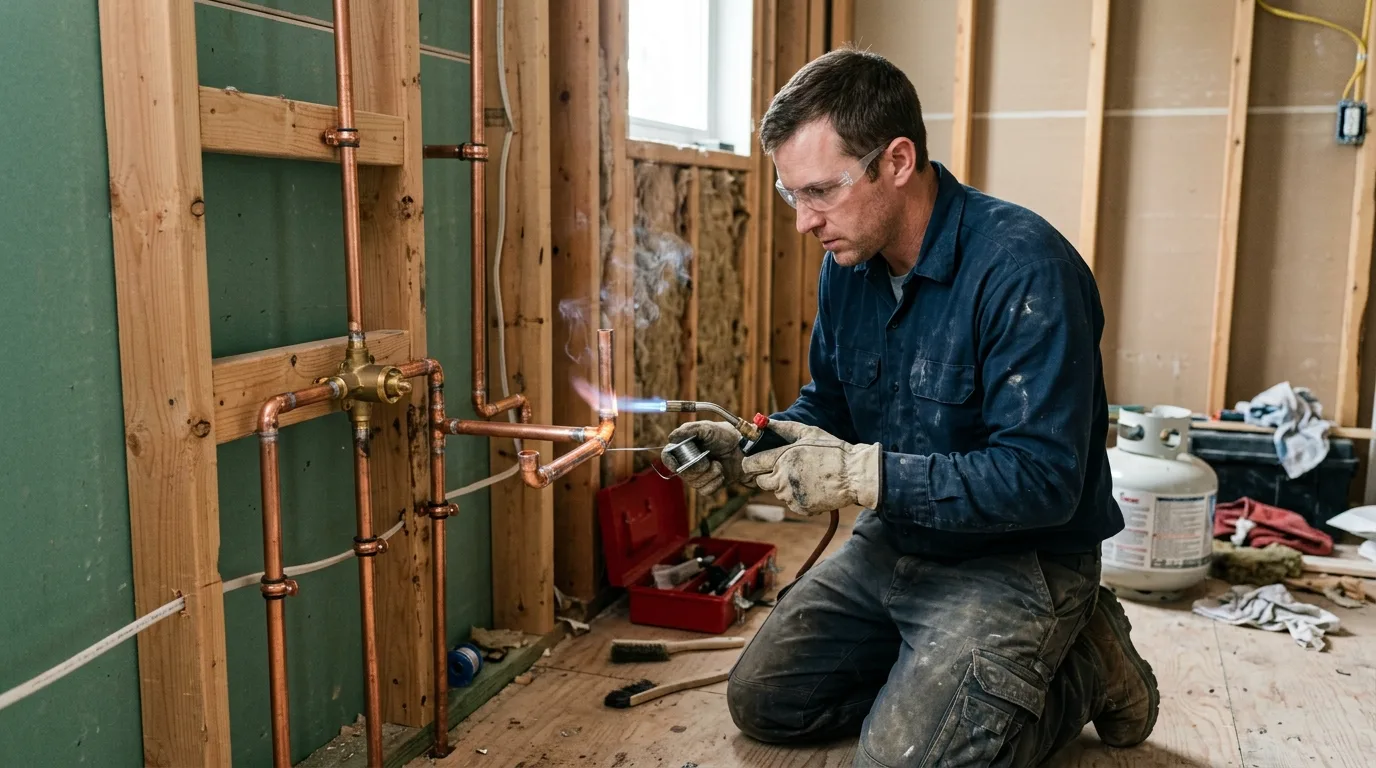
If your house has polybutylene supply, the options are limited and the choice is mostly about timing. Repair of an individual failed fitting is possible and buys time. It does nothing about the rest of the system, which is the same age, the same material, and subject to the same chemistry.
The reason we are direct about this is the failure mode. A copper pinhole weeps and gives you warning. A polybutylene fitting failure can release water at full pressure with no warning at all, and if it happens while nobody is home, the damage is not a plumbing bill; it is a restoration project.
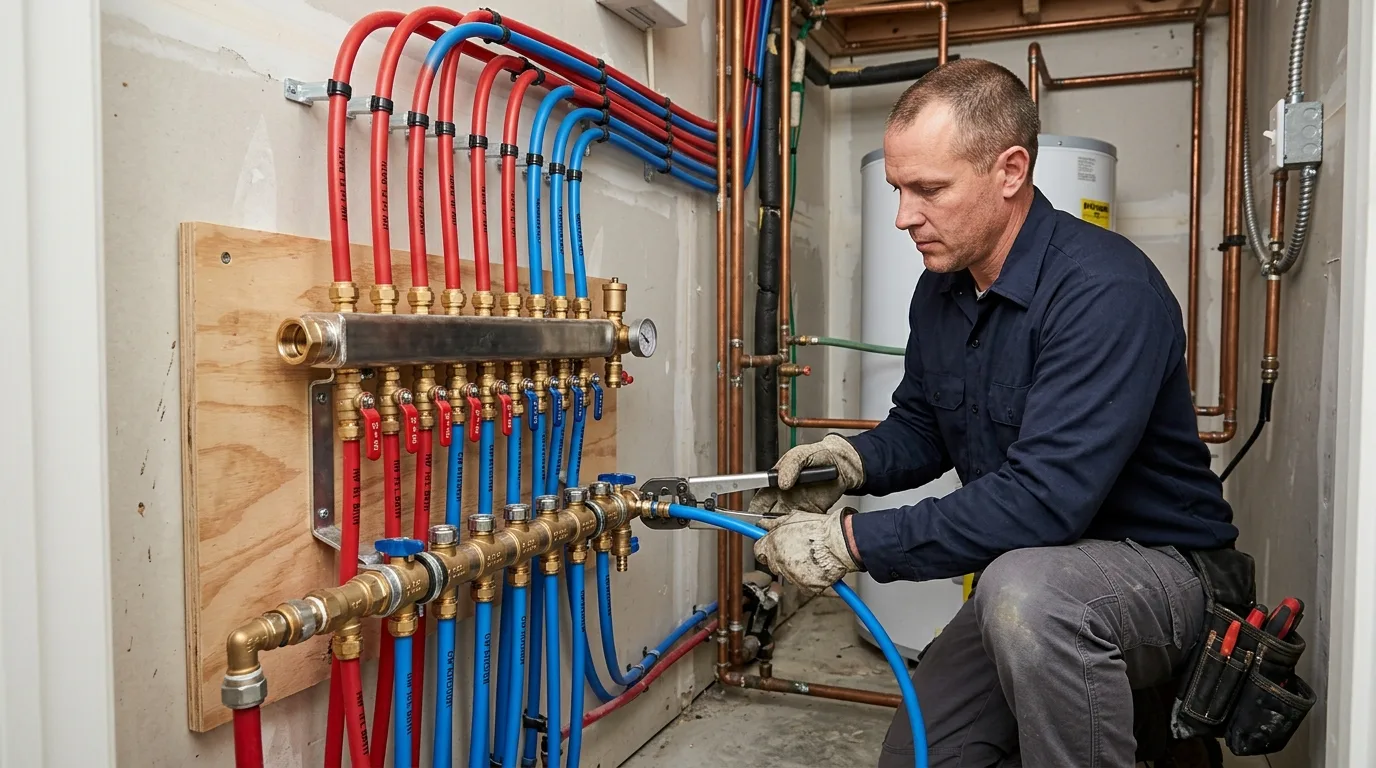
Repiping replaces the supply system entirely, usually in PEX or copper. On a slab home like these, new lines are typically routed overhead through the attic and dropped down interior walls, which means the concrete is never touched. It is a two to four day job on a typical house, with drywall openings at drop points that need patching and painting afterwards.
What makes it manageable is planning. We map the runs before starting, keep water on for as much of the work as possible, group the wall openings sensibly rather than scattering them, and leave the patching ready for a finisher. Households generally stay in the house throughout.
It is also the right moment to fix everything adjacent: a new pressure regulator, new angle stops and supply lines at every fixture, and an expansion tank if the system needs one. Doing those during a repipe costs a fraction of doing them separately later.
Common calls
Consistent with an 1980s hillside tract now approaching forty years old.
01
Sudden releases at crimped connections rather than slow drips. The reason we recommend planning a repipe rather than waiting.
02
Hillside position means static pressure varies significantly across short distances. Some streets sit well above the 80 psi code limit.
03
Builder-grade PRVs from the original construction, scaled by hard water and worked hard by elevation, now well past a normal service life.
04
Slab-on-grade throughout. Located electronically before concrete is opened, with an honest comparison of spot repair against rerouting overhead.
05
Original or first-replacement tanks in garages, frequently with strapping and venting that would not meet current requirements.
06
Systems spanning significant elevation change, where pressure at the lower zones far exceeds what the components are built to tolerate.
How we work
Material first, pressure second, everything else after that.
Under a sink, at the heater, and at the point of entry. Polybutylene, copper, CPVC, or PEX; this determines everything that follows.
Static and flowing at the hose bib, held to catch overnight creep. On a hillside, position within the pressure zone matters enormously.
Age, condition, and whether it holds. These valves work harder here and are scaled by hard water at the same time.
Patched drywall, replaced sections, and staining. A history of fitting failures is the strongest argument for planning ahead.
Repair now, repipe on a schedule, or repipe immediately, with the reasoning and the cost of each, and no pressure to decide on the spot.
Runs mapped before cutting, water kept on where possible, openings grouped, and everything pressure-tested and documented at the end.
1980s
Dominant construction era
PB
The material worth identifying in your house
2–4 days
Typical whole-home repipe
24/7
Dispatch across the hillside tracts
Local conditions
Elevation and pressure. Corona Hills climbs, and position within a municipal pressure zone determines static pressure. Houses low in a zone can sit well above the code limit of 80 psi. On polybutylene, that matters more than usual, higher pressure increases the stress on exactly the fittings that fail.
Water chemistry. Chlorine and chloramine in treated supply are part of what degrades polybutylene over time, making it progressively brittle. This is unavoidable in municipal water and it is one reason the material is no longer used. Whole-house filtration reduces exposure and is worth considering, though it is a mitigation rather than a solution.
Hard water. Fifteen to twenty grains, doing what it does everywhere in Corona: sediment in water heaters, scale on fixture cartridges and valve seats, and mineral on regulator diaphragms and seats that shortens their service life.
Slab and slope. Slab-on-grade construction on graded hillside lots. Slab leaks occur, and the overhead reroute option is generally straightforward here because attic access on these floor plans is usually good.
Terraced yards. Hillside landscaping with retaining walls and terracing makes any outdoor excavation more involved and more expensive to restore, which raises the value of accurate leak location and of trenchless approaches for service lines and laterals.
Corona Hills
Look under a sink. Gray flexible pipe with crimped metal bands is worth a phone call.
Answered 24/7 · upfront pricing before any work
Full service list
Corona Hills
If that is what is under your sink, it is worth understanding your options before a fitting lets go.
Independent local contractors · workmanship guarantee on completed work
Corona Hills FAQs
Look under a sink, at the water heater connections, or where the main enters the house. Polybutylene is flexible plastic, usually gray and occasionally blue-gray, joined with crimped metal bands rather than soldered like copper.
It was used widely from the late 1970s through the mid 1990s, which places Corona Hills squarely in the era. Not every house here has it, but it is worth ten seconds to check.
The concern is the failure mode rather than any health issue. Failures occur at fittings and joints, and they tend to be sudden releases at full pressure rather than slow drips that give you warning.
If that happens while nobody is home, the result is water damage on a scale that dwarfs the plumbing repair. That is why we recommend planning a repipe rather than waiting for a failure.
Individual failed fittings can be repaired and it buys time. It does nothing for the rest of the system, which is the same age and material and subject to the same degradation.
It is a reasonable stopgap while a repipe is planned. It is not a solution, and we will not present it as one.
New supply lines run overhead through the attic and dropped down interior walls to each fixture, so the slab is never opened. Typically two to four days on an average house.
There are drywall openings at the drop points that need patching and painting. We map the runs first and group the openings sensibly, and most households stay in the house throughout.
Both are good. PEX is faster to install, more forgiving of routing, resistant to the pinhole corrosion that affects copper, and generally less expensive. Copper is rigid, extremely long-lived, and preferred by some owners for that reason.
In Corona water either performs well. The choice usually comes down to budget, routing complexity, and personal preference, and we are happy to quote both.
Elevation. Municipal pressure is governed by how far below its supply tank a property sits, and on a hillside that changes quickly across a short distance.
A house low in its pressure zone can be well above the 80 psi code maximum while one higher up is marginal. It has to be measured at your address, and on polybutylene it matters more than usual.
If it dates to the original construction, almost certainly. Ten to fifteen years is a normal service life in clean water, and Corona hardness scales the valve seat which shortens it further.
On a hillside the valve is also throttling a larger pressure drop, which means it works harder. Corona Hills regulators are among the hardest-working in the city.
Yes. Dispatch is answered 24 hours a day across Corona Hills and the surrounding areas, with emergency response for burst lines, active leaks, and sewage backups at any hour.
If a fitting lets go, shut the main off first if you can reach it safely. On a polybutylene failure that one action is the difference between a repair and a restoration.
It helps. California disclosure asks what you know about the condition of the property, and polybutylene supply is material information. A completed repipe replaces an open question with a permit, an invoice, and a warranty.
Buyers and their inspectors read it that way too. Homes with documented repipes tend to move through inspection with far less renegotiation than identical houses that still have the original pipe.
Usually up through a closet or a garage wall into the attic, then across and down to each fixture group. That keeps the openings in ceilings and in closet interiors rather than in living space.
On the lower floor, drops come down inside wet walls where they can. Slab-side fixtures like an island sink are the awkward case and sometimes need a short overhead reroute instead.
Corona Hills · 92880
Pipe material identified, pressure measured, and a repipe conversation had on your schedule rather than after a failure.
Dispatch answers 24/7 · same-day and emergency response available