01
Thermocouple or flame sensor
The most common reason a gas pilot lights and immediately dies. Inexpensive, quick, and often paired with cleaning the pilot assembly and burner so the new part is not asked to do the old one’s job.
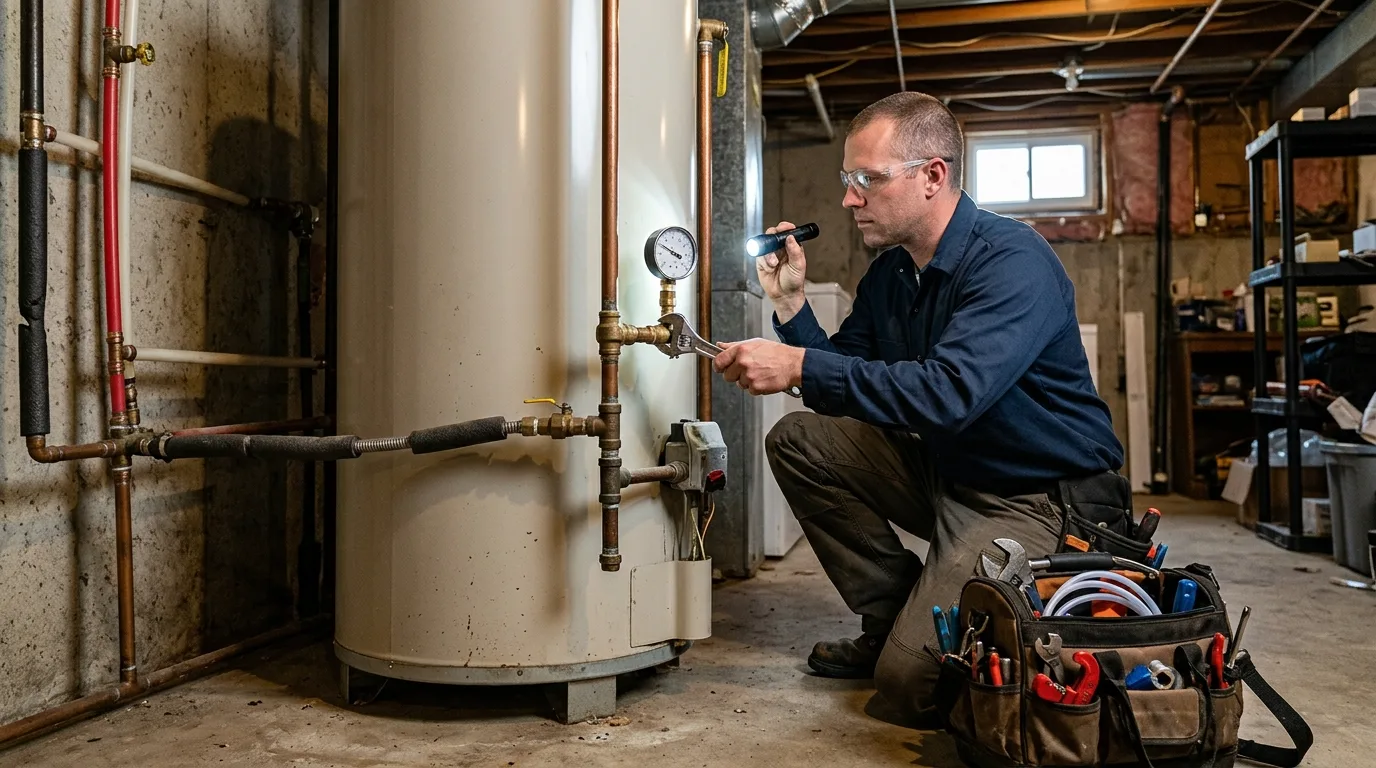
No hot water · Corona, CA
Cold showers, a pilot that will not stay lit, rumbling in the tank, or water on the garage floor. We diagnose the actual failure and tell you plainly whether it is a part, a service, or a heater at the end of its life.
Answered 24/7 · same-day repair in most cases · repair or replace, honestly
Same day
Most repairs completed on the first visit
Both numbers
Repair cost and replacement cost, together
24/7
Dispatch, including nights and weekends
What went wrong
A water heater is a simple machine with a small number of failure points, and the symptom usually narrows it down before we arrive. Describing what you are seeing accurately on the phone genuinely speeds this up.
No hot water at all, gas heater. Most often a pilot or ignition problem, a failed thermocouple or flame sensor, a dirty pilot assembly, a tripped thermal switch at the base, or a gas control valve that has given up. On sealed-combustion units, a blocked air intake screen clogged with garage lint and dust is a surprisingly frequent culprit.
No hot water at all, electric heater. Usually a tripped high-limit reset, a failed upper heating element, or a failed thermostat. Electric diagnosis is fast and definitive because the elements can be tested directly.
Some hot water, then cold too soon. Classic sediment accumulation stealing tank volume, a broken dip tube mixing cold into the top of the tank, or a failed lower element on an electric unit. In Corona this is the most common complaint we get, and hardness is why.
Rumbling, popping, or knocking. Water flashing to steam underneath a layer of hardened scale on the tank bottom. It is not immediately dangerous, but it means the burner is heating rock instead of water, and it is the single loudest warning that the tank is being cooked from below.
Water on the floor. This is the one that decides itself. A drip from a fitting, the TPR valve, or the drain valve is a repair. Water seeping from the bottom of the tank body is a failed tank, and no repair exists for that, the only honest answer is replacement.
Rusty or smelly hot water. A spent anode rod, which is the sacrificial part designed to corrode so the tank does not. Replacing it is cheap and can add years. Ignoring it is how a repairable heater becomes a leaking one.
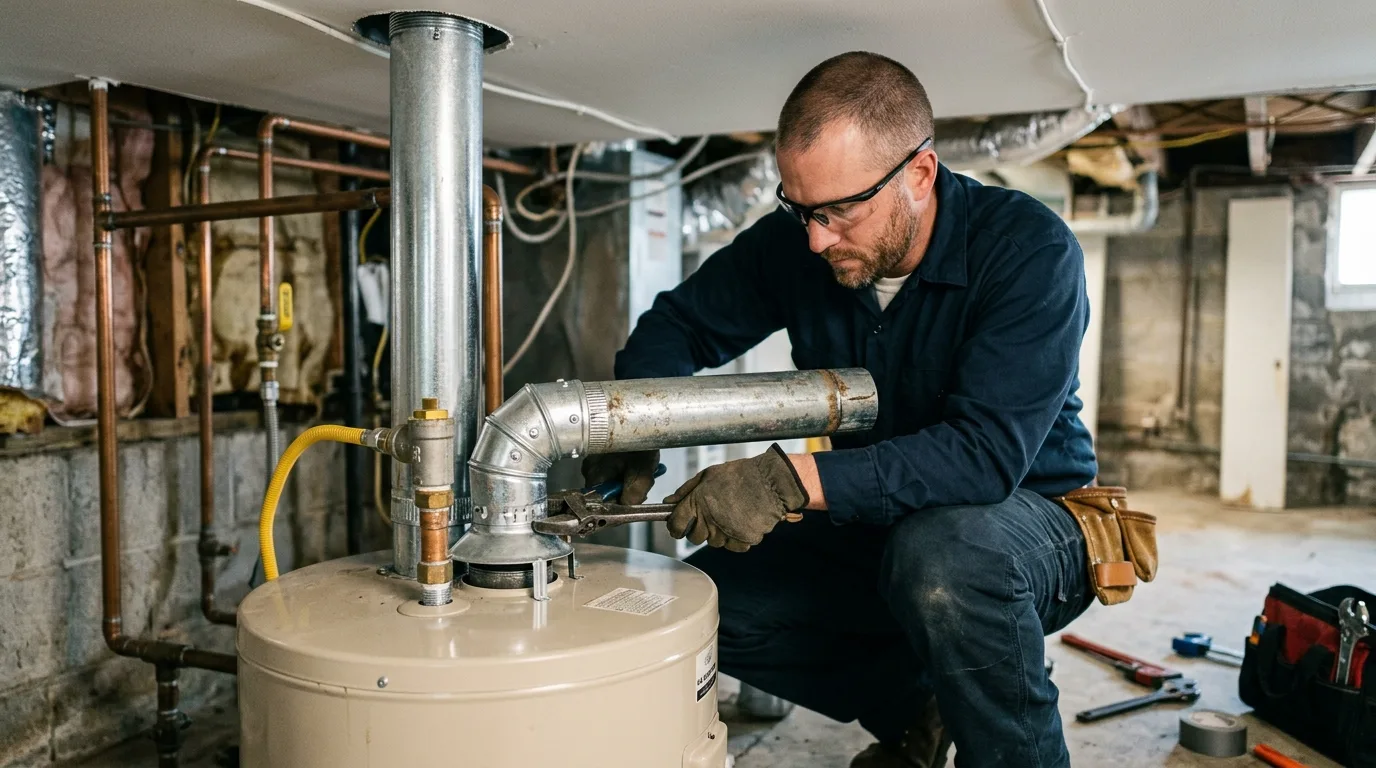
Diagnosis
Guessing at parts is expensive for you and embarrassing for us, so the visit starts with measurement. We read the actual delivered temperature at a nearby fixture, check the thermostat setting against it, and confirm whether the unit is producing heat at all.
On a gas unit, that means inspecting the burner and pilot assembly, testing the thermocouple output, checking the thermal switch, verifying draft at the flue, and confirming gas supply. On an electric unit, it means testing both elements and both thermostats for continuity and checking the high-limit.
Then the parts that tell us about the heater’s remaining life: the age from the serial number, the condition of the anode rod, how much sediment comes out of a drain sample, whether the TPR valve and its discharge line are correct and functional, whether an expansion tank exists and holds charge, and whether the connections show corrosion or evidence of past leaks.
You end up with three specific things: what failed, what it costs to fix, and how much life the rest of the unit realistically has. That third number is what makes the repair-or-replace decision straightforward instead of a coin flip.
Common repairs
These are the repairs that make up the large majority of our Corona water heater calls, and the parts for them ride on the truck.
01
The most common reason a gas pilot lights and immediately dies. Inexpensive, quick, and often paired with cleaning the pilot assembly and burner so the new part is not asked to do the old one’s job.
02
On electric units, a failed upper element means no hot water, a failed lower means it runs out fast. Elements are tested rather than assumed, and heavy scale on a pulled element tells us what the water is doing.
03
When the temperature setting no longer matches what comes out of the tap, or the burner will not fire on demand. Gas control valve replacement is a larger repair, and its cost is a genuine factor in the replace conversation.
04
The sacrificial rod that corrodes so your tank does not. In Corona’s hard water it is often fully consumed years early. Replacing it is one of the highest-value repairs available on a mid-life heater.
05
A weeping temperature and pressure relief valve is sometimes the valve and sometimes a genuine pressure problem the valve is correctly reporting. We determine which before swapping anything.
06
Draining sediment restores tank capacity, quiets the rumbling, and cuts the energy the burner wastes heating scale. On a heater that has never been flushed, it is the first thing worth doing.
Sequence
What actually happens, in order.
Gas or electric, how old, and what exactly it is doing, no hot water, not enough, noisy, leaking. That conversation often tells dispatch what part to load before the truck leaves.
If water is on the floor or gas is involved, you get told what to shut off and how, right there on the call. Cold water inlet valve, gas control to off, or the breaker.
Full diagnostic on the unit, then a price for the repair and a price for replacement, side by side, with the heater’s age and condition stated plainly.
Common parts are on the truck, so most repairs finish on the first visit. Uncommon parts get ordered with a stated timeline rather than a vague one.
A flush where sediment warrants it, an anode check, TPR verification, expansion tank check, and a look at the connections. The point is that the next failure is not next month.
Draft and combustion checked on gas units, seismic strapping verified, discharge line routed correctly, and temperature set to a safe delivery point before we leave.
24/7
Dispatch answered, every day of the year
Same day
Most repairs done on the first visit
2
Prices given: repair and replace
Why here
Ask a manufacturer how long a tank heater lasts and you will hear ten to twelve years. Ask a plumber who works in Corona and the honest answer is closer to eight to ten, and the gap is almost entirely water chemistry.
Corona’s supply blends local Temescal basin groundwater with imported State Water Project water. Hardness commonly lands in the fifteen to twenty grain range, genuinely hard by any standard. When hard water is heated, dissolved calcium and magnesium precipitate out and settle. In a tank heater they land on the bottom, directly above the gas burner, and build into a hard crust.
That crust does three destructive things. It insulates the water from the burner, so the burner runs longer and hotter for the same result and your gas bill quietly climbs. It creates hot spots that stress the glass lining, and once the lining cracks the steel behind it starts corroding. And it traps pockets of water that flash to steam, which is the popping and rumbling you hear, a sound that is effectively the tank reporting its own decline.
Hardness also consumes anode rods faster. The rod is meant to corrode preferentially; in aggressive water it can be entirely gone by year four or five, at which point the tank itself becomes the sacrificial part.
There is a pressure factor too. Corona’s elevation range means some neighborhoods run high static pressure, and a heater without a functioning regulator and expansion tank absorbs every thermal expansion cycle in its own tank walls and its TPR valve. A weeping relief valve in a high-pressure neighborhood is very often a pressure problem wearing a plumbing costume.
All of which is why our repair visits include a flush recommendation and an anode check, and why we will mention a softener if you are on your second heater in twelve years. Not as an add-on, as the actual cause.
The decision
| Situation | What we recommend and why |
|---|---|
| Under 6 years, part failure | Repair, without hesitation. A thermocouple, element, or thermostat on a young heater is a small fraction of replacement cost and the tank has most of its life left. |
| 6–9 years, part failure | Usually repair, with eyes open. We give you the repair cost, the replacement cost, and the anode and sediment condition so you can weigh a cheap fix against a heater that may need another in two years. |
| Over 10 years, major part | Replacement is generally the better value. A gas control valve or a pair of elements plus labor on a heater past its design life is money spent on borrowed time. |
| Leaking from the tank body | Replacement, always. A perforated tank cannot be repaired. Anyone who tells you otherwise is selling you a delay, not a fix. |
| Heavy sediment, still working | Flush and service now. Restoring capacity and quieting the rumble is cheap and may add years, though a tank that has never been flushed in a decade sometimes reveals a leak once the crust is disturbed; we tell you that risk up front. |
| Repeated failures | Replacement, and a water chemistry conversation. Two or three service calls in two years on the same unit is the heater telling you something. |
| Capacity too small | Replacement sized correctly, or a tankless conversation. If the heater works fine and simply runs out, repairing it changes nothing. |
| Venting or safety defects | Corrected regardless. Improper draft, missing seismic strapping, or a TPR line discharging where it should not are not optional items to defer. |
You get both numbers and the reasoning. The decision stays yours; we are not paid more for talking you into a new heater.
Cold shower this morning?
Tell dispatch whether it is gas or electric, roughly how old, and exactly what it is doing. Common parts ride on the truck.
Answered 24/7 · upfront pricing before any work
Related work
Coverage
Water on the garage floor
A leaking heater does not improve while you research it. Shut the cold water valve on top of the tank, kill the gas or breaker, and get us on the phone.
Independent local contractors · emergency dispatch available
Water heater FAQs
Nine times out of ten it is the thermocouple, the small sensor that sits in the pilot flame and tells the gas valve it is safe to stay open. When it weakens, the valve stops trusting it and shuts the pilot down within seconds.
The other candidates are a dirty or partially blocked pilot orifice, a tripped thermal switch at the base of the unit (often caused by lint and dust in the combustion chamber, very common in garage installations), or a failing gas control valve. All are diagnosable in one visit, and the first two are inexpensive.
Usually sediment. Scale accumulating on the tank floor physically occupies volume that used to hold water, so a fifty-gallon tank might be delivering the useful output of a thirty-five gallon one. Corona’s hard water makes this the single most common cause we find.
The other possibilities are a broken dip tube dumping cold water at the top of the tank instead of the bottom, or a failed lower heating element on an electric unit. All three are diagnosable, and two of the three are inexpensive repairs.
Not immediately. What you are hearing is water trapped under hardened scale flashing to steam and forcing its way out, unpleasant but not an explosion risk on a heater with a working TPR valve.
It is, however, a serious efficiency and lifespan warning. The burner is heating mineral deposits rather than water, the glass lining is being thermally stressed, and the tank is aging faster than it should. A flush will often quiet it substantially, and it should not be ignored for another year.
On a heater that has been flushed regularly, a homeowner flush is reasonable maintenance. On a Corona heater that has never been flushed in eight years, be aware of what you may be starting.
Heavy compacted sediment can block the drain valve mid-flush, leaving you unable to close it, and disturbing a thick scale layer occasionally exposes corrosion that was being held back by the deposit itself. If it has been years, having it done professionally means someone is standing there with the parts and the shutoff knowledge if that happens.
Manufacturers say ten to twelve years for a tank unit. In Corona, without a softener and without regular flushing, eight to ten is a more realistic expectation, and we see plenty fail earlier.
Two things extend it meaningfully: an annual flush, and replacing the anode rod when it is consumed rather than after the tank has started corroding. A heater that gets both, in a house with controlled pressure, can genuinely reach the upper end of the range.
That pipe is likely the TPR discharge line, and a functioning relief valve dripping means it is doing its job, relieving excess pressure or temperature. The question is why it needs to.
Common causes are high static pressure in your neighborhood, a missing or failed thermal expansion tank, a thermostat set too high, or a genuinely failed valve. Replacing the valve without finding the cause means it will weep again. We measure pressure and check the expansion tank as part of the diagnosis.
No, and we will not pretend otherwise. If water is coming from the body of the tank rather than a fitting, valve, or connection, the inner tank has perforated and there is no repair, welding, sealants, and epoxy are all temporary at best on a pressurized vessel.
What we do first is determine whether the leak is actually the tank. A weeping TPR valve, a loose drain valve, a corroded nipple, or condensation running down the outside all get mistaken for tank failure regularly, and those are all fixable.
That is usually bacteria reacting with a magnesium anode rod, producing hydrogen sulfide. It is unpleasant rather than hazardous, and it is a solvable problem.
The fix is typically a flush and disinfection combined with replacing the standard anode with an aluminum-zinc rod, which does not feed the reaction the same way. If it recurs, that points to something further upstream and we look at the whole system rather than the heater alone.
Around 120 °F is the usual recommendation, hot enough for household use, low enough to reduce scalding risk and slow scale formation, which matters more here than in soft-water regions.
Some households need it higher for a dishwasher without its own booster, or lower where there are young children or elderly residents. Anything above roughly 120 °F raises scald risk at the tap, and mixing valves are the correct way to have high storage temperature and safe delivery temperature at the same time.
Yes. Tankless heaters have their own failure profile, ignition faults, flow sensor problems, and above all scale in the heat exchanger, which in Corona’s water is the dominant issue.
Most tankless complaints here (fluctuating temperature, error codes, reduced output) trace back to scale, and the fix is descaling rather than parts. If you are considering a switch from tank to tankless, that is a separate conversation and worth having properly.
Corona, CA · water heater specialists
Diagnosis first, both prices second, and an honest read on how much life the unit has left.
Dispatch answers 24/7 · same-day and emergency response available