Why here
Where Corona’s hardness comes from, and what it means
Corona’s water is a blend. Part of it is local groundwater drawn from the Temescal basin, which has moved through mineral-rich sediment and picked up dissolved calcium and magnesium along the way. Part of it is imported water delivered through the State Water Project. The proportions shift with season and supply conditions, but the result is consistently hard, commonly fifteen to twenty grains per gallon, or roughly 250 to 350 milligrams per liter as calcium carbonate.
For scale, water is generally called “hard” above seven grains and “very hard” above ten. Corona is well past both thresholds. This is not a marginal case where a softener is a luxury; it is water hard enough that appliance manufacturers themselves recommend treatment above these levels.
The practical consequence shows up in the age at which things fail here. Tank water heaters that should last ten to twelve years commonly go at eight to ten. Tankless heat exchangers need annual descaling rather than the every-other-year the manual suggests. Faucet cartridges, fill valves, and angle stops all live shorter lives. None of that is a defect in the equipment; it is the water.
Two local details are worth knowing. First, the blend varies, so a hardness number from a neighbor or from a two-year-old city report is a starting point, not a spec; we test at your tap. Second, homes in Temescal Valley and outlying areas on private wells have entirely different water chemistry, sometimes with iron or manganese, which changes the equipment selection substantially. Well water gets a different conversation and different testing.
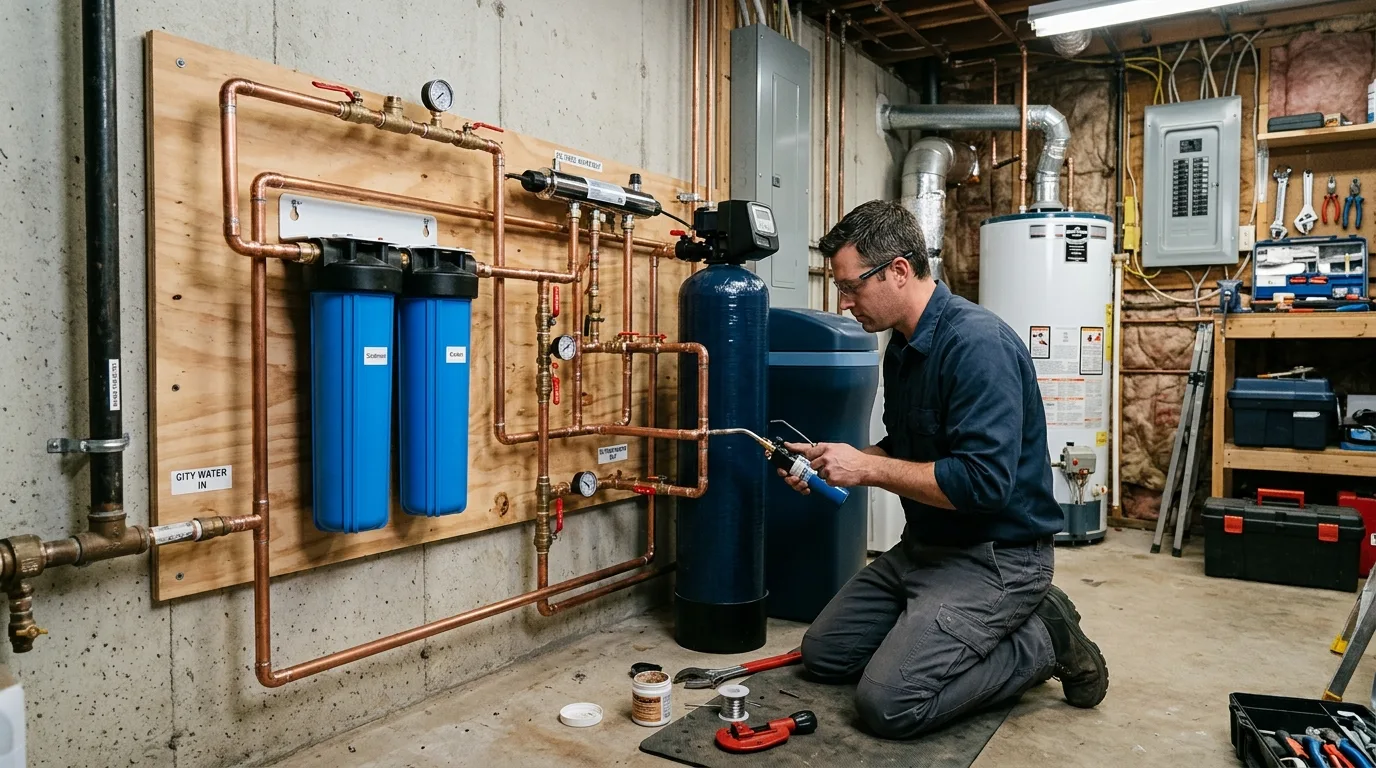
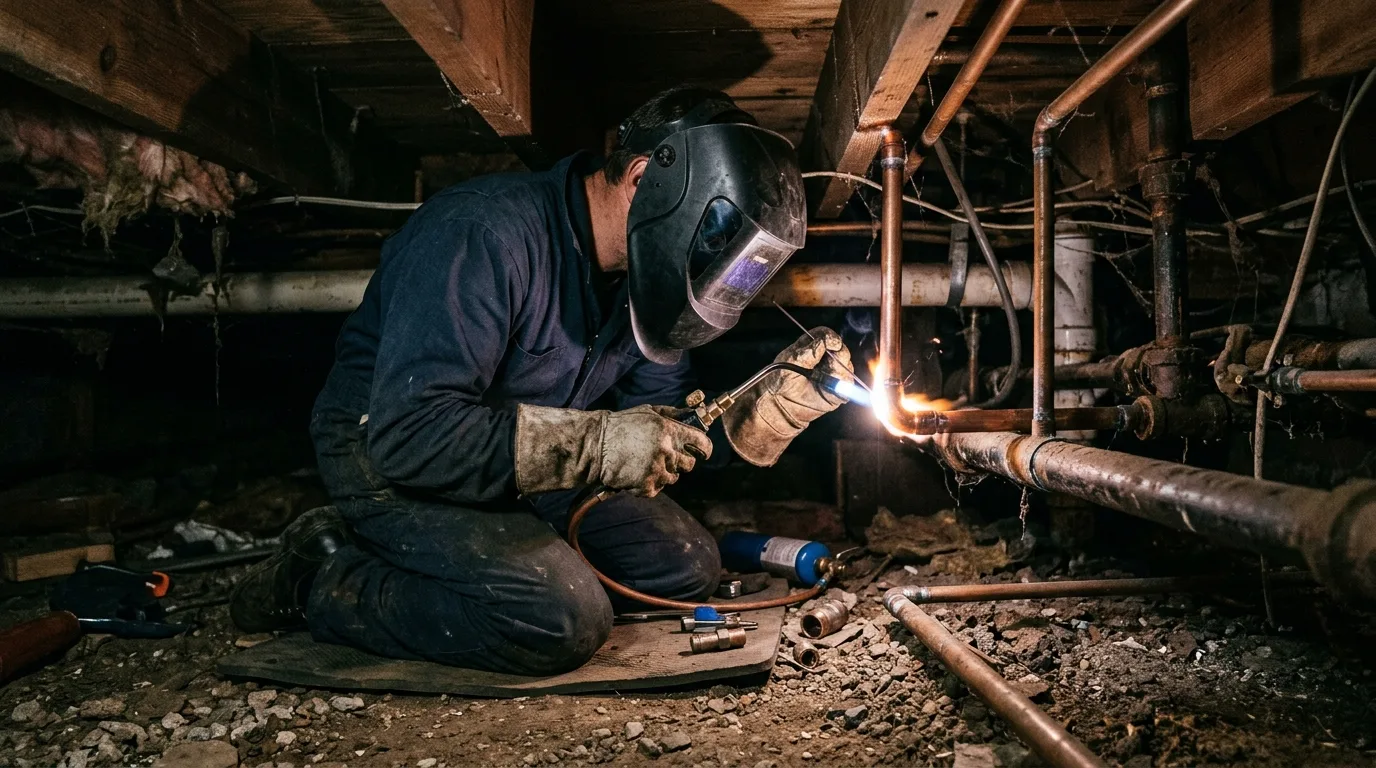
One more thing worth saying plainly: if you are about to spend money on a repipe, a new water heater, or a tankless conversion, that is the moment to deal with hardness. Installing new equipment into untreated fifteen-grain water is buying the same failure timeline you just paid to escape.