01
Root-blocked laterals
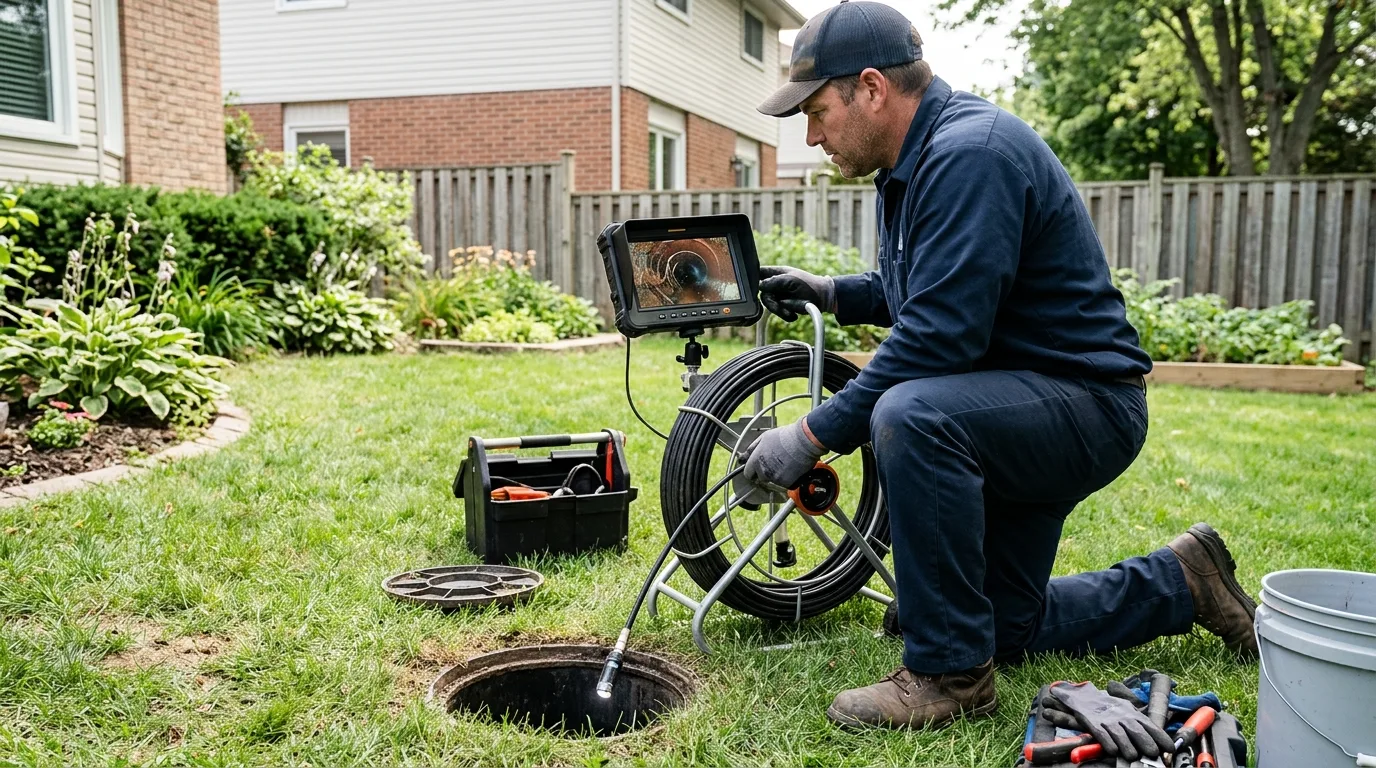
Clay pipe with joints every few feet, beneath streets with mature trees. Roots enter at the joints and build a mat. Cabling clears a channel; jetting and a camera tell you the actual condition.
Downtown Corona · 92879
The oldest housing stock in the city sits inside the Circle, and it comes with the oldest plumbing. Galvanized supply, cast iron waste, and clay laterals under eighty-year-old street trees.
Answered 24/7 · we know what is behind these walls before we open them
The neighborhood
Downtown Corona is where the city started, and the housing inside and immediately around the Grand Boulevard circle reflects that. A large share of it predates the Second World War, with additions and remodels layered on across eight decades. That history is the single most useful thing a plumber can know before arriving.
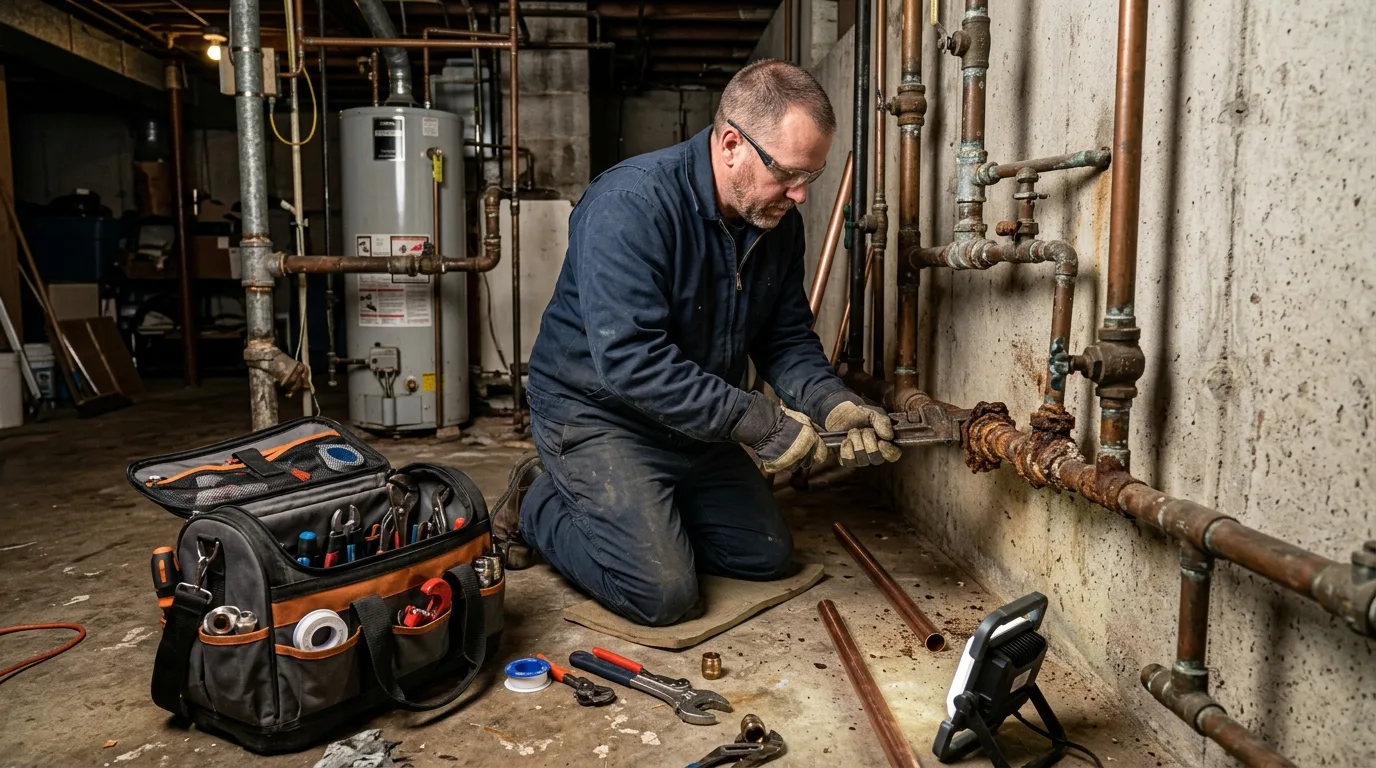
What it means practically is that almost nothing in these houses is one generation of material. A 1920s bungalow may have original galvanized supply in part of the house, copper from a 1970s kitchen remodel, and a length of PEX from a bathroom done last decade, all connected with whatever fittings were to hand at the time. Dissimilar metals in contact corrode. Transitions made without dielectric separation fail. And the failure shows up somewhere else entirely.
The drains tell a similar story. Cast iron waste piping was standard here for decades, and cast iron does not fail cleanly. It scales internally into a rough, tuberculated surface that catches everything passing over it, and it corrodes from the bottom of the pipe outward until the invert is gone. A downtown drain that backs up regularly is often not blocked in the ordinary sense; it has simply lost most of its usable diameter.
Outside, the laterals are frequently clay in older sections, jointed every few feet, running beneath streets lined with mature trees that were planted when the houses were new. Roots find the joints. That is not a defect; it is what happens when you put a jointed pipe near a large tree for seventy years.
None of this makes these homes bad. It makes them predictable, which is a considerable advantage if the person working on yours knows the pattern.
What we find
Galvanized steel was the standard supply material through the era most of downtown was built, and it has a well-documented failure mode. The zinc coating protects the steel for a few decades and then stops. After that the steel corrodes from the inside, and the corrosion product builds inward as a rough scale that steadily narrows the bore.
The symptoms arrive in order. Water pressure drops, particularly at upstairs fixtures and particularly when two are running. Hot lines fail before cold, because heat accelerates the process. Water runs discoloured after the house has sat unused, then clears. Eventually a section perforates and you have a leak inside a wall.
The mistake people make is treating each symptom as its own repair. Replacing a section of pipe that has failed leaves the rest of the same-age pipe in place with the same amount of life left. On a house where the galvanized is original, sectional repair is spending money to postpone a conversation.
The honest assessment is usually a repipe, and on a downtown house it is a job with specific complications: plaster and lath rather than drywall, finished basements and crawlspaces, original woodwork and tile worth protecting, and often no straightforward path for new runs. It takes longer and it needs more care. It is also the last time anyone will have to think about the supply piping in that house.
We plan access before we cut, protect finishes rather than apologising for them afterwards, and where the layout permits, run new lines through routes that never touch the historic fabric.
Common calls
The pattern here is consistent enough that we usually know before we arrive.
01
Clay pipe with joints every few feet, beneath streets with mature trees. Roots enter at the joints and build a mat. Cabling clears a channel; jetting and a camera tell you the actual condition.
02
Internal scaling and bottom-of-pipe corrosion. Repeat backups in the same line, sometimes with a distinctive slow gurgle. Lining or replacement rather than another clearing.
03
Gradually worsening flow, worse upstairs and worse on hot. Often blamed on the city. Almost always the pipe.
04
Galvanized to copper without dielectric separation, corroding at the joint. Common wherever a partial remodel met original pipe.
05
Slow leaks that show as staining or bubbling paint long before anyone hears water. Detection first, then a planned opening rather than exploratory demolition.
06
Closets, service porches, and additions with marginal venting and no seismic strapping. Replacement here is as much about compliance as capacity.
How we work
Older houses reward patience and punish assumptions.
Build year, what has been remodeled and when, and any history of backups or leaks. On a downtown property this shortens diagnosis considerably.
Camera on drain problems, moisture metering and detection on suspected leaks, and a pressure gauge on supply complaints. We do not open plaster on a hunch.
Supply, waste, and every transition between them. Mixed-material houses fail at the joins, and knowing what meets what is most of the diagnosis.
Including whether the sensible answer is a repair now or a larger job planned properly. We will tell you when patching is the wrong purchase.
Access planned to minimize damage to plaster, tile, and original woodwork, with protection down before tools come out.
Pressure held under test, the cleared drain re-cameraed, and photographs of whatever is out of reach so you can see it too.
Pre-1945
Much of the housing stock inside the Circle
92879
Primary downtown ZIP
24/7
Dispatch, including nights and weekends
Camera
Standard on any repeat drain issue
Local conditions
Three local factors matter more downtown than anywhere else in the city.
Mature trees. The streets around the Circle carry some of the oldest planted trees in Corona, and their root systems are correspondingly large. Combined with jointed clay laterals, this produces the single most common sewer problem in the area. A one-off clearing treats the symptom. A camera survey tells you whether you are managing a recurring maintenance item or looking at a lateral replacement, and trenchless methods matter here, because excavating a front yard with established landscaping and street trees is expensive and often unwelcome.
Hard water on old pipe. Corona’s supply runs fifteen to twenty grains, and mineral deposition compounds every problem galvanized pipe already has. It also scales water heaters, fixture cartridges, and valve seats. In a downtown house the practical effect is that everything wears out faster than the same component would elsewhere.
Pressure. Downtown sits comparatively low in the city’s elevation range, and low position within a municipal pressure zone generally means higher static pressure at the house. On modern plumbing that is a wear issue. On eighty-year-old supply piping it is a failure risk, and it is one of the first things we measure. A working pressure regulator matters more on an old house than a new one, not less.
There is also a practical point about foundations. Downtown has a higher proportion of raised foundations than newer parts of Corona, which is genuinely good news: a crawlspace makes leak location, repiping, and drain work dramatically easier than the slab construction that dominates south of here. Where a downtown property has been built on or added to on a slab, though, the same slab leak considerations apply as anywhere else.
Downtown Corona
If the same line has failed twice, the next useful step is a camera, not another cable.
Answered 24/7 · upfront pricing before any work
Full service list
Downtown property
A camera inspection of the lateral and a pressure test of the supply tell you more about an older house than any other hour you can spend.
Independent local contractors · workmanship guarantee on completed work
Downtown Corona FAQs
Yes; it is a significant part of what we do. The housing inside and around the Circle needs a different approach to a newer tract home, and the difference is mostly knowing what materials to expect and where they meet.
Galvanized supply, cast iron waste, clay laterals, and plaster walls all change how a job is planned. We plan access before cutting and protect finishes as a matter of course.
Usually not. Gradually worsening pressure in an older downtown home is almost always corroded galvanized supply piping narrowing internally. It is worse upstairs and worse on hot water, which is the signature.
It is worth confirming with a gauge before assuming anything. If static pressure at the hose bib is fine but flow inside the house is poor, the restriction is your piping.
The indicators are cumulative: falling pressure, discoloured water after the house sits, hot lines noticeably worse than cold, and more than one leak in a few years.
Sectional repair on original galvanized is postponing rather than fixing. If your house still has its original supply piping, the useful question is when to repipe rather than whether.
Roots, almost certainly. Clay laterals are jointed every few feet, and the mature street trees downtown have root systems that find those joints reliably.
A camera inspection shows whether it is an intrusion you can manage with periodic jetting or damage that needs the line replaced. Trenchless methods are worth asking about; they avoid trenching an established front yard.
We plan to avoid it. Access is chosen before any cutting, we prefer routes through closets, crawlspaces, and non-historic surfaces, and protection goes down before tools come out.
Where an opening is unavoidable we show you exactly where and how large first. Cutting plaster on a guess is not something we do.
Fewer than newer parts of Corona, because raised foundations are more common here, and a crawlspace makes leak location vastly easier.
Where a downtown property has a slab addition or was rebuilt on a slab, the same considerations apply. We establish the foundation type before diagnosing anything under the floor.
It is durable and it does not last forever. Cast iron scales internally into a rough surface that catches waste, and it corrodes from the bottom of the pipe upward until the invert is gone.
Repeat backups in the same line, in a house of this age, are worth a camera. The answer may be lining rather than replacement, which is far less disruptive.
Yes. Dispatch is answered 24 hours a day and we cover the downtown grid, the Circle, and the surrounding older neighborhoods for emergencies at any hour.
For an active leak, shut the water off at the main first if you can reach it safely, then call. That one step limits most of the damage.
The usual split is that the property owner is responsible from the building to the point of connection at the main, which means the run under the parkway and the street trees is generally yours.
It is worth confirming for your specific address before work starts, because responsibility for the section in the right of way varies. Where a city tree caused the damage, that is a separate conversation and worth documenting with a camera survey.
Not reliably. Sixty or seventy years of internal corrosion narrows a three-quarter-inch pipe to something closer to a straw, and no fixture compensates for a supply that cannot deliver volume.
Replacing the fixture usually disappoints. Repiping the branch that serves the bathroom is the real fix, and it can be done ahead of the rest of the house if a full repipe is not on the cards yet.
Downtown Corona · 92879
Diagnosis that accounts for galvanized supply, cast iron waste, and clay laterals rather than assuming modern materials.
Dispatch answers 24/7 · same-day and emergency response available