01
Valve cartridge replacement
The correct part for the specific valve body, with seats and springs replaced and the body cleaned. Repair first where a repair is genuinely durable.
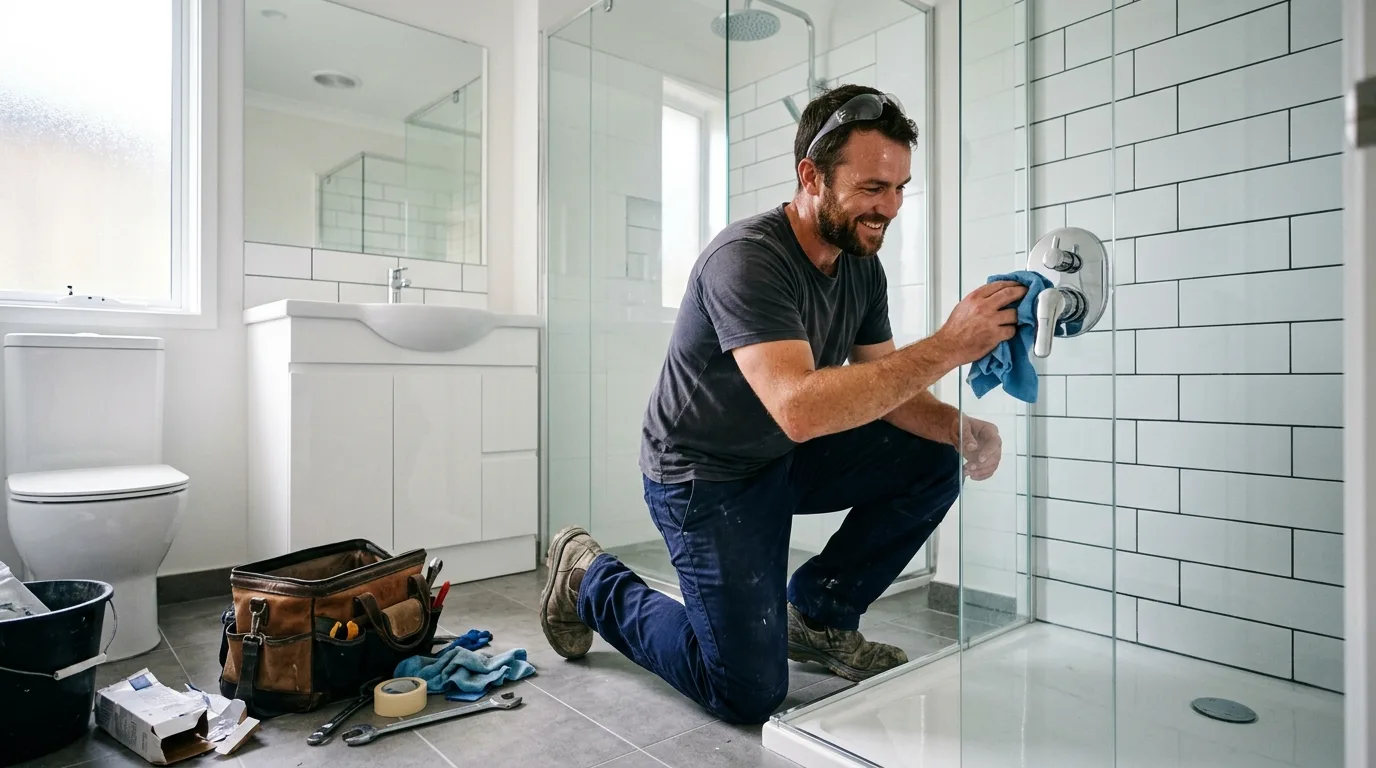
Showers & tubs · Corona, CA
The valve behind a shower wall is the one fixture in the house you cannot inspect. When it starts dripping or the temperature stops holding, the repair is as much about access as plumbing.
Answered 24/7 · access cut cleanly and documented before any wall work
Behind the tile
Every other fixture in a house can be inspected. You can look under a sink, behind a toilet, at a water heater. A shower valve sits inside a wall behind tile or a surround, and the only evidence you get about its condition is how it behaves.
Which is why a shower drip deserves attention that a sink drip does not. A dripping showerhead means the valve is no longer closing fully. The water going down the drain is the visible part. The question that matters is whether water is also going somewhere else, past a failing seal, into the wall cavity, into the framing, into a subfloor. Very often it is not. Sometimes it is, and by the time it shows on the other side of the wall the repair has grown considerably.
The other common failure is temperature. A shower that runs hot then cold, or that scalds when a toilet is flushed, has a pressure-balancing or thermostatic cartridge that is no longer doing its job. That is a comfort problem and a safety one, particularly in households with children or elderly residents.
Modern valves are required to include anti-scald protection. Older two-handle valves generally do not have it, and a fair number of Corona bathrooms still run original valves from an era when it was not required. Replacing one is a good moment to fix that.
Most valves are repairable. Cartridges, seats, springs, and stems are replaceable parts, and if the valve body is sound and a kit exists, that is the right first move. The complication is that many older bodies have no parts available, and then the job becomes a body replacement, which means opening the wall.
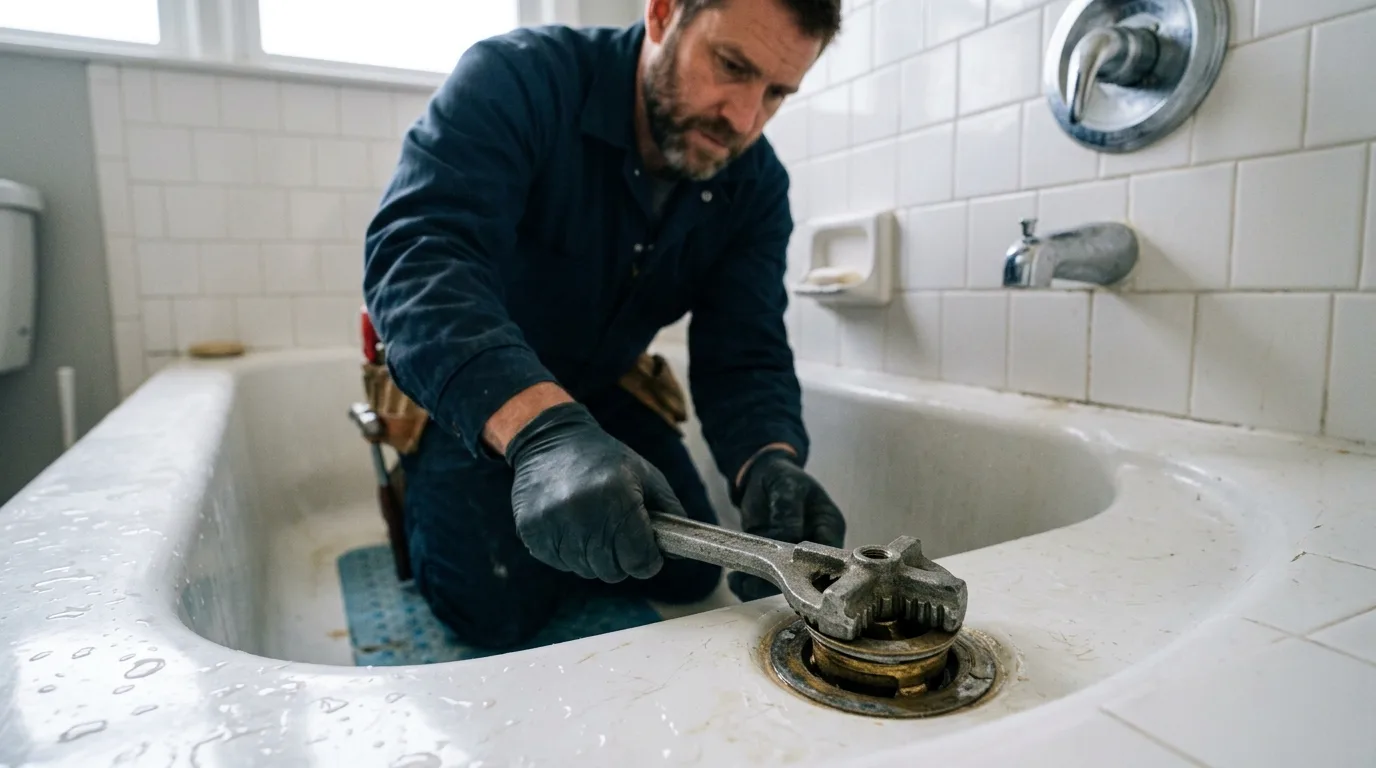
Down below
Tub and shower drains fail differently to every other drain in the house, because what blocks them is hair bound together with soap and mineral. In hard water that combination forms a dense, felted mass that grips the pipe wall, and it builds steadily rather than suddenly. Most people adapt to a slow drain for months before treating it as a problem.
The right approach is mechanical: pull the stopper assembly, remove the mass directly, and clear the trap. Chemical drain openers are a poor answer here; they rarely dissolve a hair mat completely, they sit in the trap in the meantime, and on older or marginal piping they do real damage. We would rather spend twenty minutes with proper tools.
A tub’s overflow gasket is a leak source that hides well. The gasket behind the overflow plate hardens with age, and water escaping there only appears when the tub is filled above the overflow, so it leaks during baths and never during showers, which makes the pattern genuinely confusing for homeowners. The evidence shows up as a stain on a ceiling below or a soft spot at the base of the tub apron.
A shower pan failure is more serious. A pan liner that has cracked, or a pan that was never sloped correctly to the drain, leaks continuously during use and does so directly into the floor structure. This is not repairable by resealing the surface; a failed pan means the shower floor comes out.
Because both of these can present identically to a supply-side leak, we use moisture metering and, where the picture is not clear, proper leak detection before opening anything. Cutting the wrong wall is expensive and avoidable.
Scope
From a cartridge swap to a full bathroom rough-in.
01
The correct part for the specific valve body, with seats and springs replaced and the body cleaned. Repair first where a repair is genuinely durable.
02
When no parts exist for an older body, or the body itself is compromised. Includes access, new valve, and the wall left ready for the finish trade.
03
Replacing older non-compliant valves with pressure-balancing or thermostatic units, set and verified at a safe maximum outlet temperature.
04
Stopper assemblies, trip levers, overflow gaskets, trap clearing, and drain body replacement where the flange or trap has corroded through.
05
Tub spout diverters, three-way and volume-control diverters, handheld and rain-head combinations, and trim replacement on sound existing valves.
06
New valve and drain positions set to plan, pressure-tested before the wall closes, with access panels specified where the layout warrants one.
Sequence
Cartridge work is often same-visit. Valve replacement is typically a day.
Drip, temperature swing, pressure loss, or an unexplained leak. Each points somewhere different, and getting this wrong means cutting the wrong wall.
Moisture readings, an inspection from the back side or the ceiling below where accessible, and leak detection where the source is genuinely ambiguous.
Manufacturer and model determined from the trim, so we know whether a cartridge is available and whether the body can stay.
If the wall must be opened, we show you where and how large, and we prefer the back side of the wall wherever the layout allows it.
Cartridge, seats, and springs, or a full valve body with new connections and appropriate transitions to the existing pipe material.
Pressure held, hot and cold verified, anti-scald limit set, drain run under load, and the access left clean and squared for whoever closes it.
120 °F
Maximum shower outlet temperature under code
2.0 gpm
California maximum for new showerheads
1 day
Typical valve body replacement
24/7
Dispatch for an active leak
Why here
Corona’s bathrooms have three local characteristics that shape this work.
Scale is the primary killer of shower valves. At fifteen to twenty grains, mineral deposits inside the valve body, on the cartridge, and across the sealing surfaces. A cartridge that would last a decade in soft water can start weeping here in a few years, and the deposits are also what makes an old cartridge seize so firmly in its bore that removing it risks damaging the body. When a cartridge will not come out cleanly, a small repair becomes a wall opening, which is why softening pays back in places people never think to count it.
The same mineral closes off showerhead nozzles and the small internal passages of diverters, which is the most frequent cause of a shower that has slowly lost pressure. Before anyone diagnoses a supply problem, the head should come off and go in a vinegar soak.
Slab construction changes the drain picture. A large share of Corona homes sit on slab, and a tub or shower drain in a slab home runs inside or beneath the concrete. There is no crawlspace to inspect from, so a drain-side leak is invisible and, when confirmed, is genuinely a slab job rather than a plumbing repair. Correct diagnosis before excavation is not a nicety here; it is the whole difference between a targeted repair and a demolished bathroom floor.
Pressure again. Houses at the low end of a municipal pressure zone can sit well above the code limit of 80 psi to fixtures, and shower cartridges are among the first components to show it. Repeated cartridge failure in one bathroom is a reason to put a gauge on the hose bib before fitting another part.
Finally, age. Bathrooms in the older parts of the city may still have original valve bodies with no parts support, galvanised supply, or cast iron tub drains, all of which turn a simple-sounding repair into something that needs a proper look first. We would rather tell you that on the phone than discover it behind your tile.
Straight answers
| Factor | Why it changes the number |
|---|---|
| Cartridge or body | A cartridge in an accessible, supported valve is the least expensive outcome. A body replacement involves access, a new valve, and new connections. |
| How we get access | A cut from the back side in a closet or adjacent room is far cheaper than going through tile. Where an access panel already exists, cheaper still. |
| Tile and finish | Cutting through tile means matching or replacing it afterwards, and discontinued tile is a real constraint. We plan access to avoid this wherever possible. |
| Parts availability | Common current valve families have parts on hand. Discontinued bodies may have no support at all, which forces replacement regardless of condition. |
| Pipe material behind the wall | Copper is routine. Galvanised means corroded threads and often an argument for replacing more than the valve. Older CPVC and polybutylene need specific transitions. |
| Drain-side work | A stopper and trap clear is quick. A corroded drain body or a tub shoe replacement means access below, and on a slab that is a different job entirely. |
| Pan condition | A failed shower pan liner cannot be repaired from the surface. If the pan is the leak, the shower floor comes out, and we will confirm that before saying it. |
| Remodel versus repair | Rough-in work while a wall is already open is efficient and inexpensive relative to the same work later. It is the cheapest hour in bathroom plumbing. |
Shower dripping?
If a valve is no longer closing fully, it is worth knowing where else the water is going before it shows on a ceiling.
Answered 24/7 · upfront pricing before any work
Related work
Coverage
Remodeling a bathroom?
Valve height, drain position, and access panels are decisions that cost nothing now and a great deal later.
Independent local contractors · workmanship guarantee on completed work
Shower & tub FAQs
Usually not. In most cases the valve cartridge has worn and needs replacing, and if the valve is an accessible, currently supported model, that is a straightforward same-visit repair through the trim opening.
It becomes a bigger job when the valve body is discontinued with no parts available, or when a scaled cartridge will not come out without risking the body. Then the wall has to be opened, and we will tell you before we start.
That is the pressure-balancing element in the valve failing to compensate, or the absence of one entirely in an older two-handle valve. When cold pressure drops elsewhere in the house, the mix at the shower shifts hot.
A pressure-balancing or thermostatic valve fixes it. It is also a safety upgrade, scald protection is required on new installations for exactly this reason.
Not always, and we work hard to avoid it. The first thing we look for is access from the back side of the wall, a closet, a hallway, an adjacent room, or an existing access panel. Drywall is cheap to repair; tile often is not.
Where the valve genuinely can only be reached from the front, we show you exactly where and how large the opening will be before cutting anything.
We would advise against it. Tub blockages are hair bound with soap and mineral into a dense mat, and chemical openers rarely clear that completely; they just sit in the trap, and on older or marginal piping they cause real damage.
Pulling the stopper assembly and removing the mass mechanically takes about twenty minutes and actually solves it. It is also something a homeowner can often do with a hair-catching tool.
Several candidates, and the pattern tells you a lot. If it only happens when someone takes a bath, suspect the overflow gasket; it leaks when the tub fills above the overflow plate and never during showers.
If it happens during showers, suspect the pan, the drain connection, or the valve. We meter for moisture and locate the source before opening anything, because cutting the wrong ceiling is an expensive way to guess.
The pan is the waterproof layer beneath the shower floor. When its liner cracks, or when it was never sloped correctly to the drain, water passes straight into the floor structure every time the shower is used.
It cannot be fixed by resealing grout or caulk at the surface; those are not the waterproofing layer. A failed pan means the shower floor is rebuilt. We confirm it properly before delivering that news.
Start with the showerhead. Mineral scale closes the nozzles gradually and this is the most common cause by a wide margin. Take it off, soak it in vinegar overnight, and rinse it clear.
If that does not restore it, the next suspects are a scaled or failing cartridge, a partially closed valve, or a whole-house issue, and if other fixtures are weak too, the problem is not the shower.
Current models are far better than the reputation suggests. California limits new showerheads to 2.0 gallons per minute, and a well-designed head at that rate feels perfectly adequate.
What ruins the experience is not the flow rating but scale in the nozzles and inadequate hot water delivery. Fix those and a 2.0 gpm head is fine.
Code requires shower valves to limit outlet temperature to a maximum of 120 degrees Fahrenheit. Most valves have an adjustable limit stop that sets this, and it is frequently left at the factory position or knocked out of adjustment during a repair.
We set and verify it as part of any valve work. It matters most in households with young children or elderly residents, where a few degrees is the difference between hot and a burn.
Before the tile goes on, and ideally before the fixtures are ordered. Valve height, drain position, and whether the chosen trim matches the valve body are decisions that are trivial with the wall open and painful afterwards.
It is also the moment to ask for an access panel where the layout allows one. It costs almost nothing during a remodel and it turns every future valve repair into a routine job instead of a tile-cutting exercise.
Corona, CA · bathroom specialists
Access explained before it is cut, valve options given honestly, and the wall left ready for the finish trade.
Dispatch answers 24/7 · same-day and emergency response available