01
Pressure above code
Houses low in a zone running well over 80 psi. Presents as hammering pipes, short fixture life, and weeping relief valves rather than as an obvious complaint.
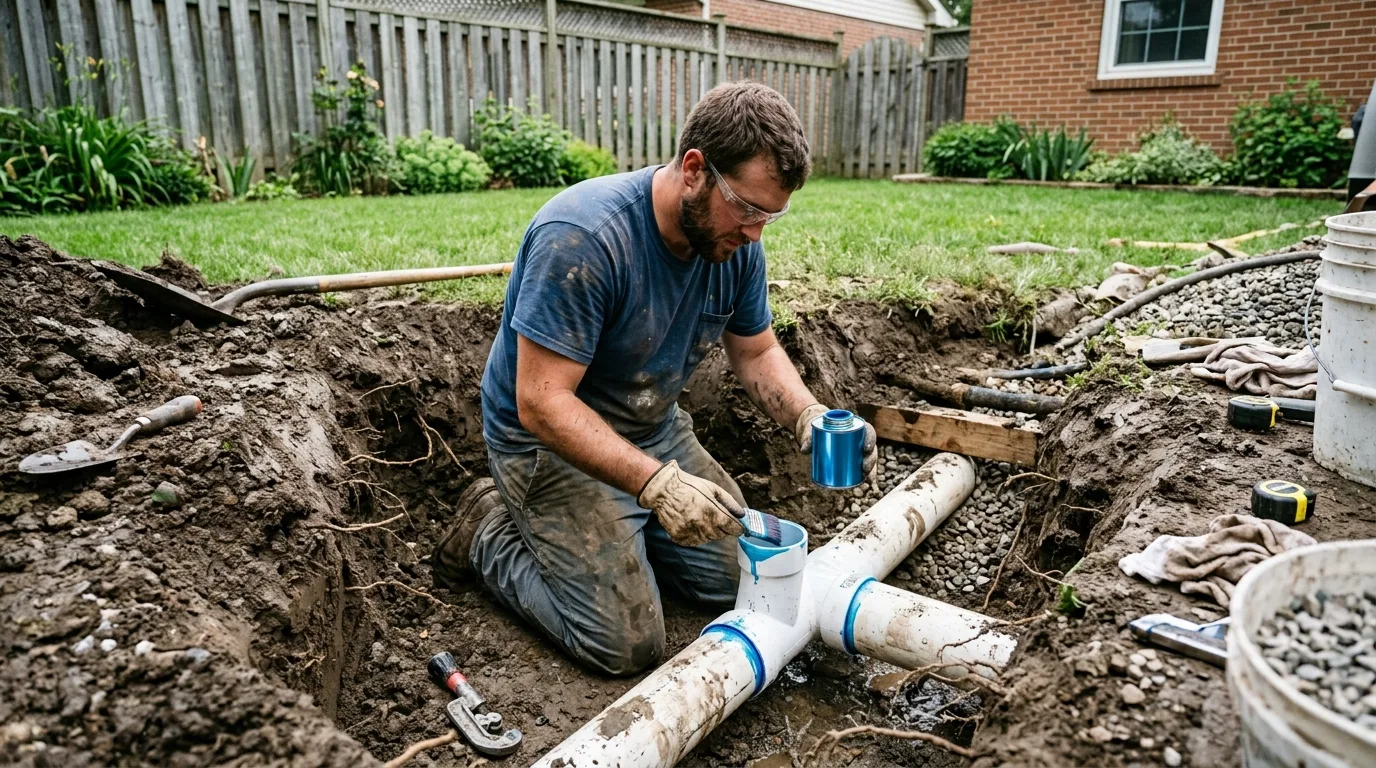
Green River · 92880 / 92882
Corona’s westernmost edge, hemmed between the Santa Ana River and the 91. Canyon geography, real elevation change, and pressure that has to be measured rather than assumed.
Answered 24/7 · we cover the canyon end of the 91 corridor
The neighborhood
Green River occupies Corona’s far western end, where the city narrows into the Santa Ana River canyon and the 91 runs through toward Orange County. It is geographically distinct from the rest of Corona, hemmed by the river corridor on one side and rising terrain on the other, with the freeway threading between.
That geography produces a specific set of plumbing conditions. The first is elevation. Like Sierra Del Oro immediately east, properties here sit at meaningfully different heights within short distances, and municipal water pressure is a direct function of position within a pressure zone. A house low in its zone can run well above the 80 psi code limit; one higher up can be marginal. There is no neighborhood-level answer; it is measured at the address.
The second is drainage. Canyon-edge and hillside lots move water in ways flat lots do not. Rainfall and irrigation run downslope, saturated soil collects at low points, and water from uphill can present as damp at a foundation with no plumbing fault anywhere near it. This matters because the symptom, persistent damp near a foundation or a slab edge, looks exactly like a leak. Ruling out drainage before excavating is not fussiness; it is the difference between fixing the problem and digging a hole for nothing.
The housing spans roughly the 1970s through the 2000s with a mix of ages, predominantly slab-on-grade, with copper or PEX supply and ABS drains. Original builder-grade regulators and heaters in the older portions are at or past end of life.
One practical note: this is the furthest corner of the city, and some contractors treat it as an afterthought. We cover it as normal service area, including nights and weekends.
Access
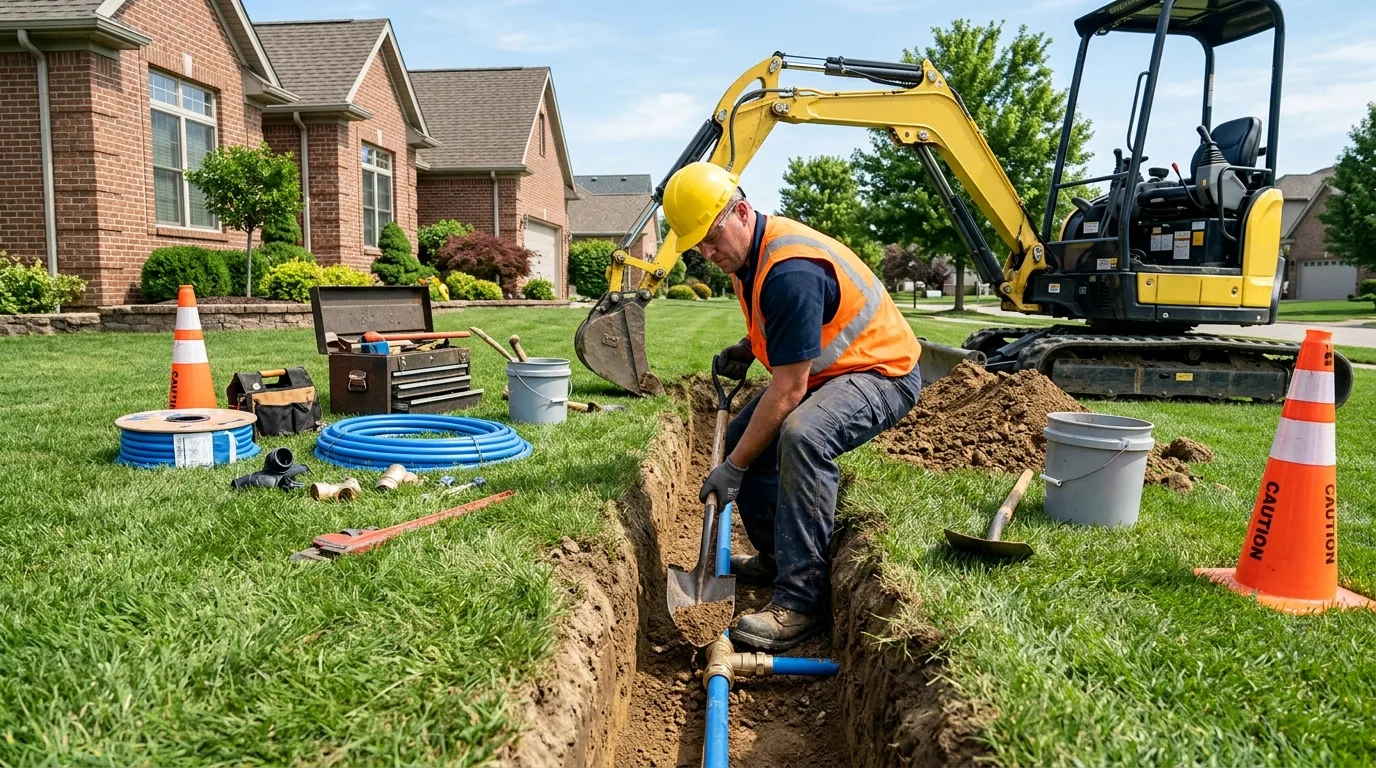
On a flat lot, a buried repair is mostly plumbing cost. On a terraced canyon-edge lot with retaining walls, hardscape, and slope, the plumbing is often the smaller half of the bill. Excavation is harder, equipment access is limited, spoil has nowhere convenient to go, and restoration involves structural landscaping rather than turf.
That changes the calculus in two ways. First, accurate location is worth much more here. Spending an extra hour with acoustic equipment and pressure isolation to put a leak in a small area rather than a general one directly avoids thousands in unnecessary excavation and restoration. We would always rather locate carefully than dig speculatively, and on these lots the argument is overwhelming.
Second, trenchless methods carry a bigger advantage. Replacing a service line or a sewer lateral by pulling or lining from pits at either end avoids trenching across terracing and retaining structures. Where the geometry permits it, that is frequently the difference between a manageable project and one that requires a landscaping contractor afterwards.
Slab work follows the same logic. Where a slab leak is confirmed, the choice between spot repair and rerouting overhead through the attic depends partly on access, and on these floor plans an overhead reroute is often both cleaner and cheaper than repeated concrete work.
None of this is exotic. It is simply thinking about the whole cost of a repair rather than the plumbing line item, which is what a canyon-edge property demands.
Common calls
Elevation and geography drive the list.
01
Houses low in a zone running well over 80 psi. Presents as hammering pipes, short fixture life, and weeping relief valves rather than as an obvious complaint.
02
Properties near the top of a zone with genuinely marginal pressure, compounded by scaled aerators or a regulator restricting further.
03
Valves throttling a large pressure drop wear faster, and hard water scales the seat at the same time. Early failure is normal here.
04
Slope drainage, irrigation runoff, and uphill water presenting as foundation damp. Ruled out before anything is excavated.
05
Slab-on-grade throughout. Located acoustically and thermally, with overhead reroute often preferable to repeated concrete work.
06
Systems spanning significant elevation change, where the lower zones run far above what the components tolerate, plus UV damage on exposed pipe.
How we work
Measure, then rule out, then locate, then dig, in that order.
Static and flowing at your hose bib, held where creep is suspected. Nothing here is inferred from the street or the neighborhood.
On any foundation damp, we establish whether the water is plumbing or slope before proposing excavation. This step saves real money.
Everything off inside, low-flow indicator watched, then the main at the house closed to split indoor from outdoor.
Acoustic, thermal, and pressure methods as required. On these lots the value of locating well is unusually high.
What is above the line, what equipment can reach, and whether trenchless or an overhead reroute is the better whole-cost answer.
Pressure held, meter rechecked, ground properly backfilled and compacted, and the work documented with photographs.
50–65
Target psi we set to
80 psi
Code maximum to fixtures
Trenchless
Usually preferred on terraced lots
24/7
Dispatch to the canyon end of the 91
Local conditions
Elevation. The dominant factor. It governs static pressure, it affects how multi-story houses behave floor to floor, and it affects irrigation systems spanning vertical distance on a single property. It also means the pressure conversation here is more consequential than in flat parts of the city.
Slope and drainage. Water moves across these lots. Persistent damp at a foundation is as likely to be drainage as plumbing, and establishing which comes first. Sustained saturation against a foundation is its own problem regardless of source, and worth addressing either way.
Hard water. Fifteen to twenty grains, doing the usual: sediment in water heaters, scale on fixture cartridges and shower valve bores, mineral on regulator seats. Combined with the harder work regulators do at this elevation, early PRV failure is the norm rather than the exception.
Sun on outdoor plumbing. Exposed PVC degrades under ultraviolet and becomes brittle, and on terraced lots there is often more above-ground irrigation pipe than on a flat lot. Cracked exposed pipe here is frequently a material-selection problem from a previous installation rather than a failure of good pipe.
Proximity to the river corridor. Relevant mainly for soil moisture and for drainage behavior on lower-lying parcels. It is worth mentioning if your property sits near the canyon floor, because it changes what we expect to find.
Green River
A hundred feet of elevation changes the number materially. Get yours measured before replacing another part.
Answered 24/7 · upfront pricing before any work
Full service list
Green River
On a canyon-edge lot that can be drainage rather than plumbing. Worth establishing which before anyone excavates.
Independent local contractors · workmanship guarantee on completed work
Green River FAQs
Yes, as normal service area including nights and weekends. It is the furthest corner of Corona and some contractors treat it as an afterthought; we do not.
Dispatch is answered 24 hours a day, and we cover the canyon end of the 91 corridor along with Sierra Del Oro immediately east.
Elevation. Municipal pressure depends on how far below its supply tank a property sits, and on canyon-edge terrain that distance changes quickly over a short horizontal span.
A house low in its pressure zone can be well above the 80 psi code limit while one higher up is marginal. It genuinely has to be measured at your address.
Not necessarily, and on a slope it frequently is not. Rainfall and irrigation run downhill, saturated soil collects at low points, and water originating uphill can present as damp at a foundation with no plumbing fault nearby.
We rule out drainage before proposing any excavation. Establishing which it is costs very little and can save a completely unnecessary dig.
Terracing, retaining walls, slope, and limited equipment access. On a steep lot the plumbing is often the smaller part of the bill and restoration is the larger one.
That is exactly why we spend extra time locating precisely and why trenchless methods carry a bigger advantage here than on flat ground.
Trenchless replaces a buried line by lining it or pulling a new one through the existing path, using small pits at either end instead of a continuous trench.
On terraced canyon-edge lots it is frequently the better whole-cost answer. Whether it suits depends on the line condition and geometry, which a camera inspection establishes.
Yes, for two compounding reasons. A valve throttling a large pressure drop works considerably harder, and Corona hardness scales the valve seat at the same time.
Ten to fifteen years is a normal service life in clean water. At this elevation, low in a zone, expect the shorter end.
Ultraviolet exposure. Standard PVC is fine buried and becomes brittle in direct sun within a few years, then cracks with minor impact or thermal movement.
On terraced lots there is often more above-ground pipe than on a flat lot. Exposed runs need appropriate material or proper sleeving and coating.
Yes, the area is predominantly slab-on-grade. The mechanisms are the same as elsewhere in Corona.
What differs is the repair economics. Given excavation costs on these lots, rerouting a line overhead through the attic is often cleaner and cheaper than repeated concrete work.
Seasonally, in places. It rarely affects the plumbing directly but it changes excavation: a trench that fills with water needs dewatering, shoring, and more time, which shows up in the price.
It also makes leak detection harder, because damp ground is not evidence of anything on its own. Pressure isolation and acoustic work matter more here than looking for a wet patch.
It can. Heavy vibration finds pipe that was already marginal, particularly old clay laterals and rigid joints, and utility relocations occasionally disturb service lines that were never accurately mapped.
If problems start after nearby construction, get a camera survey and keep the dated footage. Establishing when the damage appeared is what makes any conversation about responsibility possible.
Green River · 92880
Pressure measured at your address, drainage ruled out before pipes are blamed, and response that actually reaches this end of the city.
Dispatch answers 24/7 · same-day and emergency response available