01
Hose bib replacement
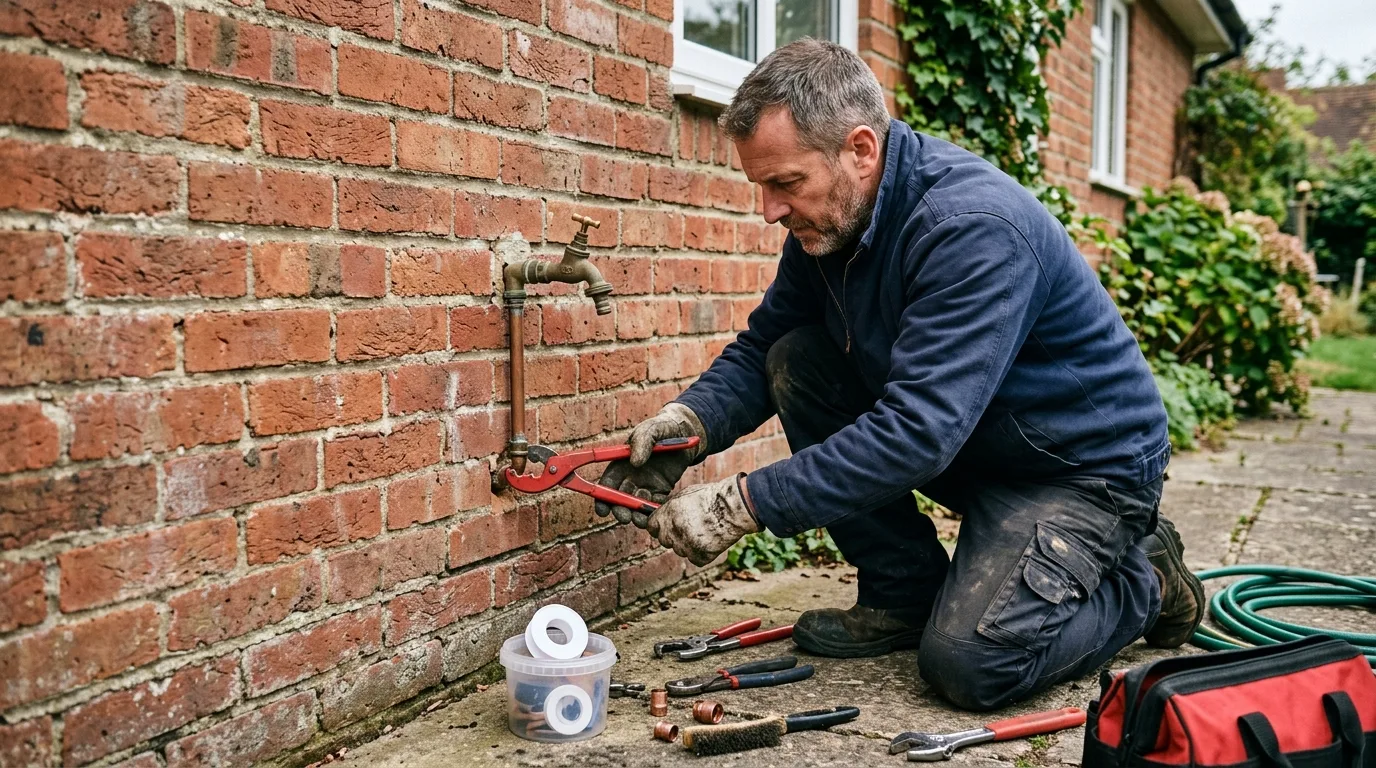
Failed spigots replaced with quarter-turn ball-valve bibs, properly braced to the structure so the pipe behind is not carrying the load every time a hose is pulled.
Outdoor plumbing · Corona, CA
The plumbing outside the house gets the least attention and the most sun. A weeping spigot, a failed anti-siphon valve, or a cracked irrigation supply runs for months before anyone notices it on a bill.
Answered 24/7 · hose bibs, backflow devices, and irrigation supply lines
Out of sight
Everything about outdoor plumbing works against early detection. A leak inside a house shows up on a ceiling, a floor, or a cabinet within days. A leak outside soaks into the ground, runs into a planter, or evaporates off warm concrete, and the only evidence is a number on a bill that arrives weeks later.
The most common failure is the humble hose bib itself. The packing behind the handle dries out and weeps when the valve is open. The washer hardens and the spigot drips when it is closed. The threads at the outlet corrode until nothing seals against them. And the connection where the bib enters the wall, almost always the worst of the lot, is where a leak goes into the wall cavity or the stem wall rather than onto the ground.
That last one is the reason a weeping hose bib is worth attending to rather than tolerating. Water tracking back along the pipe into a stud bay, behind stucco, or into a slab edge does damage nobody sees for a very long time.
Then there is irrigation supply: the line running from the house to the valve manifold and, in most systems, a backflow prevention device somewhere in that path. These are buried, exposed, or both, and they crack, corrode, and get hit by shovels and edging equipment. A cracked supply line downstream of an always-open isolation valve leaks twenty-four hours a day, whether or not the sprinklers are running.
The fastest way to find out whether you have one: turn off every fixture inside, close the irrigation isolation valve, and watch the low-flow indicator on the water meter. If it is still turning, water is going somewhere. If it stops when the irrigation valve closes, you have narrowed it to the outside system in one step.
Protection
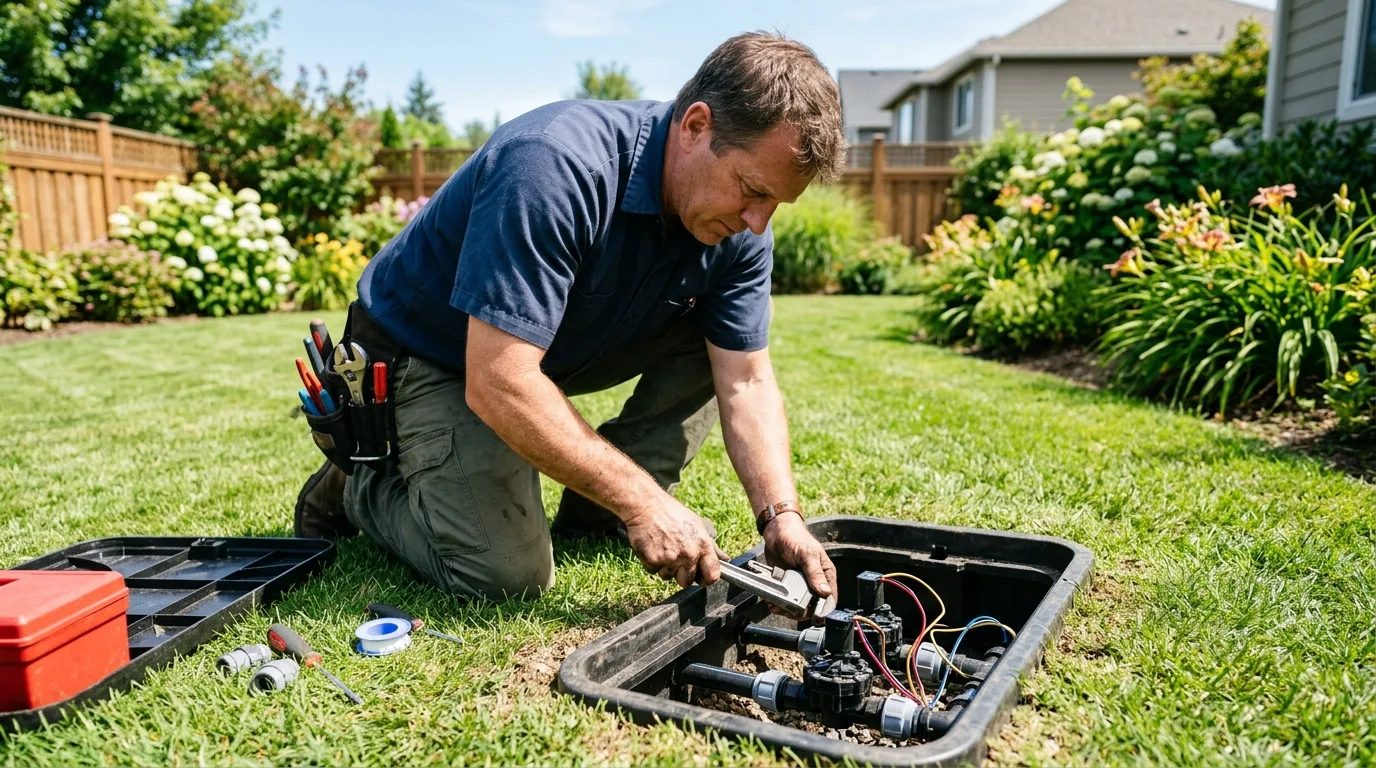
The purpose of a backflow preventer is straightforward: to stop water that has been outside the house from being drawn back into the drinking water supply. Irrigation water sits in pipes among fertiliser, soil bacteria, and whatever has been applied to the landscape, and a pressure drop in the main, a break, a hydrant draw, a utility repair, can siphon it backwards.
For that reason, irrigation systems are required to have backflow protection, and the type depends on the installation. An anti-siphon valve integrated into each zone valve is the most common residential arrangement. A pressure vacuum breaker or a reduced pressure assembly is used where the layout or the hazard level demands more.
The requirements are specific and easy to get wrong. An anti-siphon valve has to be installed above the highest downstream outlet by a defined margin, and it must not have a shut-off valve downstream of it. A great many systems installed by landscapers rather than plumbers get the height or the valve arrangement wrong, and the protection is then nominal rather than real.
Hose bibs need protection too, which surprises people. A hose lying in a pool of fertiliser, or dropped in a swimming pool, or attached to a chemical sprayer, is a direct cross-connection. A vacuum breaker screwed onto the outlet costs very little and solves it, and on many new installations it is required rather than advisory.
Devices fail. Anti-siphon valves stick, vacuum breakers weep, and reduced pressure assemblies discharge from the relief port when internal checks foul. Any of those is a signal to have the device tested rather than ignored.
Scope
Everything from a spigot to the supply feeding the whole landscape.
01
Failed spigots replaced with quarter-turn ball-valve bibs, properly braced to the structure so the pipe behind is not carrying the load every time a hose is pulled.
02
Additional bibs where the yard needs one, tied into the supply properly with an isolation valve and a vacuum breaker rather than a tee and hope.
03
The plumbing between the house and the valve manifold: leaks located, cracked or corroded sections replaced, isolation valves fitted where none exist.
04
Anti-siphon valves, pressure vacuum breakers, and reduced pressure assemblies installed and replaced to the height and configuration the code actually requires.
05
Heads blowing off, drip fittings failing, and irrigation components with unnaturally short lives, usually a pressure problem rather than a component problem.
06
Meter testing, isolation by section, and acoustic or pressure methods where a buried outdoor leak needs locating without excavating the whole yard.
Sequence
Most bib replacements are within the hour. Buried leaks take longer to find than to fix.
Everything inside closed, then the irrigation isolated, watching the low-flow indicator at each stage. This narrows a hidden leak to a section in minutes.
A gauge on a hose bib. Irrigation components fail early under high static pressure, and if that is the cause, replacing them without fixing it is pointless.
Bibs, valve manifold, backflow device, and any exposed supply piping, looking for weeping, corrosion, physical damage, and incorrect installation.
Isolation by section and, where needed, acoustic or pressure testing to put a buried leak in a small area rather than a general direction.
Bibs swapped and braced, supply sections replaced in appropriate material, backflow devices fitted at correct height with correct valve arrangement.
System pressurised, every joint checked, the meter watched again with everything closed, and any irrigation zones affected run to verify normal operation.
15 min
Meter test to confirm a hidden leak
¼ turn
The hose bib valve we fit
80 psi
Code maximum, and what most irrigation exceeds here
24/7
Dispatch for a broken supply line
Why here
Outdoor plumbing in Corona faces a specific set of conditions, and each one shortens the life of something.
Ultraviolet exposure. Our sun destroys unprotected plastic. PVC that is code-legal buried becomes brittle within a few years when installed above ground without protection, and it cracks under the slightest impact or thermal movement. A great deal of the failed exposed pipe we replace was never suitable for the location it was installed in. Where a run has to be above ground, it needs to be in the right material or properly sleeved and painted.
Static pressure. This is the biggest and most under-recognized factor. Corona spreads across a wide elevation range and houses at the low end of a pressure zone can sit well above 80 psi. Irrigation components are among the least tolerant things in the plumbing system, heads blow off risers, drip fittings pop, spray patterns mist rather than throw, and valve diaphragms fail early. If your irrigation eats components, the first thing to check is the house pressure, and the second is whether the irrigation branch has its own regulator, which is frequently the right answer.
Hard water. At fifteen to twenty grains, mineral scales drip emitters and misting nozzles closed and builds up on valve seats. Drip systems here need their filters and emitters checked far more often than the manufacturer literature suggests.
Soil movement and landscaping. Expansive soils shift, and irrigation trenching from previous installations leaves disturbed ground that settles unevenly. Add decades of shovels, edgers, fence posts, and hardscape projects, and buried supply lines in established yards accumulate damage. When we find a leak in an older Corona yard, physical damage from another trade is at least as common as material failure.
One more thing worth naming: because we irrigate heavily and year-round here, an outdoor leak is uniquely easy to miss. Wet ground near sprinklers is normal. That is precisely why the meter test matters; it does not care what the ground looks like.
Straight answers
| Factor | Why it changes the number |
|---|---|
| Bib replacement versus new location | Swapping an existing spigot is quick. Adding one where none exists means running supply, fitting an isolation valve, and penetrating the wall properly. |
| What is behind the wall | Copper is routine. Galvanised at the penetration is usually corroded at the thread and often means replacing more than the bib itself. |
| Buried or exposed | Exposed piping is straightforward. Buried lines mean locating first, then excavating, then backfilling, and landscaping and hardscape in the path add to all three. |
| Leak location difficulty | A leak that isolates cleanly to one section is quick. One that needs acoustic or pressure work across a large yard takes longer, and we quote the locating separately. |
| Backflow device type | An anti-siphon valve is inexpensive. A pressure vacuum breaker or reduced pressure assembly costs more and may need to be relocated to a compliant height. |
| Pressure correction | If the real problem is uncontrolled house pressure, a regulator on the irrigation branch or a PRV repair is the actual fix, and it is quoted plainly as such. |
| Restoration | Turf, planting beds, decorative gravel, pavers, and concrete all have to be opened and put back. Hardscape is the expensive one. |
| Emergency versus scheduled | A supply line broken and running is dispatched at any hour. Planned replacement in normal hours costs less. |
Water bill climbing?
Everything off inside, irrigation isolated, watch the low-flow dial. Fifteen minutes tells you whether you have a leak.
Answered 24/7 · upfront pricing before any work
Related work
Coverage
Bill jumped with no explanation?
An irrigation supply crack or a passing valve can run continuously for months. The meter test takes fifteen minutes.
Independent local contractors · workmanship guarantee on completed work
Outdoor plumbing FAQs
The drip itself is minor. What matters is where the water actually goes, if it is weeping at the wall penetration rather than the spout, it can track back into a stud bay, behind stucco, or along a slab edge and do damage nobody sees for years.
Replacement is inexpensive and quick. We fit quarter-turn ball-valve bibs and brace them to the structure so pulling a hose does not stress the pipe behind the wall.
Turn off every fixture inside the house and watch the low-flow indicator on your water meter, usually a small triangle or dial that spins at very low flow rates. If it moves, water is going somewhere.
Then close the irrigation isolation valve and look again. If it stops, the leak is in the outdoor system. If it keeps turning, it is between the meter and the house or inside it.
Yes. Irrigation water sits among fertiliser, soil bacteria, and whatever is applied to the landscape, and a pressure drop in the main can siphon it backwards into the drinking supply. Backflow protection is required, not optional.
The type depends on the installation, anti-siphon valves on each zone are the most common residential arrangement. The details matter: height above the highest outlet, and no shut-off valve downstream of the device.
Also worth having, and required on many new installations. A hose lying in a pool of fertiliser, dropped in a swimming pool, or attached to a chemical sprayer is a direct cross-connection with the house supply.
A screw-on vacuum breaker at the outlet costs very little and eliminates the risk entirely. It is one of the cheapest pieces of protection in the whole system.
Almost always pressure. Irrigation components are among the least tolerant parts of a plumbing system, and Corona houses at the low end of a municipal pressure zone can run well above the 80 psi code limit.
The fix is either correcting the house pressure at the PRV or fitting a dedicated regulator on the irrigation branch. Replacing heads without addressing that just repeats the failure.
Ultraviolet exposure. Standard PVC is fine buried and degrades badly in direct sun; it becomes brittle within a few years and then cracks with the slightest impact or thermal movement.
A lot of the failed above-ground pipe we replace was never suitable for that location. Exposed runs need appropriate material or proper sleeving and coating.
Yes, and it is common. The work is running supply to the new location, fitting an isolation valve so the bib can be serviced without shutting the house down, penetrating and sealing the wall correctly, and bracing the bib properly.
Where it gets more involved is a long run through finished space or around hardscape. We look at the route before quoting.
We handle the plumbing: the supply line from the house, isolation valves, backflow protection, and pressure. Heads, zone layout, drip emitters, and the controller are irrigation specialist territory.
There is overlap at the valve manifold, and we work either side of it. If a problem turns out to be a controller or a zone design issue, we will tell you rather than charge you for finding out.
It is a hard water problem. At fifteen to twenty grains, mineral builds up in the tiny orifices of drip emitters and misting nozzles and closes them off.
Practical measures: a proper filter on the drip zone, checked and cleaned on a schedule, and emitters that are serviceable rather than sealed. A whole-house softener helps, though most systems tap irrigation upstream of it deliberately.
A weeping bib is not. A broken supply line running continuously is, both for the water and because sustained saturated ground next to a foundation is its own problem.
If you cannot isolate it, or if water is running toward the house, treat it as urgent. If you can close the irrigation isolation valve and the flow stops, you have bought yourself time to schedule properly.
Corona, CA · outdoor plumbing
Spigots replaced properly, backflow protection fitted where code requires it, and irrigation supply diagnosed rather than guessed at.
Dispatch answers 24/7 · same-day and emergency response available