01
Service line leaks
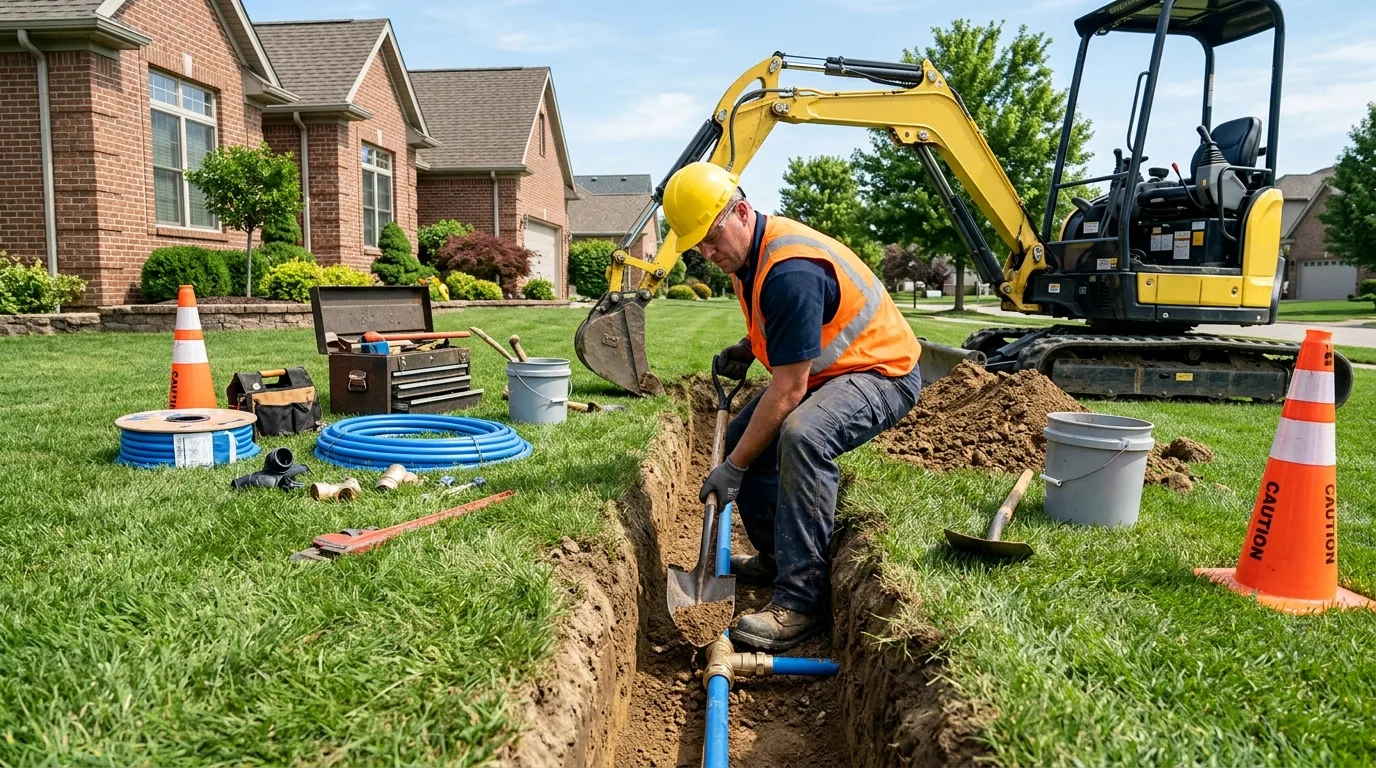
Long buried runs under mature landscaping. Located by isolation and acoustic methods so excavation happens once, in the right place.
El Cerrito · 92881 / 92879
Larger lots and a wide spread of build years mean the pipe running from your meter to your house may be far longer, and far older, than in a standard tract.
Answered 24/7 · long service lines located and tested properly
The neighborhood
El Cerrito covers a stretch of south-central Corona with a genuinely mixed character. There are original ranch homes from the 1960s and 1970s on generous lots, later infill from the 1980s and 1990s, and newer construction filling gaps between them. Lot sizes run well above the city average in places, and some parcels retain agricultural or semi-rural features from before the area was fully suburbanised.
That mix means we cannot assume much before arriving. Supply piping might be original copper, galvanized in the oldest properties, or modern PEX. Foundations are a mix of slab and, in some older homes, raised construction. Drains span cast iron, ABS, and everything in between, and laterals may be clay or plastic depending on when the house was connected.
What the area does have in common is distance. On a large lot, the service line from the water meter at the street to the point of entry at the house can be a long run, sometimes very long. That single fact changes the probability of where a problem lies. A leak on a fifteen-foot service line is unlikely. A leak somewhere along a hundred-foot run buried under decades of landscaping is a great deal more likely, and considerably harder to find.
The same applies to sewer laterals, which are correspondingly long and, where they are clay, offer many more joints for roots to find. And to irrigation, which on a large El Cerrito lot can be an extensive system with a lot of buried pipe.
Some properties in the area also have well or agricultural water history, disused irrigation infrastructure, or plumbing serving outbuildings and barns. Those are worth mentioning when you call, because they change what we test and in what order.
The long run
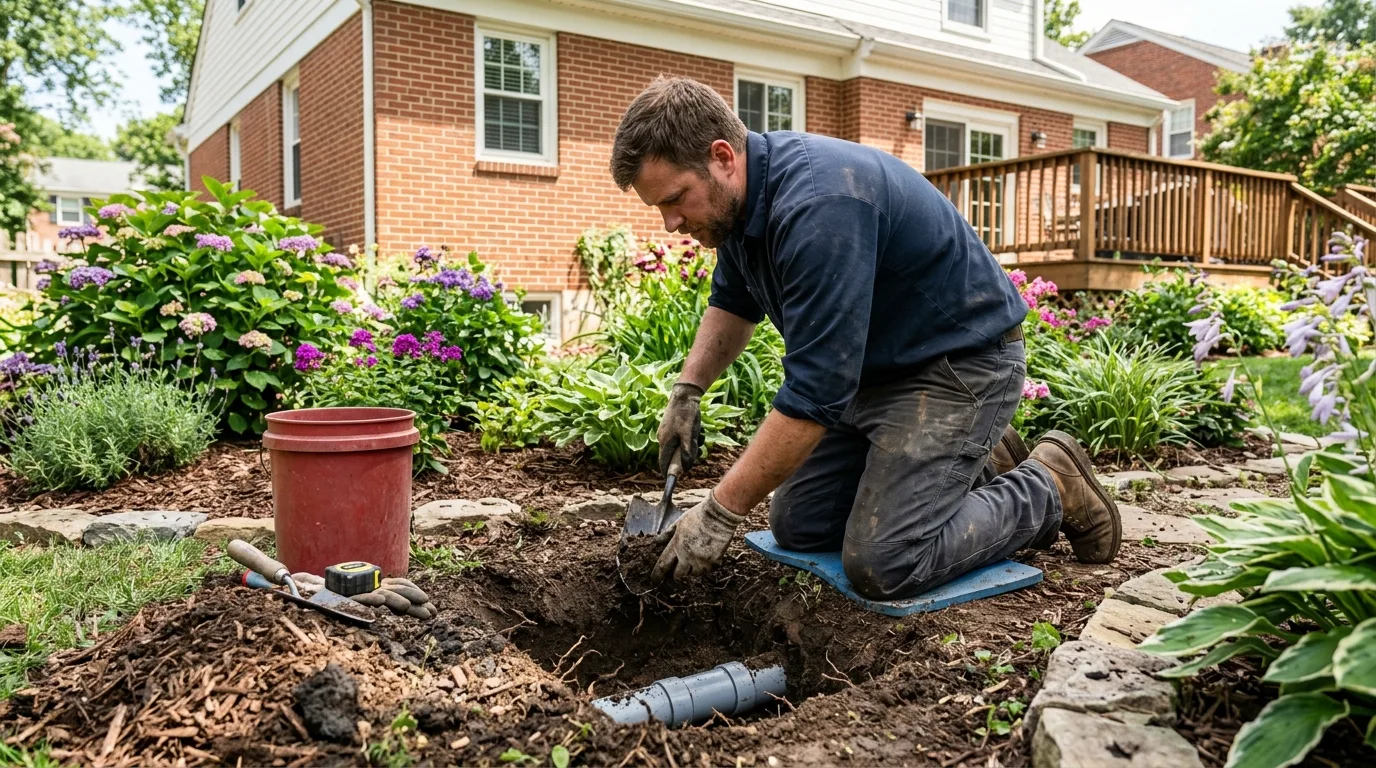
The service line is the pipe carrying water from the meter to your house, and on a large lot it is the single component most likely to cause an expensive, invisible problem. It is buried, it is long, and it is under whatever the yard has become over forty years.
The good news is that finding a leak on it is a methodical process rather than a guess. It starts at the meter: everything off inside the house, and the low-flow indicator watched. If it moves, water is escaping between the meter and the last fixture. Closing the main at the house then splits the question cleanly, if the meter keeps turning, the leak is on the service line outside; if it stops, it is inside or under the house.
From there, acoustic equipment listens for the escape along the run, and pressure testing isolates sections. On a long line, correlation between two listening points narrows it further. The objective is to put the excavation in one place, because on a large landscaped lot every extra hole is real money in restoration.
When the line does need replacing, the length is what makes trenching unattractive, a hundred feet of trench through established planting, hardscape, and a driveway is a substantial project on its own. Trenchless replacement pulls a new line through the existing path from pits at either end, and on lots like these it is frequently the difference between a manageable job and a landscaping rebuild.
The same logic applies to sewer laterals, which on these lots are equally long and equally inconvenient to trench.
Common calls
A wider range than most areas, driven by the spread of build years.
01
Long buried runs under mature landscaping. Located by isolation and acoustic methods so excavation happens once, in the right place.
02
Long clay laterals with many joints, under established trees. Camera first, then jetting, lining, or bursting depending on the footage.
03
Houses where original piping meets later remodel work. Dissimilar metals and improvised transitions corrode and fail at the join.
04
Extensive buried systems on large lots, with decades of trenching, edging, and hardscape work by other trades. Nearly invisible when they leak.
05
Wide range of ages across the area, many well past service life, often in garages or outbuildings with venting and strapping that predate current standards.
06
Where original supply survives, the familiar pattern: falling pressure, hot worse than cold, discoloured water after the house sits.
How we work
On a big lot, narrowing the search is most of the work.
Build year, remodel history, lot size, any well or agricultural infrastructure, and where the meter sits relative to the house.
Everything off inside, then the main at the house closed. This one step separates an outdoor service line problem from an indoor one immediately.
Listening along the run, with correlation between points on long lines, and pressure isolation to narrow the section.
What is above the line, planting, hardscape, driveway, and whether trenchless replacement is a better answer than trenching.
A single, correctly placed opening rather than exploratory digging, with the excavation kept as small as the repair allows.
System pressurised and held, meter rechecked with everything off, and the ground properly backfilled and compacted.
100 ft+
Service line runs on the larger lots
Trenchless
Usually the better answer at that length
15 min
Meter test to split indoor from outdoor
24/7
Dispatch across south-central Corona
Local conditions
Long buried infrastructure. This is the defining local factor. More buried pipe means more opportunities for failure and much harder detection, and it makes accurate locating disproportionately valuable. Every foot of trench avoided is landscaping that does not need rebuilding.
Hard water. Fifteen to twenty grains does the usual work here, water heaters with sediment, scaled fixture cartridges, seized shower valves, and mineral on regulator seats. On properties with extensive irrigation, it also closes drip emitters and misting nozzles.
Soil and irrigation together. Sustained irrigation over decades keeps soil around buried lines persistently damp, which accelerates external corrosion on metallic service lines and on any buried steel. Expansive soils in the region move with moisture, and that movement stresses rigid buried pipe over time.
Other trades. On a long-established large lot, buried lines have coexisted with fence posts, patio pours, pool installs, tree planting, and irrigation retrofits. Physical damage from a previous project is at least as common a cause of failure here as material fatigue.
Pressure. Worth measuring as everywhere in Corona. On a long service line, the gap between static and flowing pressure is also diagnostically useful, a large drop under flow can indicate a restricted or partially collapsed service line rather than a fixture problem.
El Cerrito
On a long service line that is worth investigating now, before it becomes a washout under a driveway.
Answered 24/7 · upfront pricing before any work
Full service list
El Cerrito
On a long service line across a big lot, that can run for months before anything shows above ground.
Independent local contractors · workmanship guarantee on completed work
El Cerrito FAQs
Turn off every fixture in the house and watch the low-flow indicator on the water meter. If it moves, water is escaping somewhere between the meter and the last fixture.
Then close the main shut-off at the house. If the meter keeps turning, the leak is on the service line outside. If it stops, it is inside or under the house. That is the single most useful five-minute test on a large lot.
It changes the economics considerably. Trenching a hundred feet through established landscaping, hardscape, and a driveway is a major project regardless of the plumbing involved.
Trenchless replacement pulls a new line through the existing path from small pits at either end. On lots like these it is often the difference between a manageable job and a landscape rebuild.
That is the entire objective. Acoustic listening along the run, correlation between two points on long lines, and pressure isolation by section put the leak in a small area.
We would rather spend an hour locating than dig three holes looking. On a large landscaped lot, restoration is frequently the bigger part of the bill.
Same principle. Long laterals mean more joints and, where the pipe is clay, more opportunities for root intrusion under established trees.
A camera inspection shows exactly what the condition is and where. Depending on the footage, the answer is jetting on an interval, lining, pipe bursting, or conventional replacement.
Yes, and it is worth mentioning when you call. Disused lines, abandoned valves, and legacy connections change what we test and in what order, and occasionally they are the source of the problem itself.
Cross-connections between old agricultural infrastructure and the potable supply are a genuine concern and something we check where the history suggests it.
Some of the oldest do. Where it survives, the pattern is familiar: pressure that falls gradually, hot lines worse than cold, discoloured water after the house sits unused, and eventually leaks inside walls.
Sectional repair on original galvanized postpones rather than fixes. If your house still has it, the useful question is when to repipe rather than whether.
Because damp ground near sprinklers looks completely normal, and on a large lot nobody walks every corner regularly. A cracked supply line downstream of an always-open valve leaks around the clock.
The meter test does not care what the ground looks like. Close the irrigation isolation valve and watch the dial, if the flow stops, you have found your area.
Yes, across the El Cerrito neighborhoods in 92881 and 92879 and the surrounding parts of south-central Corona.
The phone is answered at every hour, same-day when the run allows it, and an emergency gets the nearest available contractor rather than a queue position.
One break on an otherwise sound line is worth repairing. A second break on the same run is usually the point at which replacement becomes the cheaper path, because the failures accelerate.
On long runs the material matters more than the age. Galvanized steel and early plastic are candidates for full replacement, which can often be pulled in along the existing path with only two excavations rather than an open trench.
Yes. Elevation reduces static pressure, but the supply main can still deliver well above the code limit at the house, especially at night when demand across the zone drops.
A gauge left on overnight tells the real story. Long runs also lose pressure under flow, so it is common to see a perfectly adequate static reading alongside a disappointing shower, two different problems with two different fixes.
El Cerrito · 92881
Isolated by section and located precisely, so excavation happens in one place rather than across a yard.
Dispatch answers 24/7 · same-day and emergency response available