01
Root intrusion
Roots enter at joints and cracks seeking water, then grow into a mass that catches everything. The dominant finding in older Corona neighborhoods with clay laterals and mature street trees.
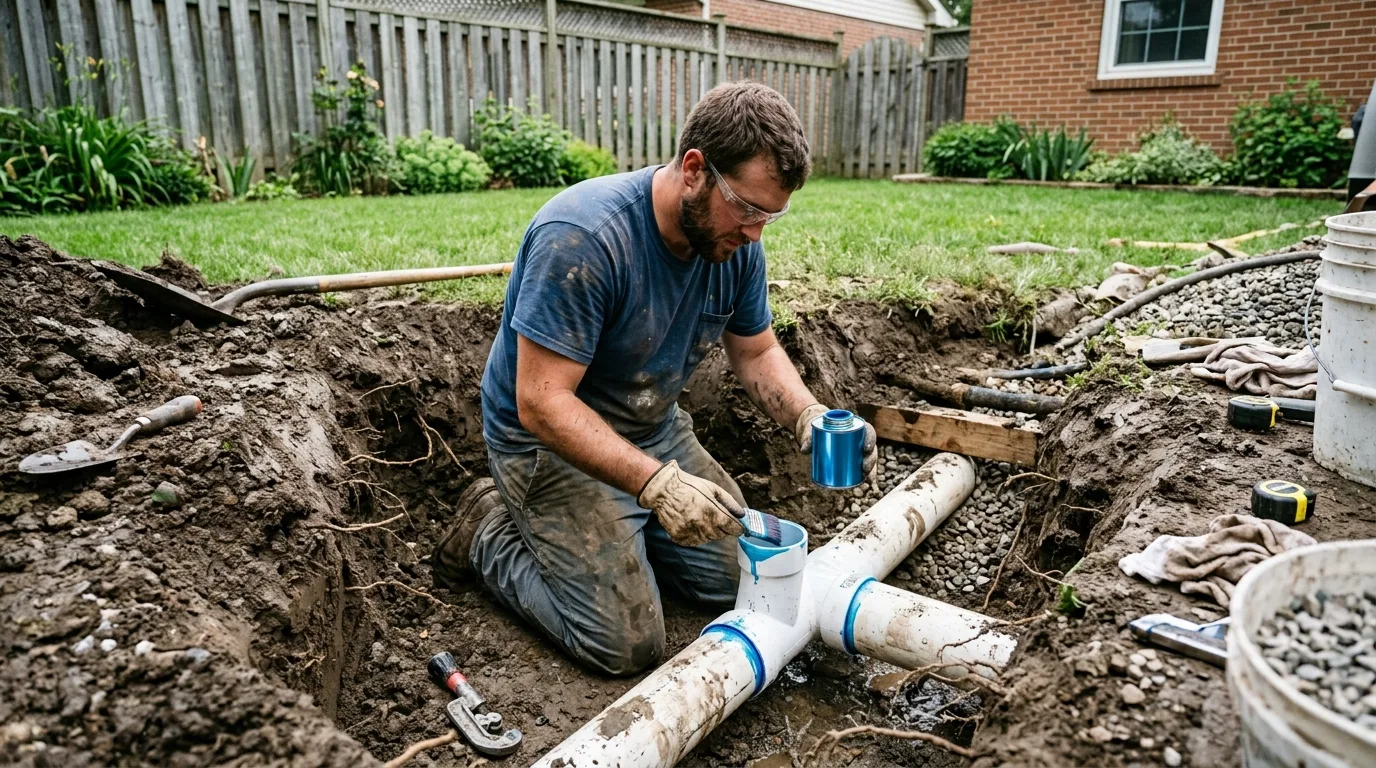
Laterals & mains · Corona, CA
When a line has been cleared three times in two years, the line is the problem. We camera it, show you the defect with a distance and depth reading, and price every route to fixing it, including the cheap one.
If waste is backing up into the house right now, stop all water use and call. Repair planning comes after the emergency.
Diagnosed on camera first
You see the defect, its distance from the cleanout and its depth before anything is priced.
Three routes, all priced
Spot repair, trenchless rehabilitation, or full replacement. The cheapest viable one gets recommended.
Permits and city coordination
Work in the parkway or to the city main is handled properly, not quietly skipped.
The signals
Your sewer lateral is the private line carrying everything out of the house to the city main in the street. It is buried, unmonitored and usually the oldest plumbing you own. It fails slowly, then all at once.
Repeat blockages in the same line. One clog is an event. Three in two years is a structural defect, roots through a joint, an offset, a crack, or a bellied section holding water and collecting solids. If you have been cabled annually and nobody has ever put a camera in the pipe, you have been buying flow rather than answers.
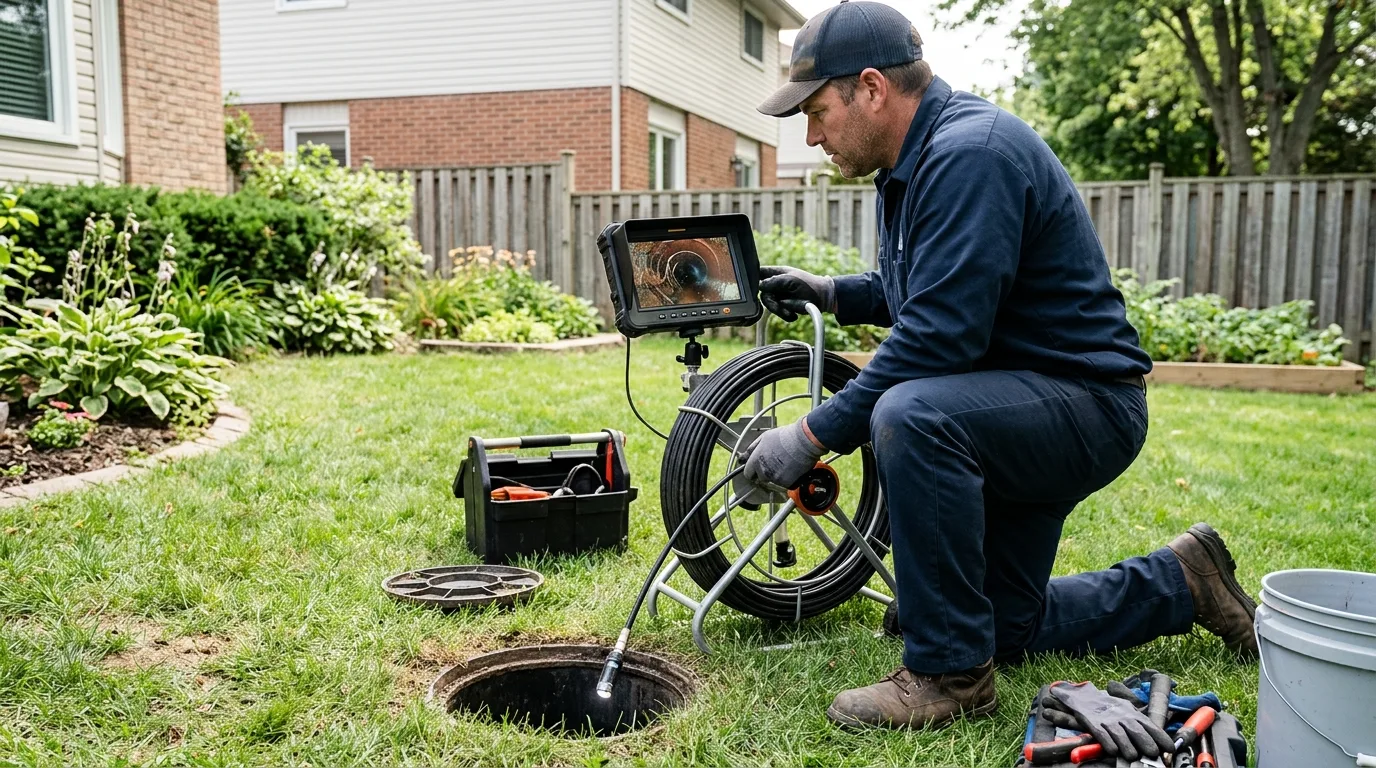
Get a camera inspection with distance and depth readings. Sewer repair quoted without footage is quoted blind, and the difference between a four-foot spot repair and a full replacement is most of the money. Any contractor unwilling to show you the inside of the pipe is asking you to trust a number instead of evidence.
What we find
Each one has a different repair, and the camera tells them apart in minutes.
01
Roots enter at joints and cracks seeking water, then grow into a mass that catches everything. The dominant finding in older Corona neighborhoods with clay laterals and mature street trees.
02
Ground movement pulls two sections out of alignment, leaving a lip that snags solids at the same point every time. Common where expansive soils move seasonally.
03
Fill settled under a section, so the pipe no longer runs downhill continuously. Water stands, solids settle out. Cleaning restores flow briefly; only re-grading the pipe fixes it.
04
Clay is brittle, cast iron corrodes, and both crack under load or root pressure. Cracks leak, admit soil, and grow.
05
The pipe has lost structural integrity and the bore is partly or fully closed. This is the failure that turns into an emergency with no warning.
06
A patch with the wrong fitting, a section of the wrong diameter, an unglued joint, a repair that reversed the slope. We find this more often than anyone would like.
Three routes
The camera decides this, not a preference. A good diagnosis usually makes the answer obvious.
One defect, in one accessible place, with sound pipe either side. Excavate to it, cut out the bad section, replace with new pipe and proper couplings, backfill and compact correctly. Cheapest by a wide margin and completely legitimate when the rest of the line is genuinely good. The camera has to support that, which is why the whole run gets viewed, not just the problem.
Multiple defects along a run, or a single defect under a driveway, mature landscaping, a patio or a pool deck. A cured-in-place liner or pipe bursting replaces the line from access pits at each end without opening the ground between them. Costs more per foot than open-trench pipe, frequently costs less overall once you count the concrete, pavers and planting nobody has to restore. Detail on the trenchless page.
The right answer when the line has a belly needing re-grading, when the diameter is wrong, when the route should change, or when the pipe is so far gone that lining it has nothing sound to bond to. It is disruptive and it is sometimes simply correct, particularly on a short front-yard run with no hardscape over it, where digging is cheaper than lining.
Whichever route, the same non-negotiables: a permit where the city requires one, proper bedding and compaction so the new line does not develop its own belly, correct slope confirmed, and a final camera pass you get to watch.
Sequence
Diagnosis and repair are separate stages on purpose. You should be able to stop after the first one and think.
Emergency first. Clearing the blockage and getting the house usable is a different job from repairing the pipe, and it happens first.
Cleanout to city main, with a locator giving distance and depth for every defect. You get footage and a written summary, not a verbal verdict.
Driveway, patio, mature trees, pool deck, irrigation, a retaining wall. Surface restoration is often the largest cost in sewer work and it drives the method choice.
Spot repair, trenchless, full replacement, with what each involves, how long the yard is affected, and what is and is not restored afterwards.
Marked utilities before any excavation, and the city permit pulled where the work requires one. Unpermitted sewer work becomes your problem at resale.
Correct bedding, compaction and slope, then a final camera pass end to end with you watching. That footage is worth keeping for the file.
3
Blockages in the same line before it is structural, not bad luck
1910
Earliest Corona housing era, clay laterals with a joint every few feet
3
Repair routes, all priced from the same footage
24/7
Emergency response when a lateral fails completely
Local detail
Sewer repair is a local trade because the pipe in the ground is local history. Corona has three broad vintages and they fail differently.
Vitrified clay laterals, sometimes with cast iron for the first section out of the house. Clay is chemically durable and will outlast most materials, but it comes in short lengths with a joint every few feet, and every joint is a door for roots. The pepper, ficus and eucalyptus trees that give those streets their character sit directly over these lines. Root intrusion here is not a possibility, it is the baseline expectation, and it recurs on a predictable cycle until the joint is sealed or the pipe is replaced. These are also the properties most likely to have no exterior cleanout, which makes every clearing and every inspection harder than it needs to be, adding one is usually the first thing worth doing.
Cast iron and, in a specific window, Orangeburg, a bituminised fiber pipe that was used widely in postwar construction and that deforms and delaminates with age. If a camera finds Orangeburg, the conversation is about replacement rather than repair, because there is nothing structurally sound left to work with. Cast iron of this era is variable: some runs are fine, others have lost the bottom of the pipe entirely to corrosion while the top still looks convincing on camera.
ABS or PVC, which does not corrode and is far less attractive to roots. Failures in these tracts are mechanical rather than chemical: bellies where engineered fill settled under a long run, offsets from soil movement, crushed sections from construction traffic or later hardscape work, and the occasional unglued joint from original installation. The good news is that plastic in reasonable condition lines beautifully. The bad news is that a belly is a slope defect, and no lining or cleaning corrects slope; that section has to be dug and re-graded.
Parts of western Riverside County have expansive soils that swell and shrink substantially between the dry season and the rains. That annual movement is what pulls joints out of alignment and cracks brittle pipe. Add the deep, water-seeking root systems that thrive in a climate with a long dry season, and you have the two mechanisms behind most of what we find on camera. It is also why sewer defects here tend to appear in clusters along a run rather than as a single tidy break.
Newer Corona yards are heavily improved, stamped concrete, pavers, pools, built-in barbecues, mature specimen planting. Older ones have long concrete driveways to detached garages. In both cases, what sits on top of the lateral frequently costs more to restore than the pipe costs to replace, which is precisely the calculation that makes trenchless methods worth pricing even when they look expensive per foot.
Straight answers
| Factor | Why it matters |
|---|---|
| Length of the run | A short front-yard lateral to a street main is a different project from a long run around a house to an alley main. |
| Depth | Deeper means more excavation, more spoil, and shoring requirements. Depth comes off the camera locator, so it is known before pricing. |
| What is on the surface | Lawn is cheap to restore. A stamped concrete driveway, pavers, a pool deck or a mature tree is not, and often decides the method. |
| Number and type of defects | One crack is a spot repair. Roots at six joints plus a belly is a whole-line conversation. |
| Pipe material found | Clay and sound plastic can often be lined. Orangeburg and severely corroded cast iron generally cannot. |
| Permits and city main connection | Work in the public parkway or a new connection at the main involves the city, inspection and traffic control. It is legitimate cost, not padding. |
| Access for equipment | A gated side yard, a narrow lot or a backyard run with no machine access shifts work to hand digging, which takes far longer. |
Every quote comes off the footage. If two contractors give wildly different numbers, ask both to point at the defect on camera and state its distance from the cleanout.
Cleared it again?
One camera inspection turns a recurring expense into a decision you only have to make once.
Footage, distance and depth readings, and every repair route priced from the same evidence.
Related work
Coverage
Sewer repair FAQs
Count the clearings. One blockage with an obvious cause is a cleaning. Three in two years, or a line that blocks on a predictable annual cycle, is a structural defect being managed rather than fixed.
A camera settles it definitively. If the footage shows roots at a joint, an offset, a belly or a crack, cleaning is a maintenance subscription. If it shows sound pipe and a one-off grease build-up, cleaning is genuinely the right answer and you have saved yourself a large quote.
Generally the property owner owns and maintains the lateral from the house to the connection at the public main, including the portion under the sidewalk and parkway. The city owns the main itself.
That boundary matters because it determines who pays, and it varies by jurisdiction and by the age of the connection. We locate the defect precisely so the responsibility question has a factual answer rather than an argument.
For most sewer lateral replacement, connection work at the main, or excavation in the public right of way, yes. Spot repairs on private property sometimes do not, depending on scope.
It is worth insisting on. Unpermitted sewer work has a habit of surfacing during a future sale or refinance, and unwinding it then costs considerably more than pulling the permit now.
Often, and it is always the first thing we look at because it is much the cheapest option. It requires sound pipe either side of the defect, which the camera has to actually show.
What we will not do is spot repair a line with defects at six joints and call it fixed. That is a way to be back in your yard next year, and you would be right to be annoyed about it.
A straightforward spot repair is usually one day, sometimes two with backfill and surface work. Full open-trench replacement of a lateral is commonly two to four days depending on length, depth and access.
Trenchless work is typically one to two days with only two access pits, which is the main reason it wins on yards with driveways, patios or mature planting over the line.
You will be told explicitly what is and is not included before you sign anything. Backfill, compaction and rough grade are part of the plumbing work. Finished concrete, pavers, specimen planting and irrigation reinstatement are often separate trades.
Getting that boundary in writing up front is the single best protection against a nasty conversation at the end. Ask for it, from anyone quoting.
Then the answer is replacement, and there is not much of a debate. Orangeburg is a bituminised fiber pipe used in postwar construction; it deforms, delaminates and loses its shape with age.
Lining needs a structurally sound host pipe to bond to, and Orangeburg does not provide one. It is worth knowing this exists in some mid-century Corona properties, because a quote to line it should be treated with suspicion.
Two situations where it is clearly worth it. Buying a property, especially anything pre-1980, a sewer inspection is inexpensive relative to what it can uncover and it is not part of a standard home inspection.
And before spending real money on hardscape or landscaping over the line. Finding out about a failing lateral after the pavers go down is a genuinely expensive way to learn.
No, and this is one of the honest limits of trenchless methods. A belly is a slope defect, the pipe no longer falls continuously, so water stands and solids settle.
Lining a bellied section produces a smooth, lined, still-bellied pipe. Correcting it means excavating that section, re-bedding it at proper fall and compacting properly. Anyone offering to line away a belly is selling you a repeat visit.
Standard homeowners policies typically exclude gradual failure of underground pipe, though some carriers offer a service-line endorsement that does cover it. Home warranty coverage varies enormously and often caps well below the real cost.
Check for a service-line rider on your policy before assuming you are uncovered; it is a small add-on that people forget they have. Either way, keep the camera footage, the written diagnosis and the itemised invoice.
Corona, CA · 24/7
Camera diagnosis with distance and depth, every repair route priced from the same footage, permits handled properly.
Spot repair, trenchless and full replacement. Upfront pricing before work begins.