01
Root intrusion
Fine hair or a heavy mass entering at a joint or crack. Tells you the pipe is jointed and compromised. Cleanable, but recurring until the entry point is sealed or replaced.
Evidence, not opinions · Corona, CA
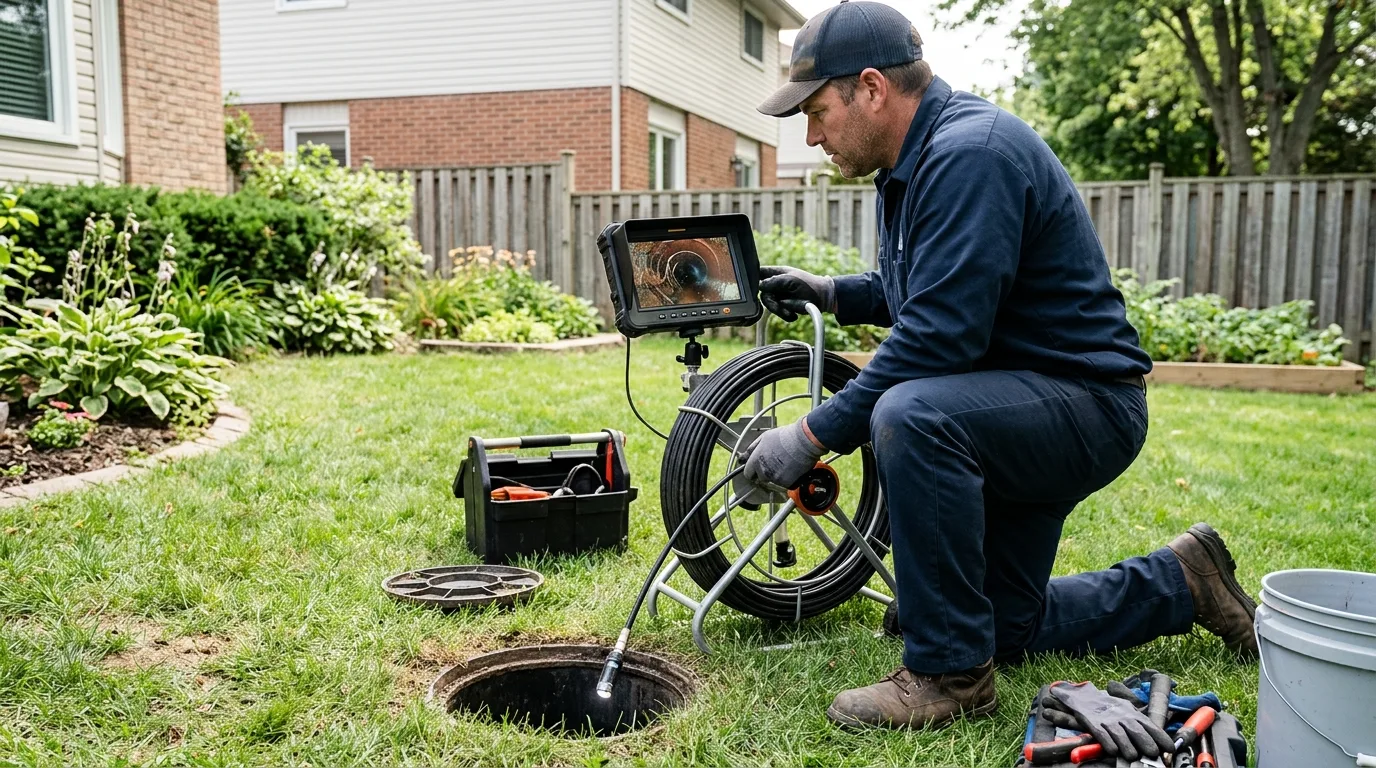
The cheapest thing you can buy in sewer work is knowing what is actually in the pipe. Footage, a locator reading for every defect, and a written summary, so any quote you get afterwards can be checked against reality.
Buying a house in Corona? A sewer inspection is not part of a standard home inspection, and pre-1980 laterals are where the surprises live.
Distance and depth
A locator puts every defect at a measured position, so repairs are targeted rather than exploratory.
Footage you keep
The recording and a written summary are yours, useful for quotes, insurers and resale.
Pre-purchase ready
Reports suitable for a real estate transaction, with plain-language findings.
Why bother
A sewer camera is a self-levelling head on a push rod with a transmitter in it, fed down the line from a cleanout, with a locator tracking it from the surface. What you get is a recording of the inside of the pipe and a measured position for anything wrong with it. It is cheap, it takes about an hour, and it is the difference between a repair quote and a guess.
A standard home inspection does not include the sewer lateral. It is the single most expensive thing on a property that nobody looks at, and on anything built before about 1980 in Corona it is likely to be clay, cast iron or occasionally Orangeburg. Finding root intrusion, a belly or a collapsed section during escrow is a negotiating position. Finding it in your second month of ownership is a bill.
One clog is an event. A second is a pattern, and a third means somebody should have looked inside the pipe two visits ago. Recurring blockages nearly always have a structural cause, roots at a joint, an offset, a sag holding water. Cabling treats the symptom on an annual subscription; the camera tells you what you are actually paying to postpone.
Sewer quotes vary enormously, and most of the variance is in scope rather than price per foot. With footage and a locator reading, you can ask any contractor to point at the defect, state its distance from the cleanout and its depth, and justify their method against it. Without footage, you are comparing two stories.
Pavers, stamped concrete, a pool, a patio, specimen planting, a driveway. All of it goes over the lateral, and all of it makes future sewer work several times more expensive. Twenty minutes of camera work before the hardscape goes down is the best-value plumbing decision available in a newer Corona tract.
The full run from the house to the connection at the main, not the first twenty feet. A locator reading giving distance and depth for every defect. Pipe material and diameter identified. Every branch connection noted. A recording you keep, and a written summary in plain language. If any of those are missing, you have paid for a look rather than an inspection.
On the screen
Each finding has a different implication, and knowing which one you have is most of the decision.
01
Fine hair or a heavy mass entering at a joint or crack. Tells you the pipe is jointed and compromised. Cleanable, but recurring until the entry point is sealed or replaced.
02
A visible step where two sections have shifted out of line. Catches solids at the same spot every time. Repairable as a spot, or eliminated by lining.
03
Water sitting in one section with everything off. A slope defect, the only common finding that trenchless methods cannot correct.
04
Longitudinal or circumferential breaks, often with soil visible or infiltration running in. Progressive, and worth acting on before it becomes a collapse.
05
Coating narrowing the bore. Often the entire explanation for slow drains, and often fixed by jetting rather than any repair.
06
Deformed fiber pipe, a wrong-diameter patch, an unglued joint, a reversed-slope repair. Changes the recommendation immediately.
The visit
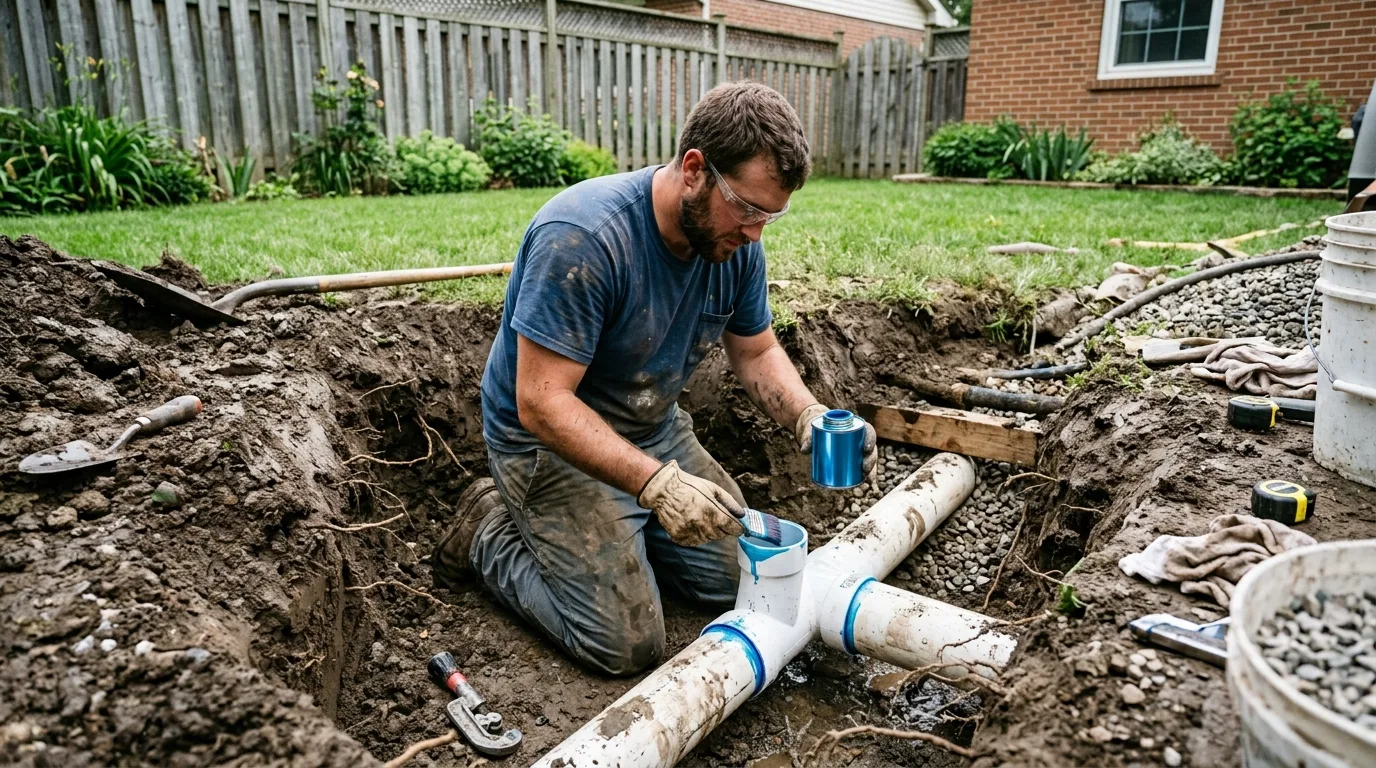
What you should not get is a verbal verdict and a repair quote. If nobody will show you the footage, the footage is not the point of the visit.
Reading a report
The value of an inspection is entirely in what you do with it afterwards.
A collapse or an active infiltration is urgent. Fine root hair at one joint on an otherwise sound line is a note and a re-check in a couple of years. Ask which each finding is.
Distance from the cleanout and depth for every defect. These two figures are what let you compare quotes and what stop a small repair being priced as a big one.
Clay, cast iron, ABS, PVC or Orangeburg. Material determines whether lining is even possible, so it belongs in the report explicitly.
Then ask why. A contractor who can explain why a spot repair will not hold has done the thinking. One who cannot is quoting from a menu.
Same footage, same distances, three contractors. Differences in price then reflect differences in scope and quality, which is the comparison you actually wanted.
Useful at resale, useful for a service-line insurance claim, and useful in three years when someone tells you the line has never been looked at.
1
Typical time for a full residential lateral inspection
2
Numbers that matter per defect: distance and depth
0
Sewer laterals included in a standard home inspection
1910
Earliest Corona housing era, clay, cast iron and surprises
Local detail
After enough inspections in one city, the findings become predictable by address. Corona sorts fairly cleanly into three groups.
Expect vitrified clay, often with cast iron for the first stretch out of the house, and expect roots. Clay comes in short lengths with a joint every few feet, and the mature pepper, ficus and eucalyptus trees overhead have root systems sitting directly on the line. A typical inspection here finds root hair at several joints, one or two offsets from soil movement, and frequently no exterior cleanout at all. That last point matters: without a cleanout, every future inspection and clearing is slower and messier, so adding one usually pays for itself on the second visit. These properties are also the strongest candidates for lining, because a jointless liner removes every root entry point along the run in one operation.
Cast iron, and in a specific postwar window, Orangeburg. Cast iron of this age is genuinely variable on camera: some runs look nearly new, others have corroded through the bottom of the pipe while the crown still looks convincing, which is exactly why the camera has to travel the whole run rather than the first section. Orangeburg is the finding that changes everything; it deforms and delaminates, it cannot be lined, and its presence turns a repair conversation into a replacement conversation immediately.
ABS or PVC from the late 1990s onward, which does not corrode and does not invite roots. Findings here are mechanical: bellies where engineered fill settled under a long run, offsets from expansive soil movement, crushed sections from construction traffic or later hardscape work, and occasional unglued joints from the original install. Standing water in one spot on the footage is the classic reading. Plastic in good condition lines well, so the common pattern, sound pipe with one defect under something expensive, is close to the ideal trenchless case.
Corona’s housing spans roughly 1910 to last year, and the two ends of that range have completely different risk profiles. A buyer looking at a 1925 bungalow near the Grand Boulevard circle and a buyer looking at a 2005 house off Temescal Canyon Road are underwriting entirely different sewer risks, and neither one is disclosed on a standard inspection report. An hour with a camera converts that unknown into a number, before the money moves.
Straight answers
| Factor | Why it matters |
|---|---|
| Whether there is a cleanout | Existing exterior cleanout is quick and clean. Pulling a toilet or going through a roof vent adds labor. |
| Whether the line needs clearing first | A camera cannot see through standing water or a full blockage. Light clearing is sometimes required and is priced separately. |
| Length of the run | A short front-yard lateral is faster than a long run around the house to an alley main. |
| Locating included | Distance and depth readings are the part that makes the inspection actionable. They should be included, not extra. |
| Report format | A recording plus a plain-language written summary. Pre-purchase reports sometimes need a specific format for a transaction. |
| Number of lines | Main lateral only, or additional branches such as a kitchen line or a laundry run investigated separately. |
This is one of the few plumbing services that should be a clear, flat, quotable price. Ask what is included before booking, and expect the footage as standard.
Buying, or blocked again?
Footage, distance and depth for every defect, and a written summary you can hold three contractors to.
Pre-purchase inspections scheduled around escrow timelines across Corona and western Riverside County.
Related work
Coverage
Camera inspection FAQs
On anything built before about 1980, yes without hesitation. A standard home inspection does not include the sewer lateral, and it is the most expensive single component on the property that nobody looks at.
Corona housing runs from around 1910 to brand new, and the older end is clay, cast iron or occasionally Orangeburg. An hour of camera work during escrow either buys you peace of mind or gives you a negotiating position worth many times the fee.
Very common in older Corona properties. Access can be taken through a pulled toilet or a roof vent instead, which adds a little labor and a little mess.
It is usually worth installing an exterior cleanout while a plumber is there. It makes every future inspection and every future clearing faster, cleaner and cheaper, and it is a small job.
Not usefully. The lens cannot see through standing water or a solid obstruction, so the line has to be cleared enough to travel first.
That is why a blocked line is normally two pieces of work: clear it to restore service, then camera it to find out why it blocked. Both get priced separately so you can see what you are paying for.
Yes, and you should insist on it anywhere you book. The recording plus a written summary is the deliverable, not a verbal opinion.
Keep both. They make competing repair quotes genuinely comparable, they support an insurance claim on a service-line endorsement, and they are useful at resale.
A transmitter in the camera head is tracked from the surface, and in normal conditions distance and depth are accurate enough to excavate to confidently.
Accuracy degrades with very deep lines, heavy reinforcement in concrete above, or dense adjacent metallic utilities. A good technician will tell you when a reading is approximate rather than presenting every figure as exact.
That is precisely what it is for. Scale, grease and debris coating the pipe is a cleaning problem, often solved by jetting with no repair at all.
Roots through a joint, an offset, a crack, a belly or a collapse are structural, and cleaning them is temporary by definition. The footage makes the distinction obvious rather than a matter of trust.
Most residential main lateral inspections take around an hour, including setup, the push, locating defects and going through the findings with you.
Add time if the line needs clearing first, if there is no cleanout, or if additional branch lines are being inspected as well.
Yes. Smaller push cameras handle kitchen branches, laundry lines, tub and shower runs and vent stacks.
It is worth doing when one specific fixture keeps backing up while the rest of the house drains fine; that pattern means a branch problem, and looking at it directly beats cabling it repeatedly.
No, they answer different questions. A camera inspects the drain side, unpressurised pipe carrying waste out, and shows physical condition.
Leak detection finds water escaping from pressurised supply lines, using acoustic, thermal and tracer methods. If your meter is spinning with everything off, that is detection. If your drains keep blocking, that is a camera.
Then you have bought a documented baseline, and that has real value. You know the material, the diameter, the condition and where every branch connects.
It also means the next contractor who tells you your lateral needs replacing has to explain what changed. Plenty of inspections end with “this line is fine, jet the kitchen branch and stop worrying”, and we would rather tell you that than find something.
Corona, CA · evidence first
Full run inspected, every defect located to distance and depth, footage and a written summary you keep.
Pre-purchase, recurring blockages, or before hardscape goes in. Flat upfront pricing.