01
Slab leaks
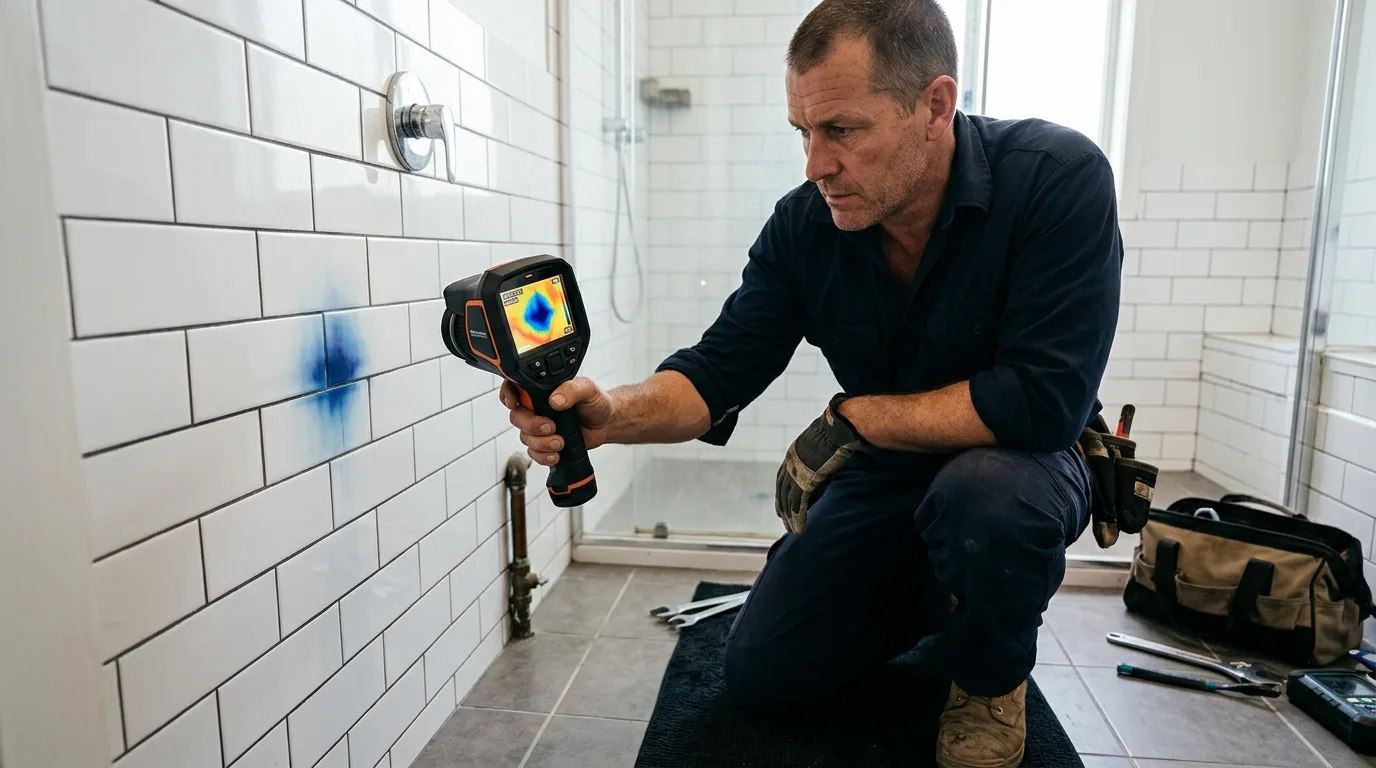
Warm floor spots, running water with everything off, unexplained bills, or foundation-adjacent damp. Located electronically before anything is cut.
Central Corona · 92879 / 92880
The tracts between downtown and the 91 are where slab construction took over. Copper supply buried in concrete, fifty years on, is the defining plumbing story of this part of the city.
Answered 24/7 · slab leaks located before anything is opened
The neighborhood
The neighborhoods between the old downtown grid and the 91 corridor were largely built from the 1950s through the 1970s, and they mark the point where Corona construction moved decisively to slab-on-grade foundations. That single change defines most of what goes wrong in this part of the city today.
On a raised foundation, a supply leak is annoying. On a slab, it is a different animal: the pipe runs inside or beneath the concrete, so a leak is invisible, inaudible in its early stages, and can run for months before anyone knows. By the time there is evidence, a warm patch on the floor, an unexplained bill, the sound of running water with everything off, a substantial volume has already gone into the ground beneath the house.
The supply material adds to it. Copper became standard in this era, and copper is genuinely good pipe. But wall thickness varied by period and specification, and thinner-wall copper embedded in concrete is subject to abrasion where it moves against the slab, to chemical attack from certain soil conditions, and to pinhole corrosion from the inside. Fifty years is a long time for any of those to work.
The drains are a mixed picture. Earlier houses in the area may still have cast iron waste, which scales and corrodes from the invert upward. Later ones have ABS, which is far more forgiving. Laterals are frequently clay in the older sections and are subject to the same root intrusion as the rest of the city.
Water heaters are the other constant. A large number of central Corona homes have heaters in garages or interior closets that are past their service life, unstrapped or badly strapped, with venting that would not pass today. Replacement here is as much a compliance job as a capacity one.
The main event
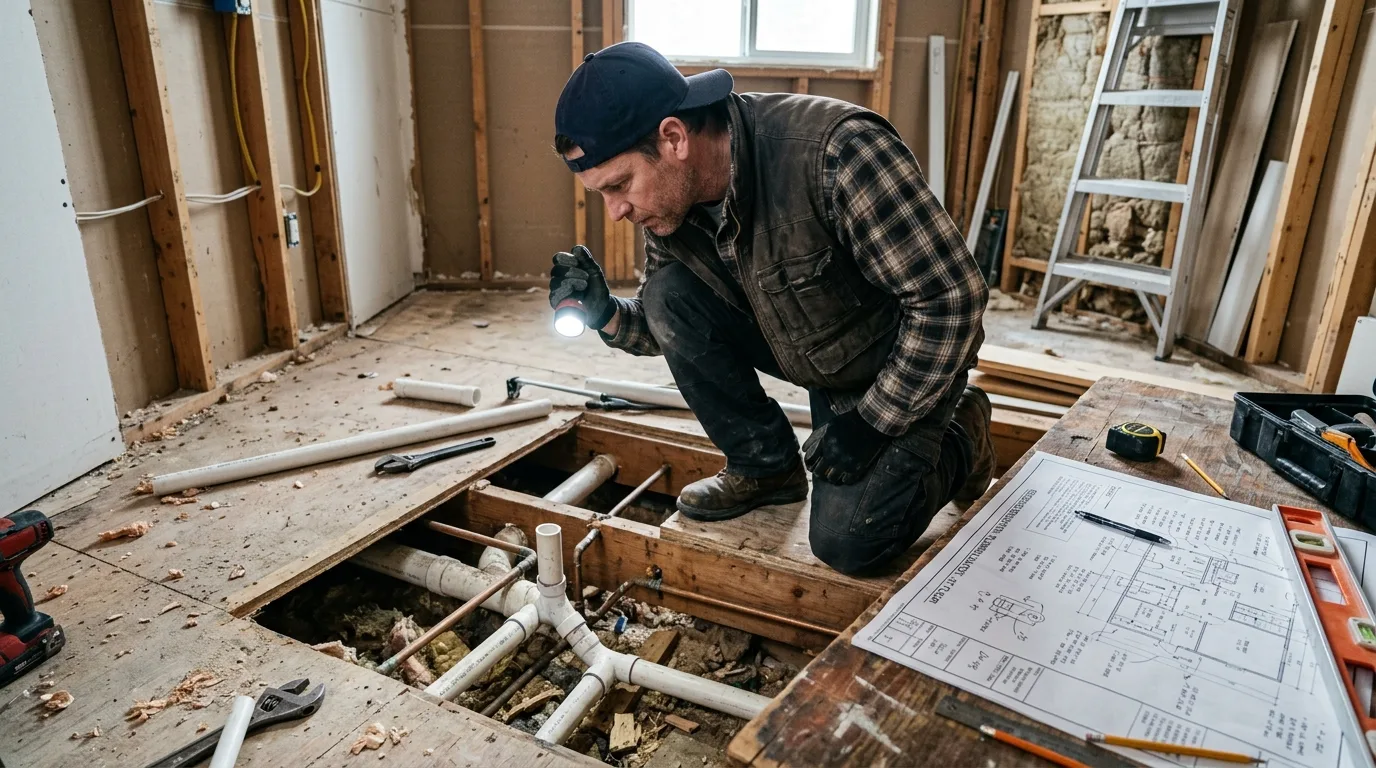
The most expensive mistake in slab leak work is opening concrete in the wrong place. It happens when someone estimates a location from a warm spot or a damp patch, cuts, finds nothing, and cuts again. Each attempt costs money, creates dust and disruption, and does structural work that has to be made good.
Proper location is a combination of methods. Acoustic equipment listens for the sound of pressurised water escaping through concrete. Pressure isolation narrows the fault to hot or cold and to a section of the system. Thermal imaging finds temperature anomalies on a hot line. Tracer gas is used where the leak is small or the acoustic environment is difficult. Used together, these put a leak within a small area rather than a general direction.
Once located, there are two honest paths. Spot repair opens the slab at the leak, replaces the affected section, and closes it. It is the least disruptive option and it makes sense when the piping is otherwise sound and this is a first failure.
Reroute abandons the line in the slab and runs a new one overhead through the attic and down walls. It costs more up front and involves drywall work, but it takes that run out of the concrete permanently. When a house has already had two slab leaks, reroute is usually the better purchase, a third is coming, and each spot repair costs nearly as much as a portion of the reroute.
The decision depends on the age and condition of the piping, the number of previous failures, and the accessibility of an overhead route. We will give you the reasoning rather than a preference, and on a house with recurring failures a full repipe deserves to be on the table.
Common calls
A consistent pattern for houses of this age and construction.
01
Warm floor spots, running water with everything off, unexplained bills, or foundation-adjacent damp. Located electronically before anything is cut.
02
Small perforations in supply lines from internal corrosion. Often the first sign that the rest of the same-age piping is on the same trajectory.
03
Fifty-gallon tanks well beyond ten or twelve years, frequently unstrapped and with marginal venting. Replacement brings the installation to current standards.
04
In the earlier tracts. Internal scaling and bottom-of-pipe corrosion producing repeat backups that cabling does not resolve.
05
Clay laterals under established landscaping. Camera first, then jetting or a trenchless repair depending on what the footage shows.
06
Central Corona sits low in the city elevation profile, and static pressure above code is common. It shortens the life of every fixture in the house.
How we work
The order is designed to avoid cutting concrete twice.
Meter test with everything off, check for warm spots, listen at fixtures. Establish that there is a leak and roughly what kind before anything else.
Hot separated from cold, and sections isolated where valving allows, to narrow the search area before equipment comes out.
Acoustic, thermal, pressure, and tracer methods as the situation requires. We do not cut on an estimate.
Spot repair or reroute, with the reasoning, the cost of each, and an honest view of how likely a further failure is.
Concrete cut once, dust controlled, repair made in appropriate material, and the slab properly restored.
System pressurised and held, meter rechecked with everything off, and the area left clean.
1950s–70s
Dominant construction era
Slab
The foundation type that defines this area
2+
Slab leaks after which reroute usually wins
24/7
Dispatch for an active leak
Local conditions
Hard water. Corona’s blend of Temescal basin groundwater and imported supply runs fifteen to twenty grains. In central Corona that shows up in water heaters that fail early with sediment on the tank bottom, fixture cartridges on a two-year replacement cycle, and scaled shower valves that seize in their bores. A softener here pays back in equipment life, not just in laundry.
Static pressure. This part of the city sits comparatively low within its municipal pressure zone, and low position means high pressure. Above the code limit of 80 psi, every valve, seal, and supply line in the house is working harder than it was designed to. It is also a genuine contributor to supply line failures, which tend to happen unattended. A gauge on a hose bib takes a minute and frequently explains a whole history of small failures.
Soil movement. Expansive clay soils in parts of the region swell and shrink with moisture, and slabs move with them. That movement is one mechanism by which embedded copper abrades and eventually perforates, and it is part of the reason slab leaks cluster in houses of a particular age and construction.
Irrigation. Established central Corona yards have decades of irrigation history, which means saturated soil against foundations, buried supply lines that have been dug through by other trades, and outdoor leaks that hide well because wet ground near sprinklers looks normal. When a bill rises with no indoor explanation, the outdoor system is the first place to isolate.
Central Corona
At that point a reroute or a repipe usually costs less than the repairs you are going to keep buying.
Answered 24/7 · upfront pricing before any work
Full service list
Central Corona
That is the classic slab leak sign, and it is worth acting on the same week rather than the same season.
Independent local contractors · workmanship guarantee on completed work
Central Corona FAQs
The classic signs are a warm spot on the floor, the sound of running water when everything is off, an unexplained rise in the water bill, and damp or a musty smell near the base of a wall.
Confirm it with the meter: turn off every fixture and watch the low-flow indicator. If it is still moving with nothing running, water is escaping somewhere.
No. Proper location puts the leak within a small area, and the opening is typically a modest square rather than a trench across a room.
The reason people fear this is that guessing leads to repeated cutting. We locate acoustically and with pressure isolation, thermal imaging, or tracer gas before anything is opened.
Spot repair makes sense when the piping is otherwise sound and this is a first failure; it is quicker, cheaper, and less disruptive.
Reroute makes more sense after a second failure, or where the piping is at an age when more are likely. It abandons the line in the slab and runs new pipe overhead, which takes that run out of the concrete permanently.
Construction era and materials. These tracts were built with copper supply embedded in or beneath slab foundations, and fifty years is long enough for abrasion against concrete, soil chemistry, and internal corrosion to take effect.
Expansive soil movement in the region contributes by working the pipe against the slab, and high static pressure accelerates every failure mode.
Yes, proactively. Beyond about twelve years a tank heater is on borrowed time, and in hard water it is likely carrying significant sediment that is reducing capacity and efficiency.
Replacing it on your schedule is a planned expense. Replacing it after it splits is that expense plus water damage and an emergency call-out.
Yes, and central Corona is exactly where it shows up. Sitting low in a municipal pressure zone means high static pressure, and above 80 psi every seal and valve in the house wears faster.
It is also a real factor in supply line and washing machine hose failures. A gauge on an outside hose bib costs about ten dollars and answers the question in a minute.
Yes. Older central Corona sections have clay laterals with jointed connections under established landscaping, and root intrusion is common.
We camera the line first. Depending on what the footage shows, the answer is jetting, a trenchless lining or bursting repair, or in some cases conventional replacement.
Yes. Dispatch is answered 24 hours a day, and an active leak, a burst line, or a sewage backup is treated as an immediate priority.
If water is running and you can reach the main shut-off safely, close it before calling. It limits the damage more than anything else you can do.
Policies differ, but the common pattern is that resulting damage, soaked flooring, cabinets, drywall, is covered while the failed pipe itself is not. Some carriers also exclude the cost of accessing the leak.
What helps a claim is documentation: the location, the method used to find it, photographs before anything was opened, and a written scope. Ask for that paperwork whoever does the work, and call your carrier before demolition rather than after.
Probably, yes. Houses built in the same year by the same builder have the same pipe, the same water, and the same pressure history, so they tend to fail as a cohort rather than one unlucky house at a time.
That is useful information. It turns an emergency into a budget line. A pressure check and a look at the exposed copper in the garage or attic will tell you roughly where you sit on that curve.
Central Corona · 92879
Electronic and acoustic location before any concrete is cut, and a straight answer on repair versus reroute.
Dispatch answers 24/7 · same-day and emergency response available