01
Banging on valve closure
A hard knock when the washing machine, dishwasher, or a quarter-turn faucet shuts off. High static pressure gives the moving column of water more energy to dump into the pipe when it stops abruptly.
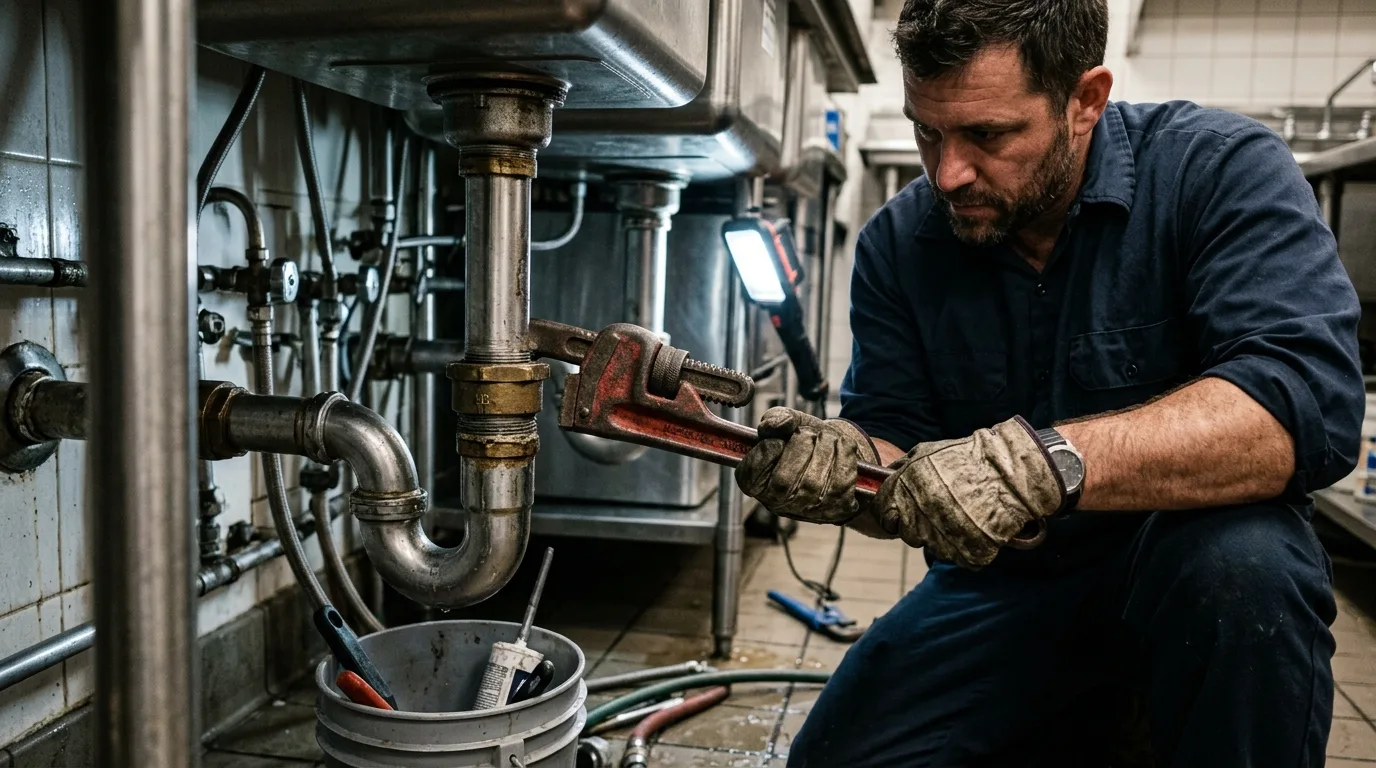
PRV repair · Corona, CA
A PRV is a wear item with a diaphragm, a spring, and a seat, and Corona’s mineral load is hard on all three. When one fails, the house either hammers at every valve closure or loses pressure it should have.
Answered 24/7 · rebuild kits carried for common valve bodies
The failure, not the pressure
Most homeowners find out about a failed pressure reducing valve indirectly. The shower feels different. A toilet starts running at night. The washing machine makes the pipes bang. A faucet that was rebuilt six months ago drips again. None of those point obviously at a brass valve near the meter, which is why the valve often sits failed for a year or more while individual symptoms get treated one at a time.
A PRV is not a permanent fitting. Inside the body there is a rubber diaphragm, a spring, a seat, and a strainer, and every one of those is a consumable. Ten to fifteen years is a fair expectation in clean water. In Corona, where the supply carries fifteen to twenty grains of hardness, scale builds on the seat and the diaphragm stiffens, and valves routinely start misbehaving well before that.
There are three ways they go. A valve can fail open, passing full main pressure into the house; this is the one that hammers pipes and kills fixtures. It can fail closed or partially closed, choking flow so that two fixtures cannot run at once and everyone assumes the service line is blocked. Or it can creep, holding its setting when water is moving and slowly climbing when the house is quiet, which is the sneakiest failure of the three.
Creep is worth understanding because it explains a common frustration: a plumber tests the pressure in the afternoon, reads 62 psi, and declares the valve fine. At two in the morning, with municipal demand down and nobody drawing water, that same house is sitting well over 100 psi. Every seal in the building spends the night under load, and the failure that eventually happens gets blamed on bad luck.
Rebuild or replace
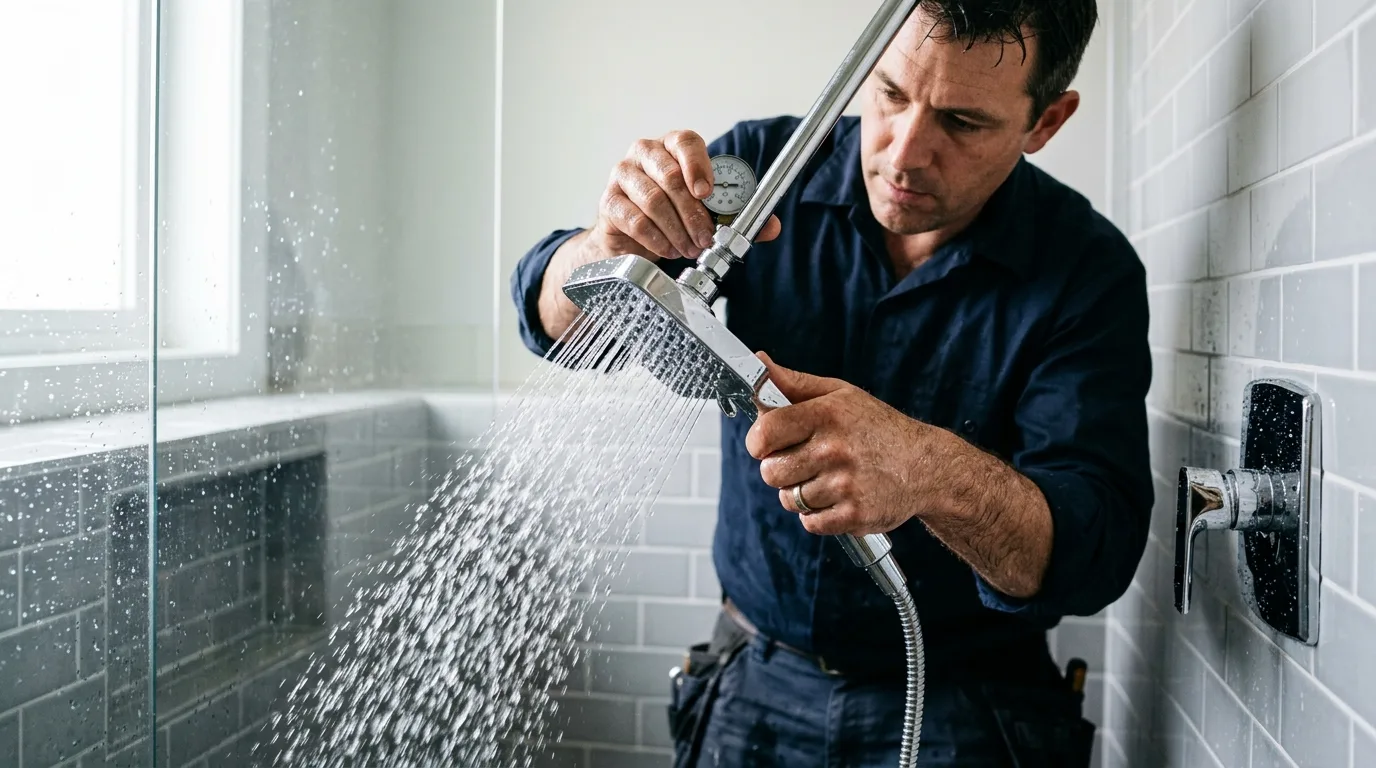
Not every failed PRV needs a new valve. Better-quality bodies, the ones with serviceable internals and a manufacturer repair kit, can often be rebuilt in place: the bonnet comes off, the diaphragm, spring, seat, and strainer are replaced, and the valve goes back to holding a setting. It is cheaper than replacement and it does not involve cutting pipe.
We check three things before recommending it. First, whether the body itself is sound, a brass casting that has been eroded internally or is weeping from a hairline crack is finished, kit or not. Second, whether a kit is actually available for that model; some older and some builder-grade valves have no support at all. Third, how old the installation is. Rebuilding a twenty-two-year-old valve buys a couple of years at best.
Replacement is the right call when the body is compromised, when no kit exists, when the valve is already at the end of a normal service life, or when it is installed without unions and we are cutting pipe anyway. In that case the marginal cost of a new valve over a rebuild is small compared to the labor that both jobs share.
Whichever way it goes, we fit the replacement with unions on both sides. That single detail turns every future service call from a pipe-cutting exercise into a twenty-minute swap, and it is the difference between a valve you maintain and a valve you dread.
Signatures
Each of these has other possible causes, but a PRV is on the list for all six.
01
A hard knock when the washing machine, dishwasher, or a quarter-turn faucet shuts off. High static pressure gives the moving column of water more energy to dump into the pipe when it stops abruptly.
02
Cartridges, fill valves, and flappers that need replacing every year or two rather than every decade. The parts are not defective; they are being run above their design pressure.
03
The T&P valve on the water heater dripping into its drain line. Usually a thermal expansion problem, and thermal expansion problems live downstream of the PRV and its expansion tank.
04
Strong in the morning, harsh at night, or the reverse. A healthy valve smooths incoming variation out. A failing one passes it through.
05
A valve failed partially closed restricts the whole house. It reads as a supply problem and gets misdiagnosed as one regularly.
06
Water tracking down the body or pooling in the valve box. A leaking PRV is also a failing PRV, and it is usually the last symptom rather than the first.
Sequence
Diagnosis is fast. Most repairs are done the same visit.
Static and flowing pressure at an exterior hose bib, then the gauge left in place to catch creep. We write the numbers down and show you.
The valve located, whether at the point of entry, a garage wall, the meter box or below grade, and the manufacturer and model read off the body so we know whether a kit exists.
Adjustment range tested, external condition checked for erosion or weeping, and the strainer inspected where the design allows it without full disassembly.
Expansion tank presence and pre-charge, heater relief valve condition, and whether high pressure has already damaged anything that needs separate attention.
Kit fitted or valve swapped, with unions added if they were not there. Water isolated, the work leak-checked under pressure before the walls of the box go back.
Dialled to a target in the 50 to 65 psi range, verified static and flowing at multiple fixtures, and left with the gauge on long enough to confirm it holds.
10–15 yr
Typical PRV service life in clean water
50–65
Target psi we set to
80 psi
California code maximum to fixtures
24/7
Dispatch for a valve failed open
Why here
The mechanism is simple. A pressure reducing valve works by pressing a seat against a diaphragm to throttle flow. That seat has to seal cleanly across a very small gap. Water carrying fifteen to twenty grains of hardness deposits mineral on exactly that surface, and once the seat cannot close evenly the valve stops holding a setting.
This is the same chemistry that scales tankless heat exchangers and shortens the life of tank heaters here. It is one of the better arguments for a softener that has nothing to do with soap and towels: softened water is measurably easier on every valve seat in the building, PRV included.
Elevation compounds it. Corona spreads across a large vertical range, and houses at the low end of a municipal pressure zone can receive substantially more incoming pressure than houses near the top of the same zone. A valve that is throttling 130 psi down to 60 is working considerably harder than one throttling 85 down to 60, and it wears out proportionally faster.
Age patterns matter too. Tracts built through the nineties and early two-thousands are now at or past the point where original builder-grade valves are due. We see clusters of PRV failures by neighborhood and by build year, and if a neighbor has recently had one replaced, that is a reasonable prompt to check yours.
One last local note: many Corona PRVs sit in below-grade boxes that have since been landscaped over, buried under decorative gravel, or hidden behind irrigation valves. Part of the visit is often just finding the thing. If you know where yours is, tell us on the phone; it genuinely shortens the job.
Straight answers
| Factor | Why it changes the number |
|---|---|
| Rebuild versus replace | A kit and an hour is the least expensive outcome. Replacement adds the valve and, where unions are absent, pipe work on both sides. |
| Access to the valve | On a garage wall or at an exposed point of entry is straightforward. Buried in a landscaped box, behind irrigation manifolds, or under a deck means excavation before plumbing. |
| Whether unions exist | A valve fitted with unions comes out in minutes. One soldered or glued directly into the line means cutting, fitting, and re-pressurising. |
| Valve size and grade | Three-quarter and one-inch bodies differ in cost, and so do quality tiers. Given what our water does to seats, a serviceable valve with an available kit earns its premium. |
| Expansion tank | Adding or replacing one where the closed system requires it is a modest line item that prevents a whole category of expensive downstream problems. |
| Collateral damage | High pressure often takes out cartridges, fill valves, or supply lines before anyone diagnoses the valve. Those are quoted separately and we say which are urgent. |
| Emergency versus scheduled | A valve failed open and hammering the house at midnight can be dispatched at midnight. Scheduled work in normal hours costs less. |
| Pipe material at the tie-in | Copper is routine. Galvanised at the point of entry often means the adjacent pipe is also due, and we will tell you honestly if a repipe conversation makes more sense. |
Hammering pipes?
If nothing has been on a gauge overnight, the valve has not really been tested.
Answered 24/7 · upfront pricing before any work
Related work
Before the next fixture repair
Cartridges, fill valves, and supply lines all fail early under an uncontrolled valve. Fix the cause once.
Independent local contractors · workmanship guarantee on completed work
PRV FAQs
Many can be repaired. Better-quality valve bodies have a manufacturer rebuild kit containing diaphragm, spring, seat and strainer. If the body itself is sound the valve goes back to holding a setting for a fraction of a replacement.
We check three things: whether a kit exists for that model, whether the brass body is sound rather than eroded or weeping, and how old the valve is. Rebuilding a valve already past a normal service life is usually false economy.
Ten to fifteen years is a reasonable expectation in clean water. In Corona, with fifteen to twenty grains of hardness scaling the valve seat, we regularly see them start to misbehave earlier than that.
Houses at the low end of a pressure zone wear valves faster still, because the valve is throttling a larger pressure drop continuously.
That is the classic signature of a creeping valve. Municipal pressure typically rises overnight when demand across the system drops, and a valve that no longer holds properly passes that increase straight through.
An afternoon spot reading will not catch it. The test is to leave a gauge on an exterior hose bib overnight with no water use and read it in the morning.
Usually near where water enters the property: at the point of entry on an exterior wall, inside the garage, in or beside the meter box, or in a dedicated below-grade valve box.
In older Corona properties it is frequently been landscaped over, buried under gravel, hidden behind irrigation valves, or grown over. If you already know where yours is, mention it when you call.
You can. There is an adjusting screw and a lock nut on top; loosening the nut and turning the screw changes the setting, and you verify with a gauge on a hose bib as you go, in small increments.
What that will not do is fix a failed valve. If it will not hold the new setting, if pressure creeps back up overnight, or if it makes no difference at all, the internals are gone and adjusting further does nothing useful.
It can be. A valve failed open leaves the whole house sitting at full main pressure, and high static pressure is a real factor in burst supply lines and washing machine hose failures, events that tend to happen unattended.
If the house is hammering hard, a relief valve is discharging, or you have already had a supply line let go, treat it as urgent. Dispatch is answered around the clock.
On a closed system, which is what a working PRV creates, yes. Water expands when heated, and with a check-valve action at the PRV that expansion has nowhere to go except into the pressure of your own plumbing.
A missing or failed expansion tank is the actual cause of a great many weeping water heater relief valves. Tanks also lose their pre-charge over time and need checking, not just installing.
If the old one failed partially closed, yes, noticeably; that is a restriction and removing it restores flow. If your problem is genuinely low incoming supply or corroded distribution piping, a new valve changes nothing.
That is why we take both static and flowing readings. The gap between the two is what separates a valve problem from a restriction problem, and it is worth getting right before spending money.
Yes. Partially closed main or angle stops, a restricted service line, galvanised distribution piping narrowed by corrosion, a clogged whole-house filter, or a failing softener bypass all present the same way.
Diagnosis is a process of elimination with a gauge, and it is short. We would rather find a half-closed valve than sell you a PRV you do not need.
A rebuild on an accessible valve is typically an hour to ninety minutes. A straightforward replacement where unions already exist is similar.
A replacement that requires cutting into the line, or a first-time installation on a house that never had one, is a half-day. Anything involving excavation to reach a buried box takes longer, and we will say so before starting.
Corona, CA · PRV specialists
Diagnosed with a held gauge reading, then rebuilt or replaced with the reasoning explained before anything is cut.
Dispatch answers 24/7 · same-day and emergency response available