01
Galvanized supply failures
Pre-war and early post-war homes. Pressure falling over years, worse upstairs and on hot, discoloured water after the house sits. Sectional repair postpones rather than fixes.
Riverside · 92501–92509
The widest range of housing stock in our service area, from Victorian and Craftsman homes near downtown to tracts of every decade since. Diagnosis starts with knowing which era you are in.
Answered 24/7 · every era of housing, every pipe material
The city
Riverside is the largest and most architecturally varied city in our service area. It has genuinely historic neighborhoods with Victorian, Craftsman, and Spanish Revival housing near downtown and along the Wood Streets, extensive mid-century development through the 1950s and 60s, tracts from every decade since, and new construction on the edges.
That range means the single most useful question on a Riverside call is when was this house built, and what has been done to it since. Every pipe material in residential history is represented somewhere in this city, and each one fails differently.
Pre-war neighborhoods bring galvanized steel supply that corrodes internally and narrows, cast iron waste that scales and loses its invert, and clay laterals with joints every few feet beneath some of the oldest and largest street trees in the region. They also bring plaster walls, period tile, and original woodwork that deserve protecting rather than cutting through.
Mid-century tracts brought slab-on-grade construction and copper supply embedded in concrete. Fifty to seventy years on, that means slab leaks, invisible, slow, and expensive if diagnosed by guesswork.
Late 70s through mid 90s is polybutylene territory: gray flexible pipe with crimped fittings that fail suddenly at connections rather than weeping a warning first.
1990s and 2000s brought thin-wall copper and its pinhole pattern, plus builder-grade regulators and heaters that all reach end of life together.
Knowing which of those you have is not a detail. It is the diagnosis.
Under the street
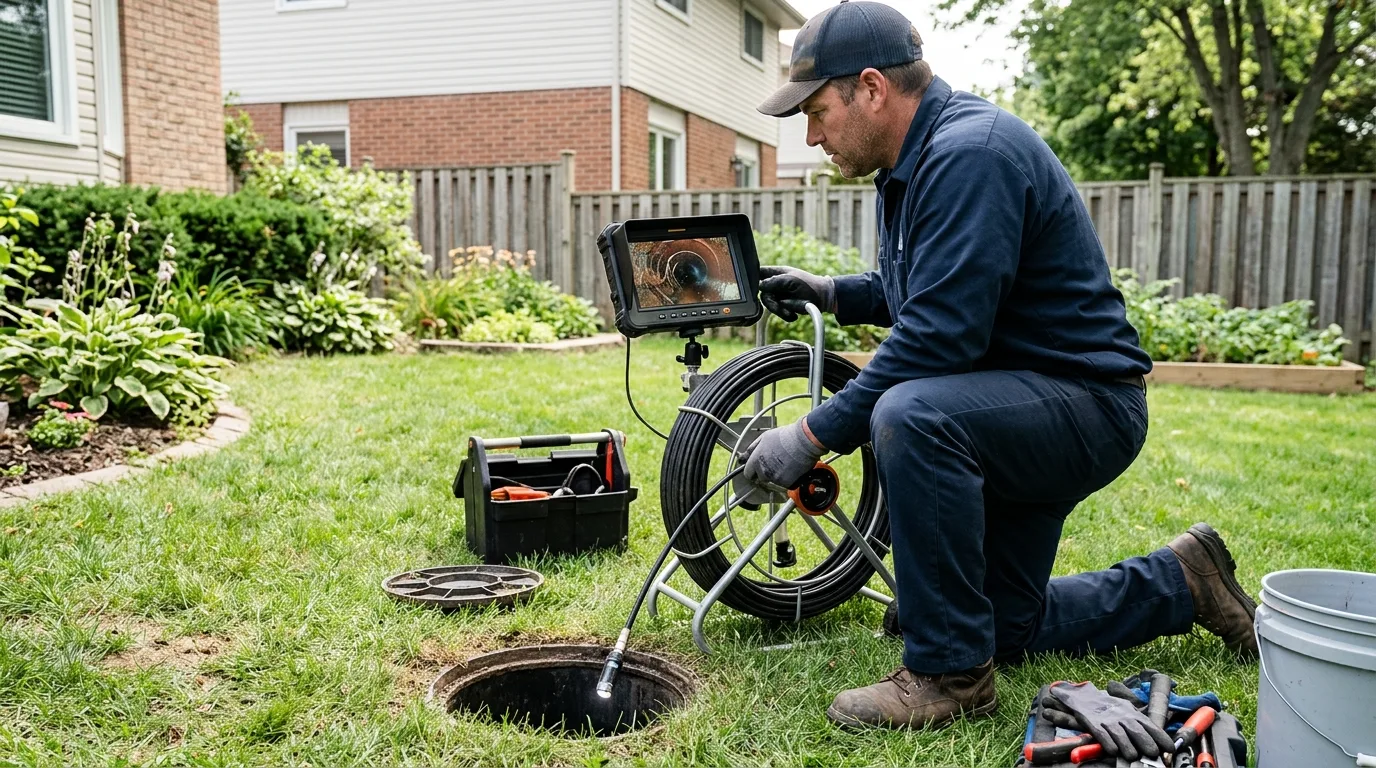
Riverside has an exceptional urban tree canopy, and in the older neighborhoods those trees were planted when the houses were new. Their root systems are now correspondingly large, and they sit above sewer laterals that in many cases are jointed clay.
Root intrusion at clay joints is the most predictable sewer problem in the city’s older areas. What matters is distinguishing the two situations a camera reveals.
In the first, roots have entered at joints but the pipe is structurally sound. That is a maintenance situation, jetting on an interval set by the footage keeps it clear, and the interval is a property-specific number rather than a default.
In the second, the pipe is damaged: joints offset, sections cracked, or a belly where the line has lost fall and holds water. Cleaning a line in that condition buys months. The honest answer is repair or replacement.
This is where trenchless methods matter most in Riverside. Lining installs a new pipe inside the old one from access points at either end; pipe bursting pulls a new line through the existing path. Both avoid trenching through mature landscaping, established root systems, a driveway, and in many cases a city parkway with a protected street tree in it. The restoration savings frequently exceed the difference in plumbing cost outright.
Neither suits every case, a collapsed line or severe offsets may need excavation. The camera establishes which category you are in before anyone commits, and that is an hour extremely well spent.
Common calls
The list depends entirely on the decade.
01
Pre-war and early post-war homes. Pressure falling over years, worse upstairs and on hot, discoloured water after the house sits. Sectional repair postpones rather than fixes.
02
Older neighborhoods under a mature canopy. Camera first to separate a maintenance interval from actual pipe damage.
03
Internal scaling and invert corrosion producing repeat backups that cabling does not resolve. Lining is often possible.
04
Mid-century tracts with copper in or under concrete. Located acoustically and thermally before anything is cut, with repair versus reroute explained honestly.
05
Late 70s through mid 90s housing. Sudden releases at crimped connections rather than slow warning drips.
06
1990s and 2000s tracts. One is a repair; a second or third changes the arithmetic toward a repipe.
How we work
Era first. Everything else follows from it.
Build year, remodel history, and previous plumbing work. On a city this varied, this single question shapes the whole diagnosis.
Supply, waste, and each junction between generations. Layered houses fail at the joins more often than in the middle of a run.
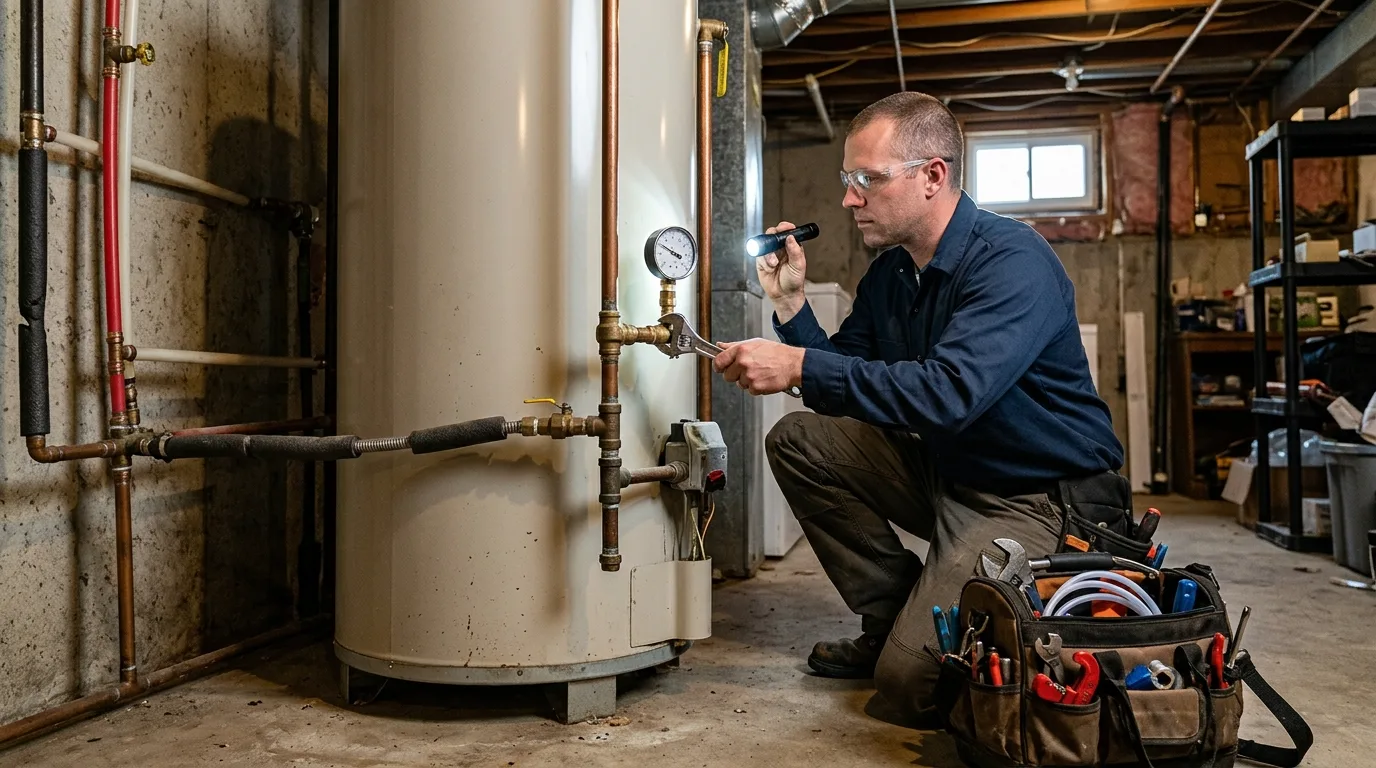
Camera on drains, acoustic and thermal detection on suspected leaks, moisture metering, and a pressure gauge on supply complaints.
In historic neighborhoods, access planned before cutting and routed through crawlspace, attic, closets, or non-original construction wherever possible.
Repair, trenchless, reroute, or repipe, with the reasoning and an honest view of what the next few years look like either way.
Pressure held under test, the cleared line re-cameraed, and photographs of whatever sits out of your sight.
1880s–now
Housing eras represented in the city
Camera
Standard on any repeat drain issue
Trenchless
Investigated before excavation is proposed
24/7
Dispatch across Riverside
Local conditions
The tree canopy. Riverside’s mature trees are a genuine civic asset and the primary driver of sewer lateral problems in its older neighborhoods. They also make excavation expensive and sometimes restricted, particularly where a protected street tree sits in the parkway above a lateral. Both facts point the same direction: camera first, trenchless where suitable.
Hard water. Regional hardness in the fifteen to twenty grain range does the usual damage, sediment in water heaters, scale on fixture cartridges and shower valve bores, mineral on regulator seats, and it compounds every problem galvanized pipe already has.
Mixed foundations. Older Riverside neighborhoods have a high proportion of raised foundations, which is genuinely good news: a crawlspace makes leak location, repiping, and drain work dramatically easier. Mid-century and later tracts are slab, where the slab leak discipline applies, locate precisely, open concrete once.
Pressure. Riverside spans considerable elevation, and static pressure varies with position in a municipal pressure zone. On modern plumbing that is a wear issue; on eighty-year-old galvanized or on polybutylene it is a failure risk. A working regulator matters more on an older house, not less.
Layered remodel history. A city this old has houses where four generations of plumbing meet. Dissimilar-metal transitions made without dielectric separation are among the most common failure points we find, and they are frequently mistaken for pipe failure when the pipe either side is sound.
Riverside
Two failures on one line is information. The next money is better spent looking than cabling again.
Answered 24/7 · upfront pricing before any work
Full service list
Riverside
A camera on the lateral and a gauge on the supply tell you more than any other hour you can spend before closing.
Independent local contractors · workmanship guarantee on completed work
Riverside FAQs
Yes, and it needs a different approach. Galvanized supply, cast iron waste, clay laterals, and plaster walls all change how a job is planned.
Our first move is non-destructive diagnosis, camera, acoustic detection, moisture metering, then looking for access from crawlspace, attic, closets, or non-original construction rather than cutting period surfaces.
In a pre-war or early post-war Riverside home, almost certainly corroded galvanized supply narrowing internally. It is worse upstairs and worse on hot water, which is the signature.
Confirm with a gauge at the hose bib. If static pressure is fine but flow inside the house is poor, the restriction is your piping rather than the supply.
Roots, most likely. Clay laterals are jointed every few feet, and Riverside’s mature street trees have root systems that find those joints reliably.
What the camera settles is whether you have a cleaning schedule or a repair. Roots through a sound joint is the first; an offset, a fracture or a low section holding water is the second.
Often, yes. Lining installs a new pipe inside the old one from access points at either end, and pipe bursting pulls a new line through the existing path.
That matters especially here, where a trench may run through mature landscaping, a driveway, and a parkway with a protected street tree. A camera establishes whether your line is a candidate.
Check the water heater connections first, then under a sink. Polybutylene is gray flexible plastic crimped at the joints with metal bands, never soldered.
It was used from the late 1970s through the mid 1990s. If your Riverside home is from that window, it is worth ten seconds to check.
Mid-century and later tracts do; those were built slab-on-grade with copper supply in or under the concrete, and fifty to seventy years is long enough for failures.
Older neighborhoods have more raised foundations, which makes diagnosis much easier. We establish the foundation type before diagnosing anything under the floor.
A fitting that separates dissimilar metals so they are not in direct contact. Galvanized steel touching copper sets up galvanic corrosion and the joint deteriorates from the inside.
In a city with this much layered remodel history, these transitions are extremely common and frequently were not done properly. It is one of the first things we look for.
Yes, across the city including downtown, the Wood Streets, Canyon Crest, La Sierra, Arlanza, Orangecrest, Woodcrest, and the surrounding neighborhoods.
Dispatch answers around the clock. Same-day where the schedule allows, and for an active leak we send whoever is closest across the Riverside line.
Yes. A replacement is a permitted, inspected job, and current code brings requirements that older installations often lack, seismic strapping, an expansion tank on a closed system, correct venting, and a properly terminated relief discharge.
The contractor pulls the permit. It matters at resale, and it matters for insurance if the heater ever causes damage. Quotes that skip it are not comparable to quotes that include it.
That points at the water heater or the hot branch specifically. Inside a tank heater, a spent anode rod leaves the steel tank to corrode, and the discolouration shows up first thing in the morning.
The other cause is galvanized hot piping that has not yet been replaced while the cold side has. Drawing a bucket from the heater drain tells you quickly which of the two you are dealing with.
Riverside · Riverside County
Galvanized, cast iron, thin-wall copper, or polybutylene; we identify what you have before quoting what it needs.
Dispatch answers 24/7 · same-day and emergency response available