01
The kitchen line blocks every year
Classic grease. Cabling buys eight to twelve months, every time, forever. Jetting removes the coating and resets the clock properly.
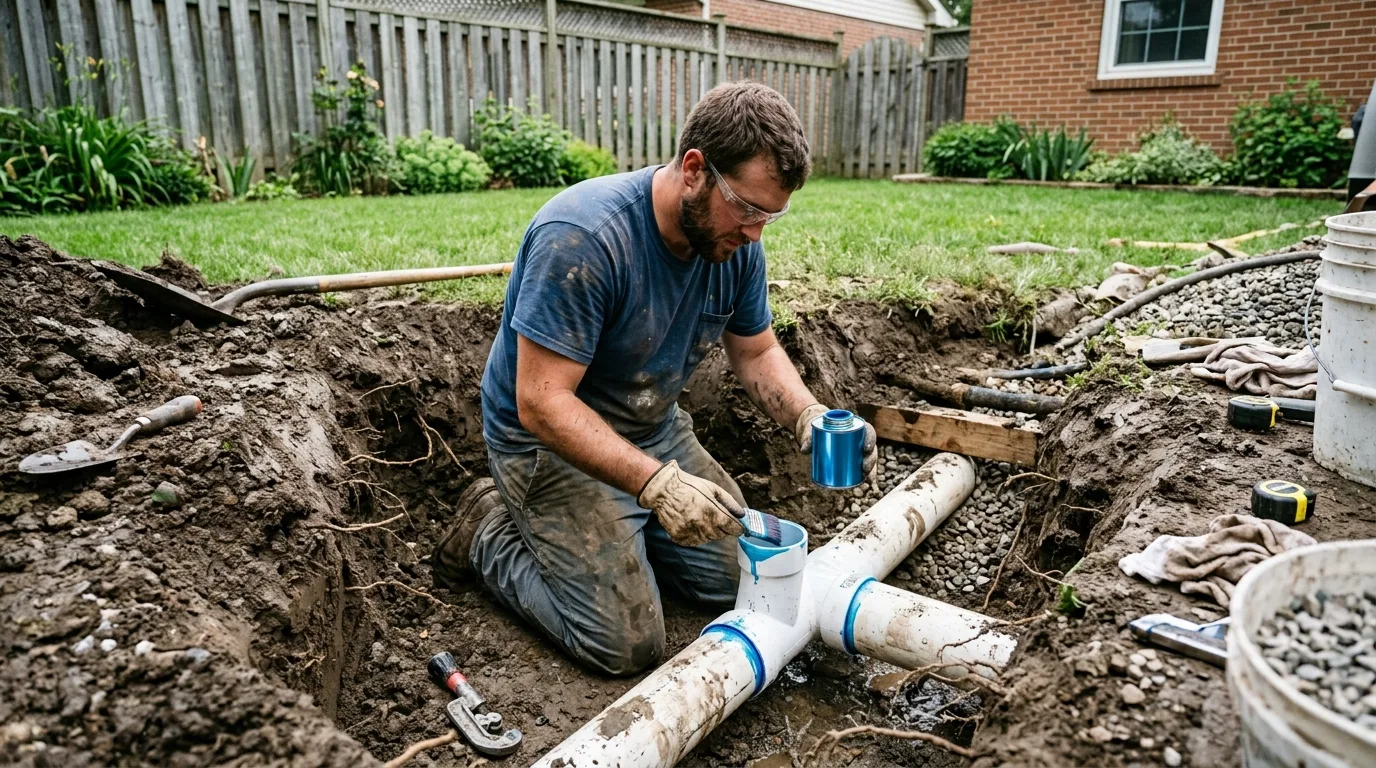
When cabling stops working · Corona, CA
A cable makes a hole through a blockage. A jet removes what caused it. If the same line keeps closing up every few months, this is the difference between clearing it again and fixing the pattern.
We camera the line first on older pipe. Jetting fragile cast iron or cracked clay without looking is how lines get damaged.
Full-diameter clean
Scours grease, scale and root hair back to bare pipe wall, then flushes it out.
Camera before and after
You see the condition going in and the result coming out. No claims without footage.
Not for every pipe
Sound line, yes. Deteriorated cast iron or broken clay, no, and we will tell you.
The difference
These two services get talked about as alternatives, which is misleading. They do genuinely different things, and most houses need the cheap one.
A drain cable is a rotating steel snake with a cutting head. Fed into the line, it bores through whatever is in the way and either chews it up or drags it out. It is fast, inexpensive and correct for the large majority of clogs. What it leaves behind is the coating on the pipe wall, the accumulated grease, scale and debris that narrowed the line in the first place. Flow returns because there is now a hole through the obstruction. The obstruction is still there.
Hydro jetting is a high-pressure hose with a specialized nozzle. Water exits rearward-facing jets, which both propels the hose up the line and scours the full internal diameter as it travels. Debris is driven back down toward the access point and flushed out. When it is finished, the pipe is close to its original bore; you are not looking at a channel through the grease, you are looking at pipe.
Jetting is a cleaning process, not a repair. It will not fix a cracked clay lateral, a collapsed section, an offset joint or a bellied run that holds water. On a badly deteriorated cast-iron line it can even find weaknesses that were already there. That is exactly why the camera goes in first, and why we would rather quote you a repair than sell you a jetting that cannot succeed.
Good candidates
Six situations where scouring the pipe changes the outcome and cabling only postpones it.
01
Classic grease. Cabling buys eight to twelve months, every time, forever. Jetting removes the coating and resets the clock properly.
02
Grease volume is an order of magnitude higher and blockages are a business interruption, not an inconvenience. Scheduled jetting is standard practice, not a repair.
03
Hard water deposits inside drain lines where hot water discharges. Scale roughens the wall and narrows the bore, and a cable cannot remove it.
04
A cutting head takes out the mass; fine root hair stays in the joint and regrows fast. Jetting strips it back much further and buys real time before a repair.
05
Detergent residue, lint and scale combine into a stubborn film. These lines respond very well to jetting and poorly to cabling.
06
A cured-in-place liner only bonds to a clean pipe wall. Jetting is a required preparation step, not an optional extra.
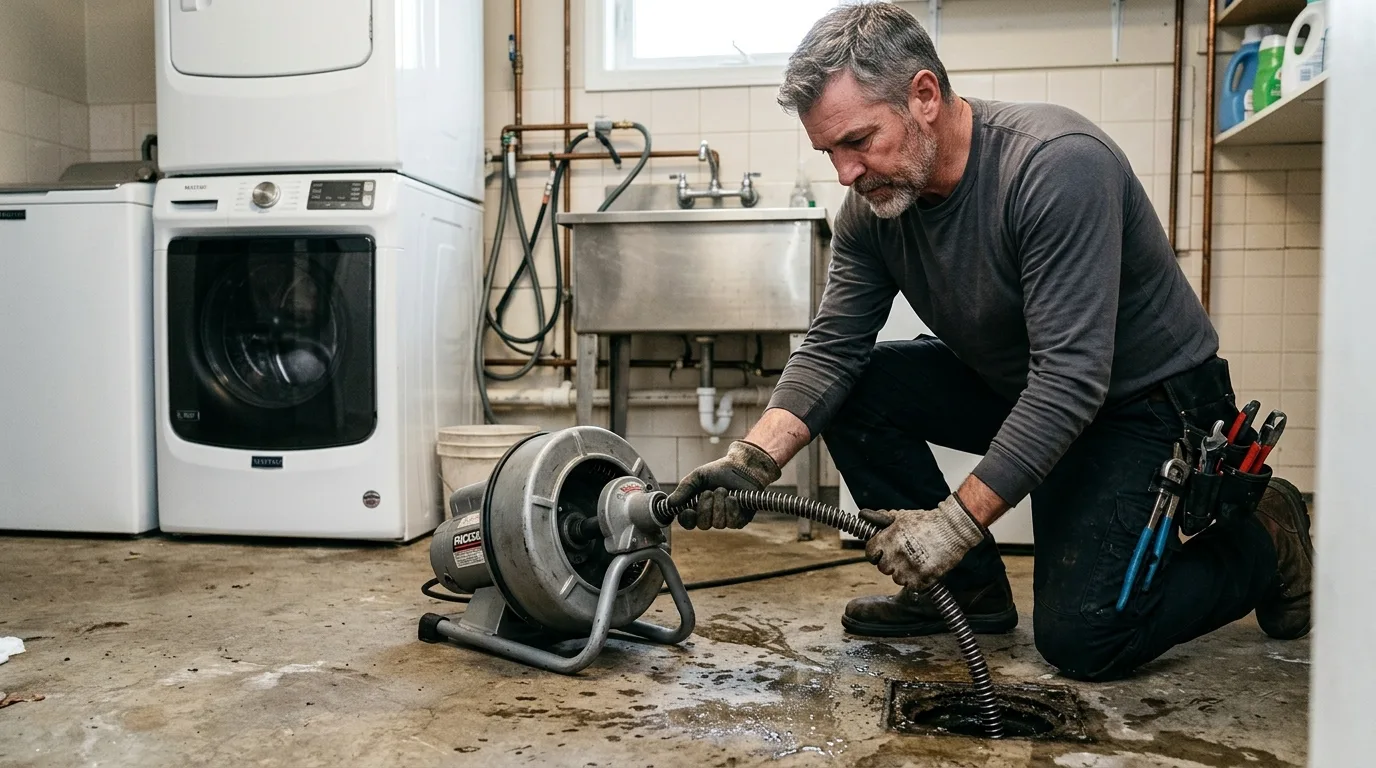
How it works
People fixate on pressure. Volume matters at least as much, pressure cuts the deposit, flow carries it away. A machine with high pressure and low flow polishes a spot; the combination is what cleans a line.
That last step is the one to insist on. Jetting is invisible work in a place you cannot look, and footage is the only honest evidence that it worked.
The visit
Longer than a cabling call, and it should be. This is cleaning a pipe, not punching through a plug.
How often the line blocks, what has been done before, what came out last time. A pattern tells you more about a drain than any single symptom.
Condition, material, diameter, distance to the problem, and any structural defect. This decides whether jetting is appropriate and at what pressure.
Sometimes that is “this will clean up beautifully and hold for years.” Sometimes it is “this pipe is broken and cleaning it changes nothing.” Both get said plainly, with the footage in front of you.
For the jetting, for the camera work, and separately for any repair that the footage reveals. Nothing gets added afterwards.
Correct nozzle, pressure matched to the pipe, worked in stages along the full run with debris flushed back to the access point rather than pushed further in.
Post-jetting footage, a high-volume flow test, and a straight recommendation on interval, including “nothing, this was a one-off” where that is the honest answer.
360
Full-diameter cleaning, not a channel through the middle
2
Camera passes: before and after, both shown to you
12
Roughly what cabling a grease line typically buys you
24/7
Line answered, though jetting itself is usually scheduled work
Local detail
Whether jetting is the right tool depends almost entirely on what is in the ground under your house, and that varies sharply by neighborhood and decade.
Inland Empire water carries a heavy mineral load, and the conversation about it usually stops at water heaters and shower valves. It should not. Where hot water discharges, dishwasher lines, laundry runs, kitchen branches, minerals deposit on the drain pipe wall and combine with grease and detergent residue into a hard, greasy composite. A cable bores through it. A jet takes it off. If you have a house here that produces slow drains on the hot-discharge side specifically, that composite is usually what you are dealing with, and softening the supply slows its return.
Homes from roughly 1930 to 1975 across Central Corona, El Cerrito and parts of Corona Hills commonly have cast-iron drainage. Cast iron corrodes internally, and the resulting rough, scaled surface is precisely what grease grips. Jetting cleans it dramatically well when the pipe is structurally sound. When it is not, when the wall has thinned or the bottom of the pipe has rusted away entirely, jetting can expose that, and the right answer is a repair conversation instead. There is no way to know which house you have without a camera, which is why we do not jet older cast iron blind.
Downtown and the Circle City district have clay laterals with jointed connections and mature street trees directly overhead. Root cutting with a cable removes the mass; fine root hair remains in the joint and regrows quickly. Jetting strips that back much more thoroughly and can buy a genuinely useful interval, but on a cracked clay pipe it is a delaying tactic, and the durable answers are lining or pipe bursting. We would rather you knew that at the start.
South Corona, Eagle Glen, Chase Ranch, Sycamore Creek, Dos Lagos and Temescal Valley are largely early 2000s with ABS drainage. Plastic is smooth, corrosion-proof and takes jetting easily, so when these lines block it is usually grease, wipes, or a bellied section where fill settled beneath a long run. Jetting handles the first two very well. A belly is a slope problem and cleaning does not cure it, though it will show up clearly on the camera as standing water in one spot.
The restaurant density along Main Street, Sixth Street, McKinley and the Dos Lagos and Corona Hills centers means a lot of grease going into a lot of laterals. For those properties jetting is not a repair, it is scheduled maintenance on a known interval, alongside grease interceptor service. Detail on the commercial plumbing page.
Straight answers
| Factor | Why it matters |
|---|---|
| Line length and diameter | A kitchen branch is quick. A hundred feet of four-inch lateral to the street main is a different scale of work. |
| What is in there | Soft grease flushes readily. Hardened grease, heavy mineral scale and compacted root hair need more passes and specialized nozzles. |
| Access | An exterior cleanout keeps it fast and clean. No cleanout means roof access or pulling a fixture, and both add labor. |
| Camera work included | Before-and-after footage is part of doing this properly. It is priced transparently, not buried. |
| Pipe condition | A line needing careful low-pressure treatment takes longer than sound ABS that can be worked hard. |
| Residential or commercial | Restaurant laterals carry far heavier loading, often need longer runs cleaned, and are usually scheduled rather than reactive. |
If the camera shows a defect that jetting cannot fix, you get told before any money is spent on cleaning, and the repair gets priced properly instead.
Cleared it twice already?
Get a camera in it, find out what is actually happening, and deal with the cause once.
Scheduled appointments across Corona, plus 24/7 response if the line is backing up now.
Hydro jetting FAQs
Not sound pipe. ABS, PVC, healthy cast iron and intact clay all take properly matched pressure without harm, and pressure is matched to the material deliberately.
The risk is with already-deteriorated pipe, cast iron that has thinned or lost its bottom, clay that is cracked. Jetting can expose those weaknesses. That is the whole reason a camera goes in first on older or unknown lines, and why we will decline to jet a pipe that should be repaired instead.
A cable bores a hole through the blockage and restores flow, leaving the coating on the pipe wall intact. A jet scours the full diameter and flushes the material out, so you get the pipe’s actual bore back.
Practically: cabling is the right cheap answer for a one-off clog. Jetting is the right answer when the same line keeps closing up, because it removes what is causing the pattern.
On a grease line that has been properly scoured, typically years rather than months, provided the habits change. Grease going back down the same drain rebuilds the same coating.
On a root-invaded clay lateral, expect a useful interval rather than a permanent fix, because the roots return through the same cracks. There the durable answers are lining or replacement.
On an older house, an unknown pipe material or a line that has blocked more than once, yes, and it is the step that protects you. It establishes whether jetting is safe, what pressure is appropriate, and whether there is a defect that cleaning cannot address.
On a known-sound modern ABS kitchen branch with an obvious grease cause, it is less critical. Either way you should get post-jetting footage, because that is the only real proof the work succeeded.
It cuts fine root hair extremely well and cleans the pipe wall around an intrusion. Heavy root mass is normally taken out with a cutting head first, then jetted to strip what remains.
But understand what that achieves. The roots came in through a crack or an open joint, and that defect is still there. Jetting buys time and improves flow; it does not close the entry point.
It depends entirely on what is in the ground, which is why nobody should answer that without looking. Original clay and cast iron of that age ranges from surprisingly sound to structurally finished.
We camera it, show you what is there, and give you a straight recommendation. Sometimes that recommendation is that jetting would be a waste of your money and a repair is the real conversation.
A single kitchen or laundry branch is often an hour or two including camera work. A full sewer lateral with heavy grease or scale can be half a day.
Multiple passes are normal and necessary, a single trip up the line looks faster and cleans considerably less.
Not if there is an exterior cleanout, which is the preferred access. The work, the water and the debris all stay outside.
Without a cleanout, access has to come from a roof vent or a pulled fixture, and containment matters more. If your house has no cleanout, adding one is a small job worth doing; it makes every future drain visit cleaner and cheaper.
Most homes, no. Fix the causes instead, grease in the bin, hair catchers fitted, only toilet paper flushed, and you will not need a schedule.
Real exceptions: commercial kitchens, houses with documented root intrusion, and lines with a known belly or rough cast iron. For those, planned jetting on an interval is cheaper and far less disruptive than reacting to backups.
Then you have found out something genuinely valuable, and cleaning stops being the question. You will see the defect on screen with a distance and depth reading, so any repair can be located precisely.
From there you get the real options priced, a spot repair, lining or pipe bursting, or full replacement, with the trade-offs of each explained rather than one of them pushed.
Corona, CA · 24/7
Camera assessment, matched pressure, full-diameter scouring and footage that proves it, or an honest recommendation not to jet at all.
Residential and commercial. Upfront pricing before work begins. No hidden fees.