01
Non-destructive diagnosis first
Camera, acoustic detection, moisture metering, and pressure testing before anything is opened. Finding the problem should not create a second one.
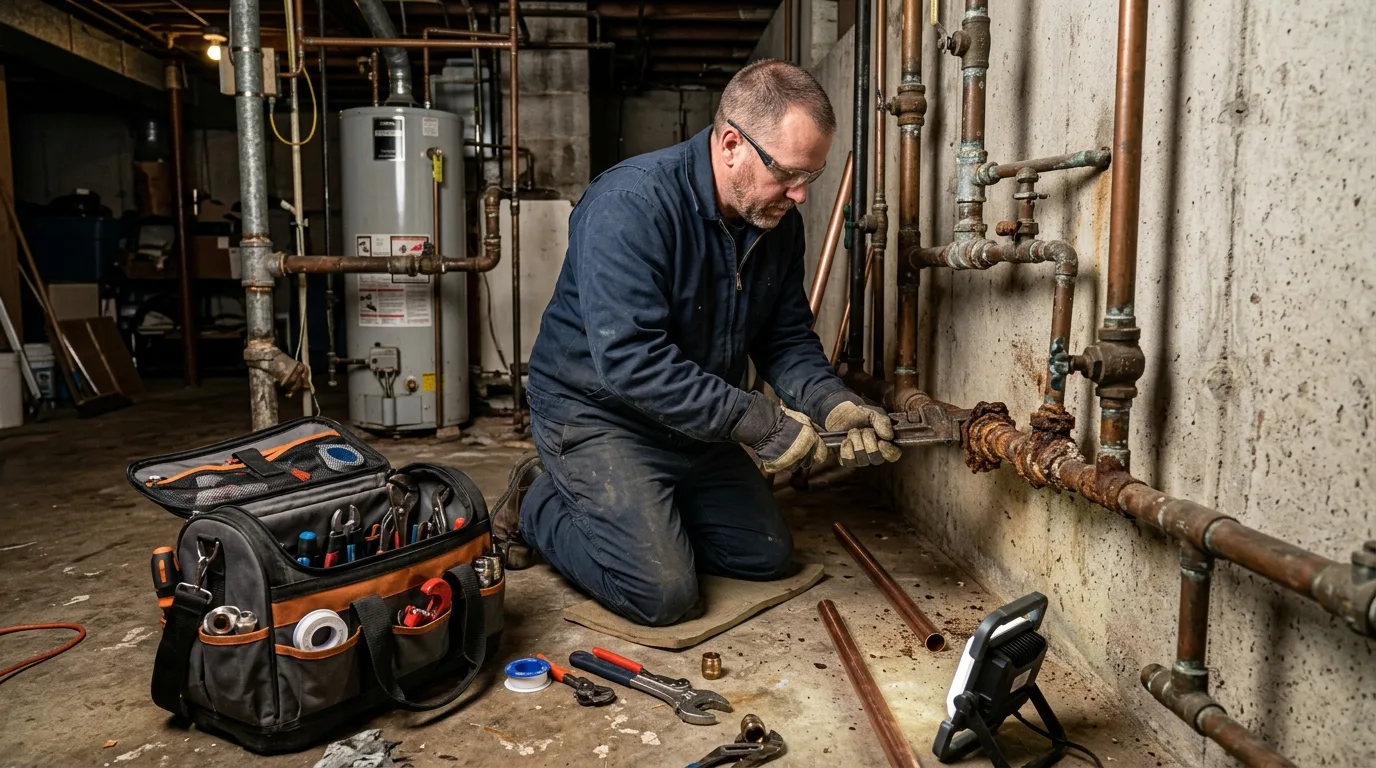
Circle City Historic District · 92879
Grand Boulevard’s circle encloses the most architecturally significant housing in Corona. Plumbing work here is judged as much on what it leaves untouched as on what it fixes.
Answered 24/7 · access planned and agreed before any surface is opened
The district
The Circle City Historic District takes its name from Grand Boulevard, the mile-diameter circle that makes Corona’s street plan unlike anywhere else in Southern California. The homes within and along it represent the city’s early architectural history, and many have been carefully maintained or restored by owners who care a great deal about them.
That changes the brief for a plumber. On an ordinary house, the question is whether a repair works. Here, the question is whether it works and whether anyone can tell it happened. Original plaster, period tile, hardwood, built-in cabinetry, and character fixtures are not obstacles to be cut through; they are the reason the house is worth what it is.
The plumbing itself is typically several generations deep. Original supply may be galvanized steel, with copper or PEX added during past remodels and transitions of varying quality between them. Waste lines are often cast iron inside with clay laterals outside. Fixtures may be original, reproduction, or modern, and some are genuinely irreplaceable.
The most valuable thing we bring to these houses is not a technique. It is the discipline of looking properly before opening anything: camera work on drains, moisture metering and acoustic detection on leaks, and a clear plan for access agreed with the owner in advance. Exploratory demolition is the fastest way to do irreversible damage to a house like this, and it is almost always avoidable.
Where a repair genuinely requires opening a historic surface, we would rather tell you that up front, show you exactly where, and let you decide, including bringing in a specialist finisher if that is what the house deserves.
The balance
The tension in historic plumbing is real. Original supply piping is often at the end of its usable life, and the reliable answer is replacement, but replacement means running new lines through a house designed without any thought for future access.
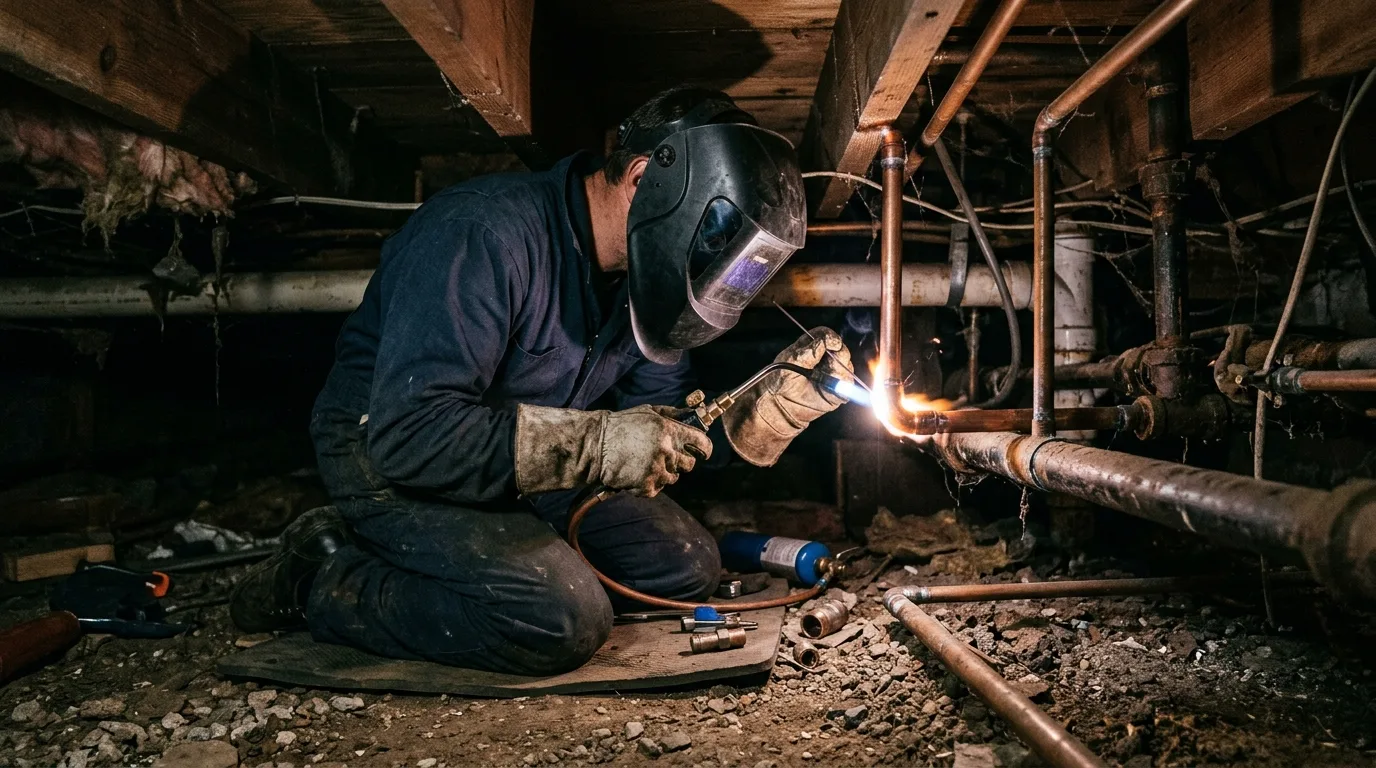
The way through is routing. In most historic homes there are paths that touch nothing significant: crawlspaces, unfinished attic space, closets, service porches, later additions, and interior walls that are not original. A repipe planned around those routes can leave every period surface intact, and it is worth spending planning time to find them rather than defaulting to the shortest run.
Period fixtures are the other question. Original faucets, valves, and tubs frequently have no parts support, and the honest answer varies. Some can be rebuilt with machined or adapted components. Some can be kept in place with modern valves concealed behind them. Some cannot be saved, and if that is the case we will say so rather than take money to attempt the impossible.
Drains are more forgiving. Cast iron waste that has scaled or corroded can often be lined rather than replaced, which means no floors coming up and no trenching through mature landscaping. For a historic property that difference is enormous, and it is the first option we investigate.
Whatever the scope, we document what was done and where new runs were routed. The next person to work on the house should not have to guess, and a written record is part of caring for a building properly.
Priorities
The order of operations matters more here than anywhere.
01
Camera, acoustic detection, moisture metering, and pressure testing before anything is opened. Finding the problem should not create a second one.
02
Crawlspaces, attics, closets, service areas, and non-original walls. There is nearly always a route that avoids period surfaces if you look for it.
03
Cast iron and clay that can be lined in place avoids floors, gardens, and driveways being opened. Always investigated before excavation is proposed.
04
Where a period fixture is worth keeping but its internals are gone, a modern valve concealed behind the original trim is frequently the right compromise.
05
Seismic strapping, expansion tanks, venting, and backflow protection all brought up to standard in ways that are reversible and unobtrusive.
06
Photographs and a description of what was done and where new runs go, so future work does not begin with exploratory holes.
How we work
Slower at the start, and considerably less destructive at the end.
Materials, previous work, foundation type, and which surfaces are original. Ten minutes here changes everything that follows.
Camera, detection equipment, and pressure testing to locate the fault precisely rather than approximately.
Where an opening is needed, we show you the location and size and get agreement before proceeding. No surprises, no discovered damage.
New runs planned through crawlspace, attic, closets, and non-original construction wherever the layout allows.
Floors, fixtures, and adjacent surfaces covered before work begins. The site is left clean at the end of each day, not the end of the job.
Pressure held, drains verified, photographs taken, and a written record of routing given to you for the house file.
Grand Blvd
The one-mile circle the district is named for
Pre-1940
Typical construction era within the district
Lining
Investigated before any excavation is proposed
24/7
Emergency dispatch, historic or not
Local conditions
Historic status changes how the work is done, not what goes wrong. The underlying conditions are the same ones affecting the whole downtown area.
Roots in jointed laterals. The district’s mature street trees and garden planting sit above clay sewer laterals with joints every few feet. Root intrusion is the most common sewer problem here, and it recurs. Because open trenching through established landscaping is exactly what nobody wants, lining and pipe bursting are worth understanding as options before a problem becomes urgent.
Hard water. Fifteen to twenty grains of hardness scales fixtures, valve seats, and water heaters. In a house with period fixtures worth preserving, that argues strongly for softening, not for laundry, but because scale is what destroys irreplaceable valve internals.
Pressure. The district sits low in the city’s elevation profile, and low position generally means higher static pressure. On original supply piping and antique fixtures, that is not a theoretical wear issue. Measuring it and controlling it with a working PRV is one of the cheapest forms of protection available to a historic house.
Raised foundations. Most of the district predates slab construction, which is a considerable advantage. A crawlspace means leaks can be found and repaired from below, repipes can be routed underneath, and drain work rarely requires opening a floor. It is one of the reasons careful work on these houses is more achievable than owners often expect.
The last point is about sequencing. If you are planning a restoration or a kitchen or bathroom project, involve a plumber at the design stage rather than the installation stage. Decisions about routing, access panels, and valve positions cost nothing while a wall is already open and are painful to revisit afterwards.
Historic District
Camera, detection, and metering find the fault without a single hole in your plaster.
Answered 24/7 · upfront pricing before any work
Full service list
Historic property
The plumbing decisions made while a wall is open determine what the next fifty years look like. Worth a conversation early.
Independent local contractors · workmanship guarantee on completed work
Historic District FAQs
Only if there is genuinely no alternative, and only after showing you exactly where and how large the opening will be and getting your agreement.
Our first move is always non-destructive diagnosis, camera, acoustic detection, moisture metering, followed by looking for access from crawlspace, attic, closets, or non-original construction. In most historic homes such a route exists.
Often, yes. Some period valves can be rebuilt with adapted or machined components. Where internals are genuinely unavailable, a modern valve concealed behind the original trim keeps the appearance and gives you reliability.
Sometimes a fixture cannot be saved. If that is the case we will tell you plainly rather than charge for an attempt we do not expect to succeed.
In most cases the damage can be kept away from anything significant. The key is routing, running new lines through crawlspace, attic, closets, service areas, and non-original walls rather than taking the shortest path.
It takes longer to plan and longer to execute than a modern tract house. It is also the last time anyone should need to touch the supply piping.
This is where trenchless methods earn their keep. Lining or pipe bursting replaces the lateral from access points at either end without a trench through the garden.
It is not suitable for every situation, a collapsed or severely offset line may need excavation. A camera inspection establishes which category you are in before anyone commits.
Yes, and we handle it in a way that respects the building. Seismic strapping, expansion tanks, venting, and backflow protection can all be brought to standard unobtrusively and, where possible, reversibly.
Compliance and preservation are not in conflict if the work is thought through. They only conflict when someone takes the fastest route.
Yes. We photograph what was found and what was done, and record where new runs were routed.
Anyone working on the house in future should not have to make exploratory holes to find out what a previous plumber did. A written record is part of maintaining a building of this kind properly.
It is worth serious consideration. Corona water runs fifteen to twenty grains, and scale is what destroys valve internals, cartridge seats, and water heaters.
If your house has period fixtures with limited or no parts support, softening is essentially a preservation measure. It is a less obvious argument than laundry and a much stronger one.
At the design stage, before anything is ordered or opened. Valve positions, routing, drain locations, and access panels are trivial decisions while a wall is open and expensive ones afterwards.
It is also the moment to plan concealed access panels. On a historic house, one small panel in a sensible place can prevent a future repair becoming a plaster job.
Galvanized steel supply, cast iron waste stacks, a clay lateral to the street, and lath and plaster over it all. Later additions often introduce copper spliced straight onto the steel, which is where corrosion tends to concentrate.
None of that is a reason to gut the house. It does mean exploratory work should be minimal, planned, and cut in places that patch invisibly.
Sometimes, but three things have to line up: gas supply sized for the burner, a venting route that does not damage a significant elevation, and a condensate drain with somewhere to go.
Where any of those forces an unsympathetic alteration, a high-recovery tank heater in the original location is usually the better answer. The gain from tankless is rarely worth cutting a new penetration through a historic facade.
Circle City · 92879
Modern reliability behind the walls, with the original fabric of the house left the way we found it.
Dispatch answers 24/7 · same-day and emergency response available