01
Failing original PRVs
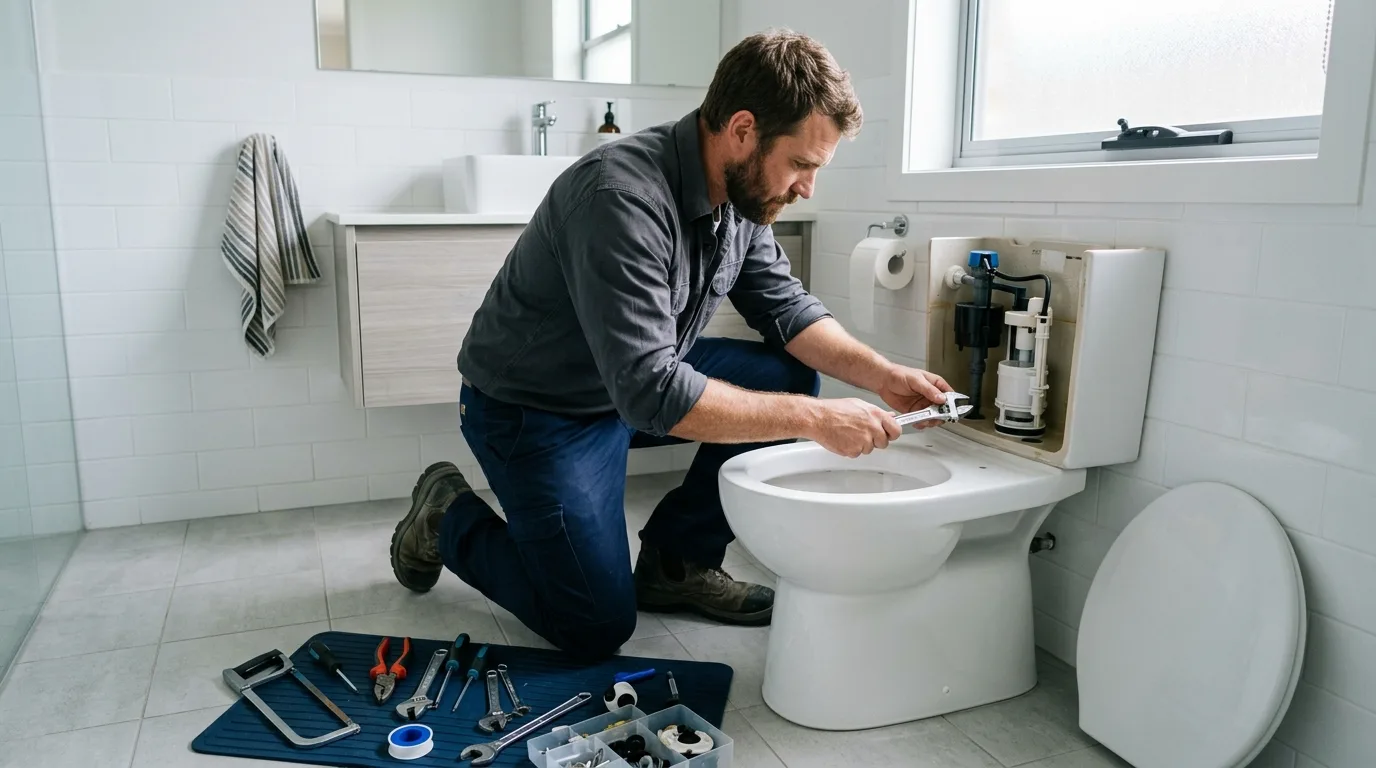
Builder-grade pressure regulators from the original construction reaching the end of their life together. Symptoms show up as fixture failures long before anyone suspects the valve.
South Corona · 92881 / 92883
Newer construction does not mean immune. The tracts south of Ontario Avenue have their own signature problems, pressure above code, scale in tankless units, and original builder-grade components reaching the end of their run.
Answered 24/7 · tankless service, softeners, and pressure work
The neighborhood
The growth south of Ontario Avenue toward Foothill Parkway and beyond happened largely from the 1990s onward, and the housing reflects it: slab-on-grade construction, copper or PEX supply, ABS drains, and a generation of appliances and fittings that were current when the tracts were built and are now fifteen to thirty years old.
That produces a completely different call pattern to the older parts of the city. We are rarely dealing with galvanized supply or cast iron waste here. What we are dealing with is a large stock of houses hitting the age at which their original builder-grade components all reach the end of their service lives at roughly the same time.
Builder-grade is the operative phrase. Production housing is specified to a price, and the plumbing components chosen are functional rather than durable. A pressure reducing valve fitted in 1998 has done well to reach today. A water heater installed with a tract is not the model anyone would choose for hard water. When these start going, they tend to go as a cohort across a neighborhood.
The other characteristic is elevation. South Corona rises noticeably toward the foothills, and pressure within a municipal zone varies with position. Some south Corona streets sit at the low end of their zone and receive static pressure well above the 80 psi code limit; others sit high and have the opposite complaint. Neither can be assumed; it has to be measured.
Slab construction means slab leaks remain a live risk despite the newer build. They are less common than in the mid-century tracts, but they happen, and the same rule applies: locate properly before opening concrete.
The local pattern
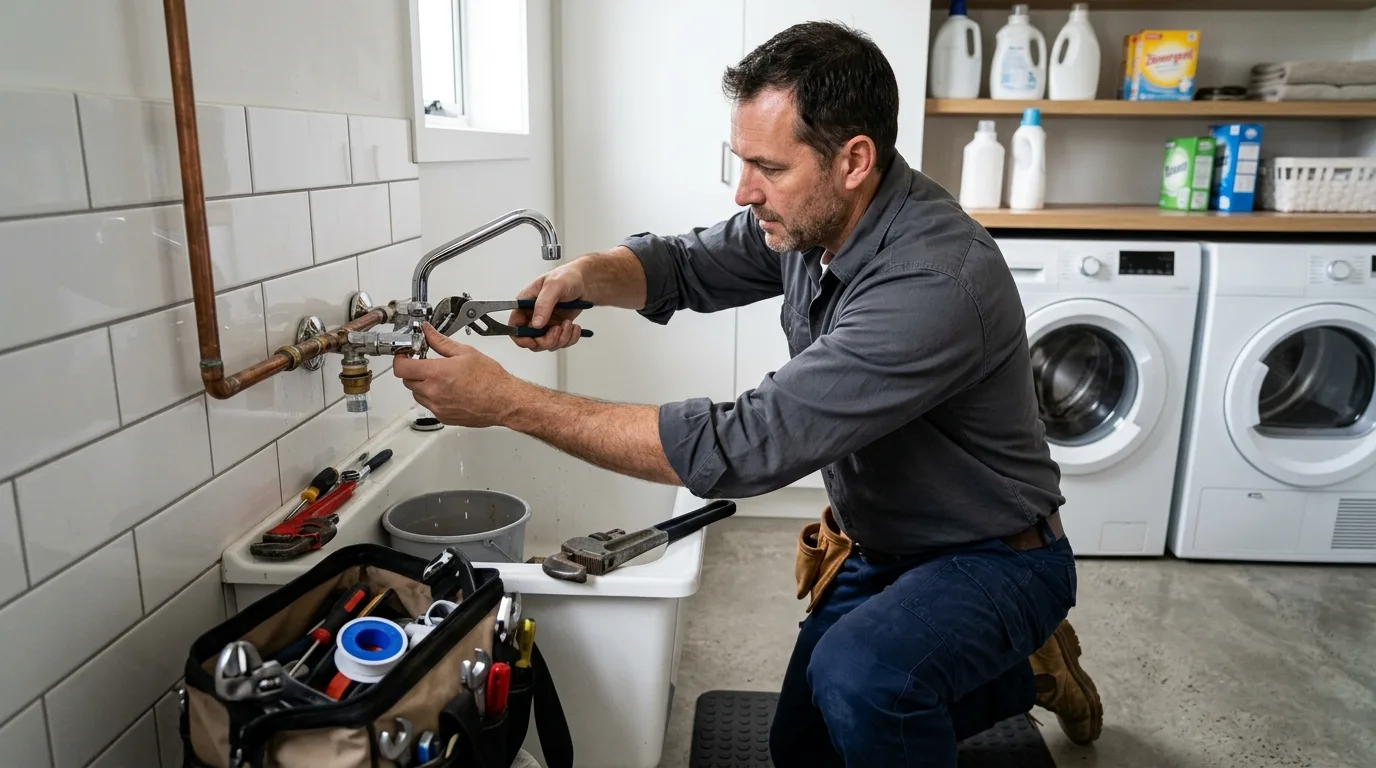
South Corona has a high adoption rate of tankless water heating, partly because the housing is newer and partly because the demographic and house size suit it. Tankless is an excellent technology here with one significant caveat: it is considerably less tolerant of hard water than a tank.
A tank heater accumulates sediment on the bottom and keeps working, badly, for years. A tankless unit heats water through a narrow heat exchanger, and mineral deposits inside that exchanger directly reduce heat transfer and restrict flow. The unit compensates by firing harder, efficiency falls, and eventually it throws error codes or fails outright. At fifteen to twenty grains, this is not a slow process.
Annual descaling is the entire maintenance requirement, and most manufacturers make it a warranty condition. It takes a couple of hours with a pump and a solution circulated through the isolation valves, and it is the difference between a unit that reaches its rated life and one that does not.
Which leads directly to softeners, which are common here for good reason. Softened water dramatically extends the life of a tankless unit, a tank heater, fixture cartridges, valve seats, and the internals of every appliance that uses water. The economics are better than the marketing usually explains, because the marketing focuses on soap and towels rather than on equipment replacement cycles.
The thing to get right is sizing. A softener specified for household size and actual hardness regenerates on a sensible cycle. One specified too small regenerates constantly, wastes salt and water, and delivers inconsistent results. It is worth having the number calculated rather than accepting a default.
Common calls
Newer housing, but a very consistent set of problems.
01
Builder-grade pressure regulators from the original construction reaching the end of their life together. Symptoms show up as fixture failures long before anyone suspects the valve.
02
Error codes, fluctuating temperature, and reduced flow from a heat exchanger that has never been descaled. Usually recoverable if caught before failure.
03
Original tank heaters in garages, typically fifteen to twenty-five years into a tract now. Replacement is planned work if you get to it first.
04
Original builder-grade components on their second decade. Cheap to replace, and worth doing before they fail while nobody is home.
05
Less frequent than the older tracts but not absent. Located electronically before any concrete is opened, with repair versus reroute explained honestly.
06
Extensive landscape systems on high static pressure. Heads blowing off and drip fittings failing repeatedly is a pressure symptom, not a component problem.
How we work
The gauge goes on first. It answers more questions than anything else.
Static and flowing at an exterior hose bib. On newer housing with repeated small failures, this is nearly always where the explanation is.
What was installed with the tract and how old it is now. Where one builder-grade component has failed, the others are usually close behind.
Tank age and condition, or tankless service history and error log. A tankless unit that has never been descaled needs that before anything else is diagnosed.
Meter check with everything off, and isolation of the irrigation system. Outdoor leaks in landscaped yards hide extremely well.
What needs doing now, what can wait, and what is worth doing together while access is open. We separate urgent from sensible.
Work tested under pressure, tankless units run through a full cycle, softener settings confirmed, and the site left clean.
1990s–2000s
Dominant construction era
15–20 gpg
Local water hardness
Annual
Tankless descaling interval here
80 psi
Code maximum, frequently exceeded
Local conditions
Elevation and pressure. South Corona climbs toward the foothills, and that vertical spread is exactly what determines pressure within a municipal zone. Streets low in a zone can sit well above code maximum; streets high in one can be marginal. Because the variation is street by street rather than area-wide, guessing is useless. The gauge is the only answer, and it is the first thing we do.
Hardness. Fifteen to twenty grains affects newer houses just as much as older ones, but the consequences land on different equipment. Here it is tankless heat exchangers, softener resin beds, fixture cartridges, and appliance solenoids rather than galvanized pipe. The response is the same: soften the water or accept a shorter replacement cycle on everything.
Slab and soil. Slab-on-grade throughout, with the same expansive soil behavior found across the region. Slab leaks are less common in newer copper than in fifty-year-old copper but are not eliminated, and the diagnostic discipline is identical, locate first, cut once.
Landscape irrigation. South Corona yards tend to be extensively irrigated, and the outdoor plumbing takes a beating: ultraviolet damage to exposed PVC, pressure-driven component failure, and buried supply lines damaged by other trades over the years. An unexplained water bill in this area is outside until proven otherwise.
What is genuinely better. ABS drains rather than cast iron, PVC or copper supply rather than galvanized, and laterals that are usually plastic rather than jointed clay. Root intrusion is far less of an issue here than downtown, and drain problems are more often about what has been put down them than about the pipe itself.
South Corona
If your fixtures keep failing on a cycle, one gauge reading probably explains it.
Answered 24/7 · upfront pricing before any work
Full service list
South Corona
In this water, a tankless heater that has never been descaled is running on borrowed efficiency. Annual service is the whole maintenance plan.
Independent local contractors · workmanship guarantee on completed work
South Corona FAQs
Because twenty years is roughly when the original builder-grade components reach the end of their service lives at much the same time. Pressure regulators, water heaters, angle stops, supply lines and fixture cartridges go all at once.
Production housing is specified to a price. The components work; they were never chosen for longevity, particularly in hard water.
Annually in Corona. At fifteen to twenty grains of hardness, mineral builds inside the heat exchanger quickly, reducing heat transfer and restricting flow.
Most manufacturers make it a warranty condition. It takes a couple of hours through the isolation valves and it is the difference between a unit reaching its rated life and failing early.
For most households here, yes, and the strongest argument is equipment life rather than laundry. Softened water extends the life of tankless units, tank heaters, fixture cartridges, valve seats, and appliance internals.
Sizing matters. A softener matched to household size and actual hardness regenerates sensibly; an undersized one regenerates constantly and delivers inconsistent results.
They can. Slab-on-grade construction and expansive regional soils mean the mechanism exists regardless of build year, though newer copper fails less often than fifty-year-old copper.
The approach is the same either way: locate acoustically and with pressure isolation before opening any concrete, then decide between spot repair and reroute on the evidence.
Almost always static pressure. Irrigation components are among the least tolerant parts of a plumbing system, and parts of South Corona sit well above the 80 psi code limit.
The fix is correcting pressure at the house regulator or fitting a dedicated regulator on the irrigation branch. Replacing heads without that just repeats the cycle.
Outside. In a landscaped South Corona yard, an irrigation supply crack or a passing valve runs continuously and leaves no visible sign, because wet ground near sprinklers looks normal.
Turn everything off inside, watch the meter low-flow indicator, then close the irrigation isolation valve and look again. That single step usually locates the problem area.
If it is original to a 1990s or early 2000s tract, yes. Beyond twelve years a tank heater is on borrowed time, and hard water sediment will have reduced its effective capacity considerably.
Planned replacement is a scheduled expense. Unplanned replacement is that expense plus water damage and an emergency rate.
Yes, across South Corona including 92881 and 92883 and the developments toward the foothills.
Dispatch is answered 24 hours a day and we run same-day service where the schedule allows it, with emergency response at any hour.
If the bowl is sound and the trip is only a flapper or a fill valve, rebuild; it is inexpensive and takes minutes. A running toilet quietly puts through more water than most leaks people worry about.
Replacement makes sense when the fill valve has been changed more than once, the tank bolts are weeping, or the original is an early low-flow model that needs two flushes anyway.
The three things that cause the expensive version of this failure are braided supply hoses past their service life, a drain standpipe that is too short so it siphons or overflows, and a pan with no drain line.
Turning the taps off between loads is good practice and rarely happens. Replacing the hoses on a schedule and confirming the pan actually drains somewhere useful is the more realistic protection.
South Corona · 92881 / 92883
Pressure measured, scale addressed, and builder-grade components replaced with things that last.
Dispatch answers 24/7 · same-day and emergency response available