01
Tankless scale and faults
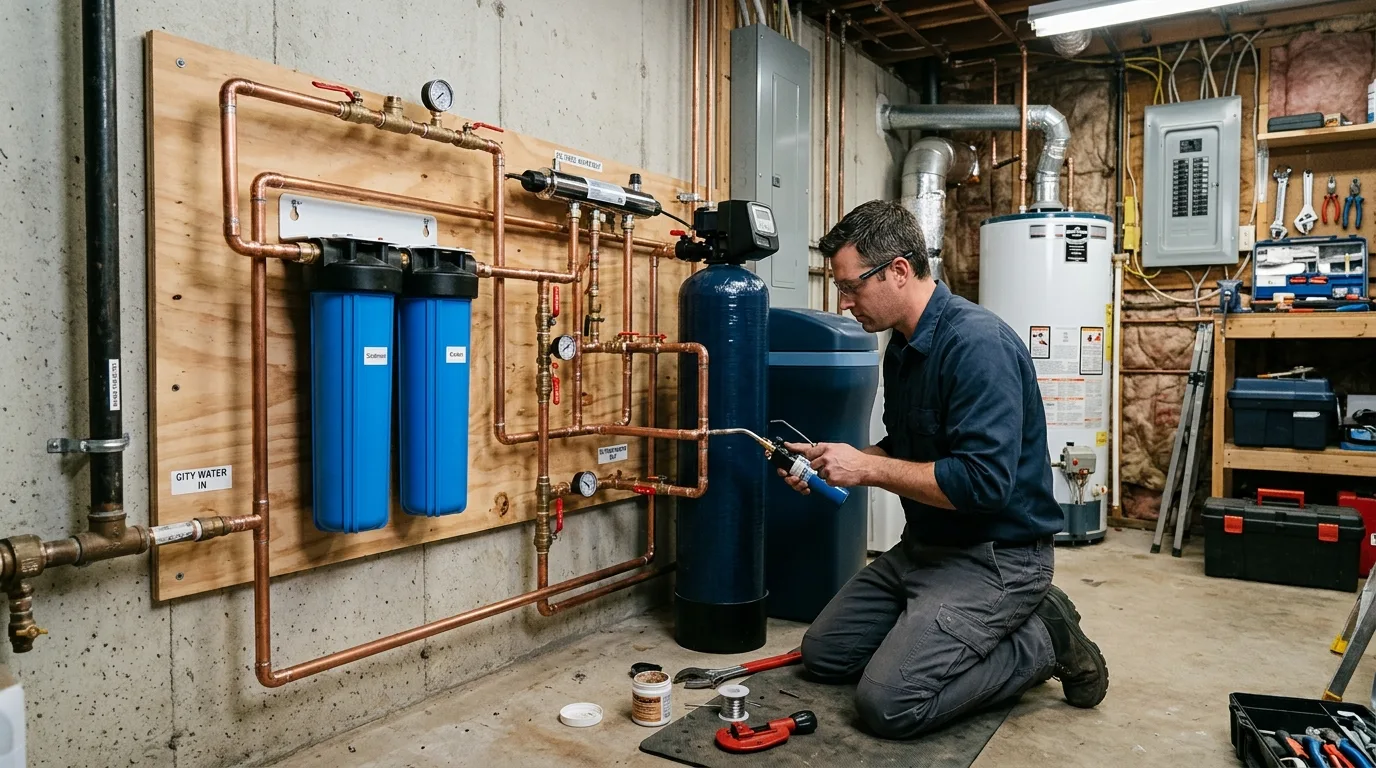
Error codes, temperature swings, and reduced flow from an unserviced heat exchanger. At this hardness, annual descaling is a necessity.
Eastvale · 92880
One of the newest cities in the region, built almost entirely since 2000. The plumbing problems here are not about age; they are about water chemistry and builder-grade components hitting their limits.
Answered 24/7 · hardness tested, softeners sized properly
The city
Eastvale incorporated in 2010 and was built almost entirely from 2000 onward, on land that was dairy and agricultural for most of the previous century. It is one of the newest housing stocks in Southern California: slab-on-grade throughout, PEX or copper supply, ABS drains, modern venting, and appliances specified within the last two decades.
Homeowners here are frequently surprised to need a plumber at all. The house is new, nothing should be worn out, and yet fixtures are failing, the water heater is underperforming, and something keeps needing replacing. The explanation is almost never age.
It is water chemistry first. Regional hardness in the fifteen to twenty grain range is aggressive by any standard, anything over ten grains is classified as very hard. Every water-using appliance and fixture in an Eastvale home is operating in conditions more demanding than its manufacturer’s testing assumed, and the components that contact water wear accordingly.
It is pressure second. Static pressure above the 80 psi code limit destroys cartridges, fill valves, supply lines, and appliance solenoids on a cycle no part survives. A household replacing the same component every year or two is usually looking at a pressure problem nobody has measured.
And it is builder-grade specification third. Production housing components are chosen to a price. They work; they were never selected for longevity in hard water. Pressure regulators, angle stops, supply lines, and disposals from an original build are the first things to reach their limits, and in a city built in a narrow window they tend to do so as a cohort.
The fix
The good news about Eastvale is that the problems are systemic rather than structural, which means they respond well to a small number of correct decisions.
Softening. A properly sized softener is the single highest-value plumbing decision available to a household here, and the return is in equipment life rather than laundry. It extends the service life of tankless units, tank heaters, fixture cartridges, shower valves, dishwashers, washing machines, and ice makers simultaneously.
Sizing is where installations go wrong. A softener is specified from measured hardness and household water use, which together give a grain capacity requirement. Undersized, it regenerates constantly and wastes salt and water while delivering inconsistent results. Correctly sized, you add salt and forget about it.
Pressure. A gauge on an exterior hose bib takes a minute. If static pressure is above 80 psi, the regulator needs adjusting, rebuilding, or replacing, and until that happens, every replacement part is on a countdown. Leaving the gauge on overnight also catches creep, where pressure climbs after midnight as municipal demand drops. That overnight number is what your plumbing actually experiences.
Tankless service. Where a home has a tankless heater, annual descaling is the entire maintenance requirement and most manufacturers make it a warranty condition. At this hardness it is not optional maintenance; it is the difference between reaching rated life and failing early.
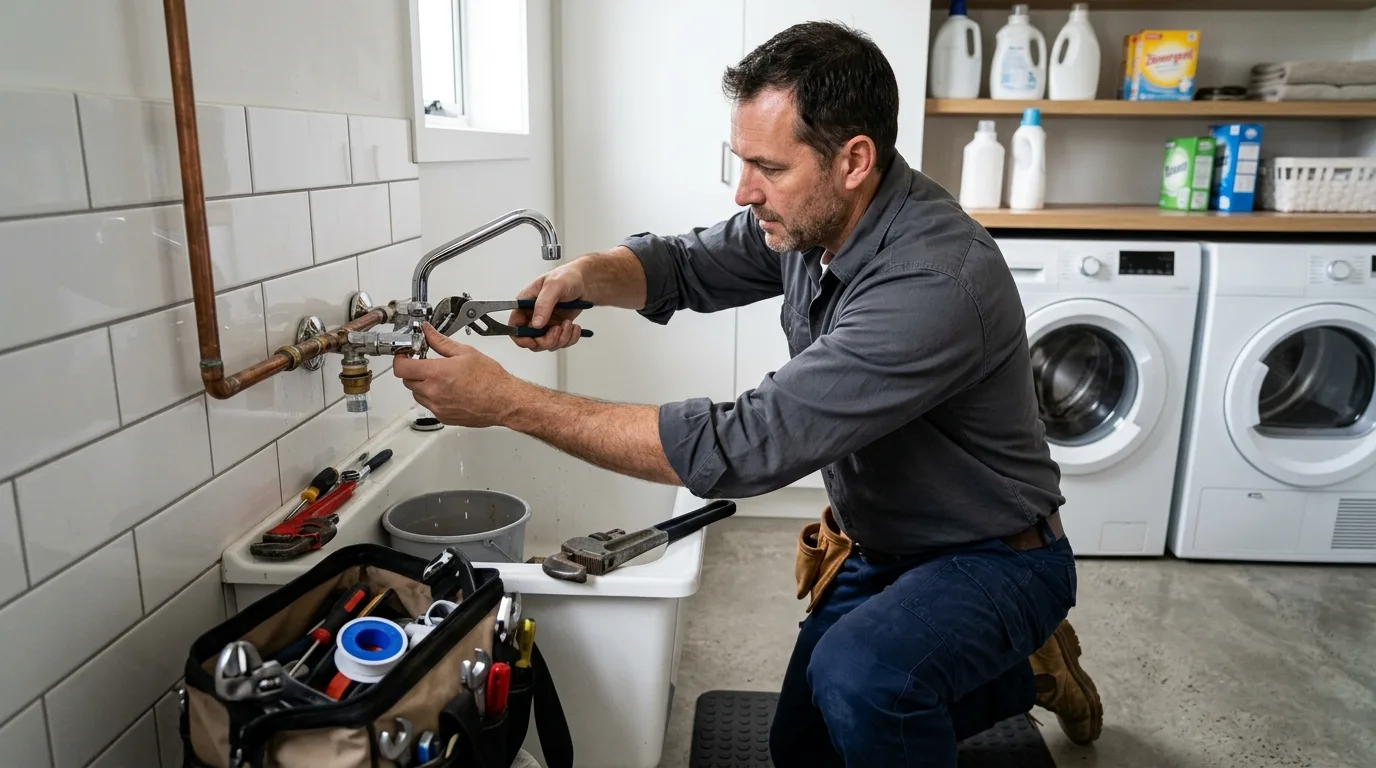
Getting ahead of the cohort. Replacing original angle stops and supply lines proactively is inexpensive and eliminates a whole category of unattended flooding. It is the least glamorous recommendation we make and among the most useful.
Common calls
New housing, aggressive water, builder-grade parts.
01
Error codes, temperature swings, and reduced flow from an unserviced heat exchanger. At this hardness, annual descaling is a necessity.
02
Units undersized for the household, exhausted resin beds, and bypass valves left in place from years ago and forgotten.
03
Builder-grade PRVs reaching their limits, with seats scaled by hard water. Symptoms appear as fixture failures long before anyone checks the valve.
04
Repeated replacement of the same components. Nearly always pressure, hardness, or both rather than defective parts.
05
Original builder-grade components that seize and fail. A known cause of unattended flooding and cheap to replace ahead of time.
06
Slab-on-grade throughout. Less common in newer piping but not absent, and located electronically before any concrete is opened.
How we work
Two measurements explain most of the list.
Actual hardness at your tap, and on softened homes a raw-versus-treated comparison to confirm the unit is doing its job.
Static and flowing readings at the hose bib, plus an overnight hold where a pattern of failures points at a creeping regulator.
What the heater is and how old, the error history on a tankless unit, how the softener has been programmed and whether the resin is spent, plus the date on the filter cartridges.
Meter test with everything off, then irrigation isolated separately. Landscaped lots hide outdoor leaks well.
What needs doing now, what is worth doing proactively, and what can safely wait. Separated clearly rather than bundled.
Work held under pressure, the tankless cycled through from cold, softener settings signed off, and treated hardness confirmed at the tap before we leave.
Since 2000
When most of the city was built
15–20 gpg
Regional hardness
80 psi
Code maximum, frequently exceeded
24/7
Dispatch across Eastvale
Local conditions
Hardness. The dominant factor. It is why equipment in a fifteen-year-old Eastvale house can be in worse condition than the same equipment in a thirty-year-old house elsewhere. Treatment is the response, and it is a solved problem rather than a compromise.
Pressure. Worth measuring at every address. Eastvale is relatively flat compared with Corona’s hillside areas, but position within a municipal pressure zone still varies, and above-code static pressure is common enough that we check it as standard.
Former agricultural land. Development on old dairy and farm ground means graded and filled soil in places, occasional legacy irrigation infrastructure still in the ground, and expansive soil behavior typical of the region. Ground movement stresses rigid pipe in and beneath slabs, which is one mechanism behind slab leaks even in newer construction.
Extensive irrigation. Newer communities with substantial landscaping mean long buried irrigation runs, drip emitters that scale closed in this water, ultraviolet damage to exposed PVC, and pressure-driven component failure. An unexplained water bill here is outside until proven otherwise.
What is genuinely in your favour. Modern drains and laterals rather than cast iron and clay, correct venting, and current fixture standards. Root intrusion and drain-material failure are minor issues in Eastvale. The problems are almost entirely chemistry and pressure, and both are measurable and fixable.
Eastvale
One gauge reading and one hardness test usually explain the entire pattern.
Answered 24/7 · upfront pricing before any work
Full service list
Eastvale
That is almost always hardness or pressure. Both are measurable and both are fixable.
Independent local contractors · workmanship guarantee on completed work
Eastvale FAQs
Because the problems here are not about age. Regional hardness of fifteen to twenty grains and static pressure that often exceeds the 80 psi code limit both wear components far faster than manufacturers assume.
Builder-grade specification is the third factor. Production housing components work but were never chosen for longevity in this water.
For most households, yes, and the case is equipment life rather than laundry. Softened water extends the life of tankless units, tank heaters, fixture cartridges, shower valves, dishwashers, and ice makers simultaneously.
The saving arrives as equipment you do not replace on schedule. Less noticeable than soft laundry, worth a great deal more over ten years.
It is calculated from your measured hardness and household water use, which give a grain capacity requirement.
Undersized units regenerate constantly, wasting salt and water and delivering inconsistent softness. It is worth having the number worked out rather than accepting a default off a shelf.
Pressure, hardness, or both. Above 80 psi static, cartridges wear out on a cycle no part survives, and hard water roughens the sealing surfaces they close against.
We put a gauge on an exterior hose bib before fitting anything else. It is a one-minute test that frequently explains a multi-year pattern.
Annually. At this hardness, mineral builds inside the heat exchanger quickly, reducing heat transfer and restricting flow until the unit throws fault codes.
Most warranties require it annually in writing. Where the installer fitted isolation valves it is a straightforward two-hour service.
It is one of the better-value things you can do. They are original builder-grade components, they seize with age, and they are what stands between a fixture failure and a flooded room.
We fit quarter-turn ball valves, which either work or do not, unlike multi-turn stops, they do not slowly seize and then leak the first time you need them.
They can. Slab-on-grade construction and expansive regional soils mean the mechanism exists regardless of build year, though newer piping fails less often than fifty-year-old copper.
The approach is the same: locate acoustically and with pressure isolation before opening any concrete, then choose between spot repair and rerouting on the evidence.
Outside. In a landscaped Eastvale yard, an irrigation supply crack or a passing valve runs continuously with no visible sign, because damp ground near sprinklers looks normal.
Turn everything off inside, watch the meter low-flow indicator, then close the irrigation isolation valve and check again. That usually locates the area in minutes.
Usually, but check three things: the physical space in the alcove or garage bay, a drain within the allowable distance for the brine discharge, and a power outlet. Builder loops are sized generously in some tracts and very tightly in others.
The loop should also be genuinely on the whole-house side. In some plans it feeds only part of the house, which produces the odd result of soft water at some fixtures and raw supply at others.
Because water runs along the top of the ceiling framing until it finds a low point or a light fixture. The stain marks where it fell, not where it started.
On second-floor laundries the usual culprits are a braided supply hose, a standpipe that is too short, or a drain pan with no drain line. All three are cheap to correct compared with a ceiling.
Eastvale · 92880
Hardness measured, pressure checked, and builder-grade components replaced with things specified to last.
Dispatch answers 24/7 · same-day and emergency response available